The Evolution of the Kuayue V5 and V3: From Practical Microvans to Modern Commercial Transport Solutions
The Kuayue V3 and V5 are compact commercial vans produced by Chongqing Kuayue Automobile Co., Ltd., a subsidiary of Changan Automobile. Designed primarily for small businesses, cargo transport, and passenger shuttle duties, these vehicles have become popular in China and several export markets due to their affordability, durability, and versatility. Over the years, the V3 and V5 have evolved through multiple generations, redesigns, and trim levels, reflecting changing market demands and stricter emissions and safety requirements.
Origins of the Kuayue V3
The origins of the Kuayue V3 can be traced to the Chana Star S460, a compact microvan introduced by Changan Automobile in the late 2000s. After production of the S460 ended, Chongqing Kuayue continued manufacturing a revised version under the Kuayue brand, renaming it the V3. The vehicle retained much of the original engineering but received styling updates and branding changes.
The V3 was developed as an entry-level commercial vehicle aimed at small business owners who needed a practical van with low operating costs. Its compact dimensions made it well-suited for crowded urban environments while still providing useful cargo capacity.
Kuayue V3 Production History
First Generation V3
Production Years: Approximately 2013–2021
The early V3 models were based heavily on the Chana Star S460 platform. These vans were available in both passenger and cargo configurations and were typically powered by small gasoline engines ranging from 1.0 to 1.3 liters, depending on market and year. The vehicle featured rear-wheel drive and a simple body-on-frame design intended for commercial use.
Kuayuexing V3
Production Years: 2021–Present
In September 2021, Kuayue launched the all-new Kuayuexing series, which included a completely redesigned V3. The new model featured a more modern body, improved interior quality, increased cargo space, and updated powertrains. The new V3 measured 165.4 inches in length and rode on a 106.3-inch wheelbase. Power came from a 1.5-liter gasoline engine producing approximately 107 horsepower, paired with a five-speed manual transmission.
V3 Trim Levels
Throughout the current generation, the V3 has been offered in four primary trim levels:
- Standard
- Comfort
- Luxury
- Premium
These trims were available in cargo-van and passenger-van configurations, with equipment differences including power steering, power windows, multimedia systems, reverse cameras, upgraded audio systems, central locking, and additional convenience features.
.
MANY auto lovers not only spend time in their garages to tinker on their autos, but have other projects going on in there as well. Wood working is a popular pastime for the creative type of individual. Not sure what to make next? Or thinking about getting into this kind of hobby? There’s lots of possibilities… Here’s some of them…

.
Origins of the Kuayue V5
The Kuayue V5 was introduced as a larger and more capable alternative to the V3. Unlike the V3, which originated from the Chana Star S460, the V5 was developed from the Changan Xinbao V5 and later rebranded under the Kuayue name. Production began in 2013, and the model quickly established itself as one of Kuayue’s most important commercial vehicles.
The V5 targeted buyers who required greater cargo volume and passenger capacity while maintaining the low ownership costs associated with Chinese microvans. It was available in passenger, cargo, and logistics-oriented variants.
Kuayue V5 Production History
Original V5
Production Years: 2013–2021
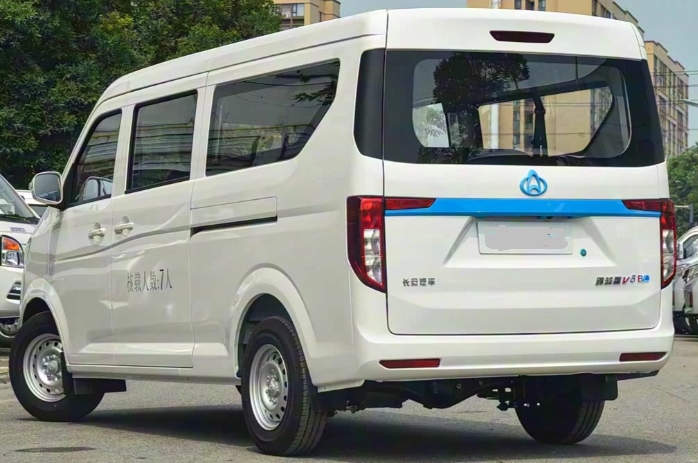
The first-generation V5 featured a six-door body design with four side doors and split rear cargo doors. Depending on configuration, seating capacity ranged from two to five occupants. The vehicle was available with either a 1.2-liter gasoline engine producing approximately 87 horsepower or a larger 1.5-liter engine producing around 112 horsepower. Both engines were paired with five-speed manual transmissions.
In 2017, the V5 received a facelift that updated the front fascia, grille, and bumper design. These changes modernized the vehicle’s appearance without significantly altering the underlying mechanical package.
Electric V5 Variant
As China’s commercial vehicle market increasingly embraced electrification, Kuayue introduced an electric V5 designed for logistics and urban delivery services. The electric version utilized battery packs ranging from approximately 41.86 kWh to 48.5 kWh and offered driving ranges approaching 174 miles under Chinese testing standards. Electric motor outputs ranged from 60 kW to 70 kW.
Kuayuexing V5
Production Years: 2021–Present
The introduction of the Kuayuexing family in 2021 brought an all-new V5. Positioned between the V3 and V7, the new V5 featured a larger body, improved passenger accommodations, and a more refined design. The wheelbase grew to 115.4 inches, while overall length reached 177.0 inches. The model continued using a naturally aspirated gasoline engine and five-speed manual transmission.
Passenger versions were available with either six- or seven-seat layouts, making the vehicle suitable for shuttle operations and family transportation in some markets.
Kuayue V5 Trim Levels
The current-generation V5 has been offered in four primary trim grades:
- Standard
- Comfort
- Luxury
- Premium
Equipment levels vary by trim. Entry-level models focus on affordability and commercial utility, while higher trims add features such as:
- Electronic power steering
- Multimedia systems
- USB connectivity
- Power windows
- Central locking
- Reverse-view cameras
- Enhanced audio systems
- Additional interior lighting
- Improved seating materials
These trim levels are available in both passenger and cargo-oriented configurations.
Technical Evolution
One of the most significant developments in both the V3 and V5 has been the transition from older small-displacement engines to more modern 1.5-liter gasoline powerplants that comply with China’s stricter National VI emissions regulations. The newer engines provide improved performance, fuel efficiency, and reliability while maintaining the low operating costs expected by commercial vehicle buyers.
The newer Kuayuexing generation also brought improvements in:
- Structural rigidity
- Interior comfort
- Noise reduction
- Driver ergonomics
- Safety equipment
- Cargo accessibility
These changes helped the vehicles remain competitive against rival Chinese microvans and light commercial vehicles.
International Presence
The V3 and V5 have been exported to numerous international markets. Various rebadged versions have appeared under different names in countries such as Pakistan and Vietnam. Some electric variants have also been marketed under other brands through strategic partnerships and joint ventures.
Future Outlook
The future of the Kuayue V3 and V5 appears closely tied to the ongoing electrification of commercial transportation. China’s growing emphasis on zero-emission urban logistics is likely to drive continued development of battery-electric versions of both models. Improved battery technology, greater driving range, and expanded charging infrastructure will likely make electric variants increasingly attractive to fleet operators.
At the same time, gasoline-powered versions are expected to remain important in rural regions and export markets where charging infrastructure remains limited. Future updates will likely focus on improved connectivity, enhanced safety features, and compliance with evolving emissions regulations.
The Kuayue V3 and V5 represent the evolution of China’s modern microvan segment. From their roots in earlier Changan commercial vehicles to the advanced Kuayuexing family introduced in 2021, both models have continuously adapted to changing customer needs. The V3 has remained the compact, entry-level workhorse, while the V5 has served customers requiring additional space and versatility. Through multiple trim levels, facelifts, and electric variants, these vehicles have established themselves as practical and economical transportation solutions for businesses and individuals alike, and they are likely to remain significant players in the light commercial vehicle market for years to come.