Landwind Rongyao: The Final Evolution of the Landwind SUV Brand
The Landwind Rongyao was one of the last new vehicles developed by the Chinese automaker Landwind before the brand ceased operations. Introduced in 2019, the Rongyao represented a significant departure from some of Landwind’s earlier products, combining original styling, modern technology, and a contemporary compact crossover platform. It was developed during a challenging period for the company and ultimately became the final all-new Landwind SUV to reach production.
Although its production run lasted only a few years, the Rongyao remains an important vehicle in Landwind history. It demonstrated the company’s attempt to reinvent itself after years of controversy surrounding some of its previous models, particularly the Landwind X7. The Rongyao was designed to restore the brand’s image while competing in China’s highly competitive compact crossover SUV segment.
The History Behind the Rongyao
Landwind was established through Jiangling Motor Holding, a joint venture involving Jiangling Motors Corporation (JMC) and Changan Automobile. During the 2000s and early 2010s, the company became known for producing affordable sport utility vehicles such as the X6, X8, X9, X5, and X7.
By the late 2010s, however, Landwind faced increasing competition from larger Chinese manufacturers and declining sales. The company needed a fresh product that would attract buyers seeking a modern crossover SUV rather than a traditional utility vehicle.
Development began under the internal project code E315. The goal was to create a stylish compact crossover with a distinctive design and improved technology. The vehicle would eventually become known as the Landwind Rongyao, a name that roughly translates to “Glory” or “Honor.”
.
Many car aficionados have multiple hobbies, like boating as well as auto stuff. Those who don’t already own a boat (and even some that do), may have thought about building their own boats. It’s really not as hard as you’d think. Just take a look at these easy boat building plans!

.
Debut and Launch
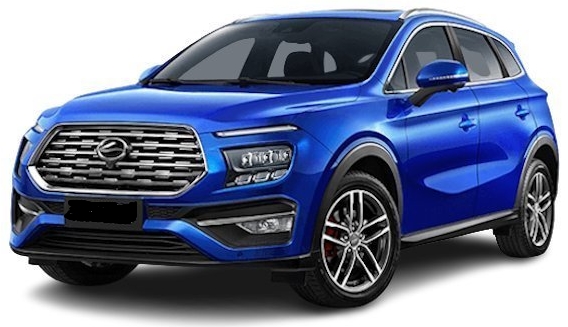
The Landwind Rongyao made its public debut at the 2019 Shanghai Auto Show. The vehicle immediately stood out because its styling was created by the Italian design firm GFG Style, founded by renowned automotive designers Giorgetto Giugiaro and Fabrizio Giugiaro.
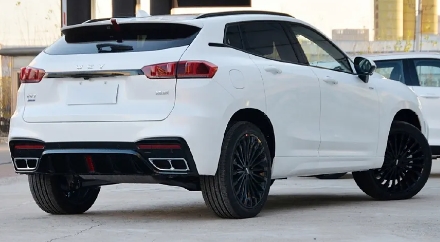
This was a significant milestone for Landwind. Unlike some previous models that had been criticized for resembling foreign vehicles, the Rongyao featured an original design developed specifically for the brand. The crossover displayed sharp body lines, a distinctive front fascia, narrow LED daytime running lights, and a modern SUV profile.
The Rongyao was positioned above the Landwind Xiaoyao and effectively replaced the Landwind X7 in the company’s lineup. Its introduction came shortly after legal disputes involving the X7’s resemblance to the Range Rover Evoque, making the Rongyao a fresh start for the brand.
Production Years
The Rongyao remained a single-generation model throughout its existence.
Production Timeline
| Model | Years Produced |
|---|---|
| Landwind Rongyao | 2019–2021 |
| Internal Development Code | E315 |
Production began during 2019 and continued until August 2021. No major facelift or second-generation model was ever introduced.
Design and Dimensions
The Rongyao was classified as a compact crossover SUV and featured a modern unibody construction.
Key dimensions included:
- Length: 179.1 inches
- Width: 74.2 inches
- Height: 65.2 inches
- Wheelbase: 108.3 inches
The crossover featured a five-door body style with seating for five passengers. Compared with earlier Landwind SUVs, the Rongyao emphasized comfort, efficiency, and urban practicality rather than serious off-road capability.
One of its most distinctive features was the front-end design. The lighting arrangement used a three-tier layout, with slim LED daytime running lights positioned above the primary headlamp units. This design helped distinguish the Rongyao from competing Chinese crossover SUVs.
Powertrain Evolution
Unlike many competitors that offered multiple engine choices, the Rongyao was powered by a single turbocharged gasoline engine throughout its production run.
Engine Specifications
- 1.5-liter turbocharged inline-four gasoline engine
- 163 horsepower
- Front-wheel drive
The engine delivered a balance of performance and fuel economy suitable for daily driving. Although not intended as a high-performance SUV, the Rongyao offered competitive power for its class and market segment.
Transmission Options
Buyers could choose between:
- 6-speed manual transmission
- 7-speed dual-clutch automatic transmission (DCT)
The dual-clutch transmission became the more popular choice because it provided smoother operation and improved convenience in urban driving conditions.
Trim Levels and Models Offered
One of the more interesting aspects of the Rongyao lineup was its evolving trim structure. Although the vehicle remained mechanically unchanged throughout production, Landwind revised trim names and equipment packages during the model’s brief life cycle.
2019–Early 2020 Trim Levels
When sales began, the Rongyao was offered in three primary DCT-equipped trims:
- Nature
- Collar
- Wisdom
These versions all utilized the 163-horsepower turbocharged engine paired with the 7-speed dual-clutch transmission.
The entry-level Nature model focused on affordability while still providing modern crossover styling and basic technology features. The Collar trim added additional comfort and convenience equipment, while the Wisdom trim served as the flagship version with the highest equipment level.
2020–2021 Revised Trim Levels
In 2020, Landwind simplified the lineup and introduced a new naming structure.
Available trims included:
- Active
- Leading
Both versions retained the same turbocharged engine and dual-clutch transmission but received revised equipment packages.
The Active model served as the entry-level variant, while the Leading trim occupied the top position in the lineup. Higher-spec versions typically included:
- Leather seating surfaces
- Large touchscreen infotainment systems
- Smartphone connectivity
- Rearview camera
- Automatic climate control
- Keyless entry
- Push-button start
- Alloy wheels
- Advanced driver-assistance features
The simplified lineup reflected Landwind’s efforts to streamline production during its final years.
Technology and Features
Compared with earlier Landwind products, the Rongyao offered a significantly more modern cabin.
Key features available during production included:
- Digital instrument displays
- Large central touchscreen
- Bluetooth connectivity
- Navigation systems
- Multiple USB ports
- Advanced safety technologies
- Electronic stability control
- Tire-pressure monitoring systems
The vehicle’s interior design was also more sophisticated than previous Landwind models, featuring soft-touch materials and a cleaner dashboard layout.
Market Position and Competition
The Rongyao entered one of the most competitive segments in the Chinese automotive market. It competed against compact crossover SUVs from manufacturers such as Geely, Changan, Haval, Chery, and GAC.
Although the vehicle received praise for its styling and equipment levels, Landwind’s declining brand recognition made it difficult to achieve significant sales volumes. The company was already facing financial and operational challenges by the time the Rongyao reached showrooms.
The End of Landwind
The Rongyao ultimately became one of the final Landwind vehicles ever produced.
By 2020, Landwind sales had collapsed, and production of Landwind-branded vehicles gradually ceased. Operations effectively ended during 2020–2021, bringing an end to a brand that had once sold tens of thousands of SUVs annually. The Rongyao’s production concluded in August 2021, marking the end of both the model and the Landwind brand itself.
Legacy and Future Outlook
The Landwind Rongyao occupies a unique place in Chinese automotive history. It represented the company’s final attempt to establish itself as a modern crossover manufacturer and demonstrated a clear shift toward original design and contemporary technology.
Although no direct successor exists, the Rongyao remains notable as Landwind’s most sophisticated production vehicle. Its collaboration with GFG Style brought international design expertise to the project, while its modern platform reflected the evolution of China’s automotive industry during the late 2010s.
Today, the Rongyao serves as the final chapter in the Landwind story. While the brand no longer exists, the vehicle remains an example of how Chinese manufacturers evolved from producing simple utility vehicles into creators of increasingly refined and competitive crossover SUVs. As one of the last Landwind models ever built, the Rongyao stands as both the culmination of the brand’s development and the closing act of its automotive journey.