Sinogold Junxing: The Evolution of Sinogold’s Compact Electric Sedan
The Sinogold Junxing represents one of the final chapters in the history of Chinese electric vehicle manufacturer Sinogold Automobile. Introduced as a compact battery-electric sedan, the Junxing was developed during a period of rapid growth and intense competition in China’s electric vehicle market. Although its production life was relatively short, the Junxing illustrates how smaller automakers attempted to survive by partnering with larger manufacturers and utilizing existing vehicle platforms to reduce development costs.
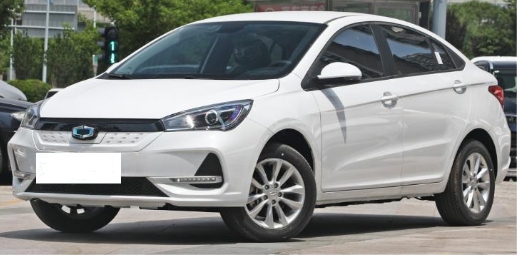
Produced from 2022 through 2024, the Sinogold Junxing was essentially a rebadged version of the Chery Arrizo e electric sedan. While it never achieved significant sales volumes, the model remains an interesting example of the consolidation and cooperation that characterized China’s electric vehicle industry in the early 2020s.
The History of Sinogold Automobile
Sinogold Automobile was founded in 2016 in Shandong Province, China. The company entered the rapidly expanding electric vehicle market with ambitions of becoming a major domestic manufacturer. Unlike larger Chinese automakers such as Chery, BYD, or Geely, Sinogold lacked the financial resources and engineering capacity necessary to develop an extensive range of original vehicles.
The company’s first significant production model was the GM3 electric MPV, which entered production in 2018. The GM3 attracted attention because of its strong visual resemblance to the Citroën Grand C4 Picasso. While the vehicle generated publicity, sales remained limited.
By the early 2020s, Sinogold faced increasing financial pressure as competition intensified among Chinese electric vehicle manufacturers. To reduce development costs and expand its product lineup, the company partnered with Chery Automobile, one of China’s largest automakers. This cooperation ultimately led to the creation of the Junxing sedan.
.
NO MORE dead batteries with this:

.
Development of the Junxing
Patent images of the future Junxing first appeared in late 2021. The vehicle was registered under the internal designation SGA7000BEV3 and was based heavily on the electric Chery Arrizo e platform. Rather than creating a completely new vehicle, Sinogold adopted the existing Chery architecture and applied minor styling revisions to distinguish the model from its donor vehicle.
Production reportedly began during 2022, making the Junxing the second production vehicle offered by Sinogold. The strategy allowed the company to enter the compact electric sedan segment without investing heavily in research and development.
Model Years and Production
2022 Sinogold Junxing
Production began during 2022, although some documentation identifies the vehicle as a 2021-design model due to its registration and approval process. The launch version featured a single electric drivetrain and was positioned as an affordable compact electric sedan for the Chinese market.
2023 Sinogold Junxing
The 2023 model year largely continued unchanged. The vehicle maintained the same battery pack, electric motor, body design, and equipment specifications. Available information suggests that Sinogold focused on maintaining production rather than introducing major updates.
2024 Sinogold Junxing
The 2024 model year appears to have been the final year of production. By this time, Sinogold was experiencing significant financial difficulties, and the company’s operations were gradually winding down. Public records indicate that Sinogold ceased operations during 2024, bringing Junxing production to an end.
Trim Levels and Variants
One of the challenges in documenting the Junxing is the limited availability of official model information. Unlike major global manufacturers, Sinogold did not maintain extensive publicly available product catalogs.
Reliable sources consistently identify a single primary trim level:
Junxing Basic Edition (2022–2024)
The Basic Edition appears to have been the principal production model offered throughout the vehicle’s lifespan. Available equipment included:
- Synthetic leather seating
- Rear parking sensors
- Manual seat adjustments
- Single-speed electric transmission
- Front-wheel drive
- 16-inch wheels
- Adjustable steering wheel
- Fast-charging capability
- Five-passenger seating configuration
The Basic Edition emphasized affordability rather than luxury, targeting consumers seeking a practical electric commuter vehicle.
No verified evidence currently exists of additional officially marketed trim levels, premium packages, or performance variants. While minor equipment differences may have existed in certain regional markets, publicly available documentation does not confirm them.
Exterior Design
The Junxing’s design was derived directly from the Chery Arrizo e. The sedan featured conventional compact-car proportions with a four-door body style and seating for five occupants.
Dimensions included:
- Length: 180.0 inches (4,572 mm)
- Width: 71.9 inches (1,825 mm)
- Height: 58.9 inches (1,496 mm)
- Wheelbase: 105.1 inches (2,670 mm)
Compared with many contemporary Chinese electric vehicles, the Junxing adopted a conservative appearance intended to appeal to mainstream buyers rather than emphasizing futuristic styling.
Powertrain and Performance
Throughout its production run, the Junxing was offered with a single electric powertrain configuration.
Key specifications included:
- Electric motor output: 120 kW (161 horsepower)
- Torque: 250 Nm (184 lb-ft)
- Front-wheel drive
- Single-speed transmission
- Ternary lithium battery pack
- Battery capacity: 54.3 kWh
- Maximum speed: 94 mph (152 km/h)
The powertrain was essentially identical to that used in the Chery Arrizo e, providing proven technology and reducing development costs.
Driving Range and Charging
One of the Junxing’s strongest selling points was its competitive electric driving range.
The vehicle offered:
- CLTC range of approximately 249 miles (401 km)
- DC fast charging capability
- Fast charging time of approximately 30 minutes
- AC charging time of approximately 9 hours
These figures placed the Junxing within the mainstream electric sedan segment in China during the early 2020s.
Market Position
The Junxing competed in a crowded market populated by both established and emerging manufacturers. Major competitors included electric sedans from Chery, BYD, GAC Aion, Geely, and other Chinese brands.
Because the Junxing was based heavily on an existing Chery product, its primary advantage was lower development cost rather than technological innovation. However, this strategy also limited the vehicle’s ability to distinguish itself from competitors.
As a result, sales remained modest compared with larger Chinese electric vehicle brands.
End of Production and Legacy
Production of the Sinogold Junxing ended in 2024 as Sinogold’s business operations concluded. The vehicle became one of the company’s final production models and serves as an example of the challenges faced by smaller Chinese automakers attempting to compete in a rapidly consolidating industry.
Although the Junxing did not achieve widespread recognition, it demonstrated the growing trend of platform sharing and strategic partnerships within China’s automotive sector. By utilizing Chery’s proven technology, Sinogold was able to bring a competitive electric sedan to market despite limited resources.
Future Outlook
Because Sinogold ceased operations in 2024, no direct successor to the Junxing is expected. Nevertheless, many of the vehicle’s technologies and design elements continue to live on through Chery’s electric vehicle lineup.
The Junxing remains a noteworthy example of a transitional period in China’s automotive industry, when numerous smaller electric vehicle startups sought survival through partnerships with larger manufacturers. While its production run was brief, the Sinogold Junxing represents an interesting chapter in the evolution of China’s modern electric vehicle market and highlights the industry’s rapid transformation during the early twenty-first century.