The Evolution of the Citroën Grand C4 Picasso: A Complete History of Citroën’s Family MPV
The Citroën Grand C4 Picasso is one of the most recognizable compact multi-purpose vehicles (MPVs) produced by the French automaker Citroën. Designed to provide exceptional passenger space, versatility, and comfort, the Grand C4 Picasso became a popular choice among large families throughout Europe. Produced from 2006 until 2018 under the Grand C4 Picasso name before being renamed the Grand C4 SpaceTourer, the model represented Citroën’s commitment to innovative family transportation during a period when MPVs dominated the market.
Origins and Development
The Grand C4 Picasso traces its roots to the Citroën Xsara Picasso, a successful compact MPV introduced in 1999. By the mid-2000s, consumer demand for larger, more flexible family vehicles had increased, prompting Citroën to develop a more advanced successor based on the C4 platform.
The Grand C4 Picasso debuted in September 2006 and was launched as a seven-seat version of the C4 Picasso. Unlike many competitors that simply added extra seats to existing models, Citroën engineered the Grand C4 Picasso with a longer body and wheelbase, maximizing interior space and passenger comfort. One of its most distinctive features was its expansive panoramic windshield, which provided exceptional visibility and gave the cabin an airy feel.
.
NO MORE dead batteries with this:

.
First Generation (2006–2013)
The first-generation Grand C4 Picasso was produced from 2006 through 2013. It shared its platform with the Citroën C4 and Peugeot 307 while offering significantly more interior room and flexibility. The model quickly gained a reputation for innovative design, practical seating arrangements, and advanced comfort features.
Design and Features
The first generation featured:
- Seven individual seats
- Fold-flat second- and third-row seating
- Large panoramic windshield
- Digital instrument cluster mounted centrally
- Optional air suspension on certain models
- Numerous storage compartments
- Excellent visibility due to slim roof pillars
Throughout its production run, Citroën continuously updated engines, technology, and equipment levels.
Common First-Generation Trim Levels
Depending on market and model year, the Grand C4 Picasso was offered in several trim levels, including:
- LX
- SX
- VTR
- VTR+
- VTX
- Exclusive
- Exclusive Plus
- Platinum (special markets)
- Limited editions and regional special editions
The Exclusive trim served as the flagship model in many European markets and included premium features such as automatic climate control, parking sensors, upgraded audio systems, cruise control, and enhanced interior materials.
Engine Range
The first-generation Grand C4 Picasso offered a wide variety of gasoline and diesel engines, including:
Gasoline engines:
- 1.8-liter 16-valve
- 2.0-liter 16-valve
Diesel engines:
- 1.6-liter HDi
- 1.6-liter HDi FAP
- 2.0-liter HDi
- 2.0-liter HDi FAP
Both manual and automatic transmissions were available depending on engine and market specifications.
Mid-Cycle Refresh (2010–2013)
In 2010, Citroën updated the Grand C4 Picasso with revised styling, improved equipment, updated lighting, and more efficient powertrains. New technology features and upgraded interior materials helped keep the model competitive as rivals introduced newer MPVs.
By the end of its production run, the first generation had established itself as one of Europe’s most practical seven-seat family vehicles.
Second Generation (2013–2018)
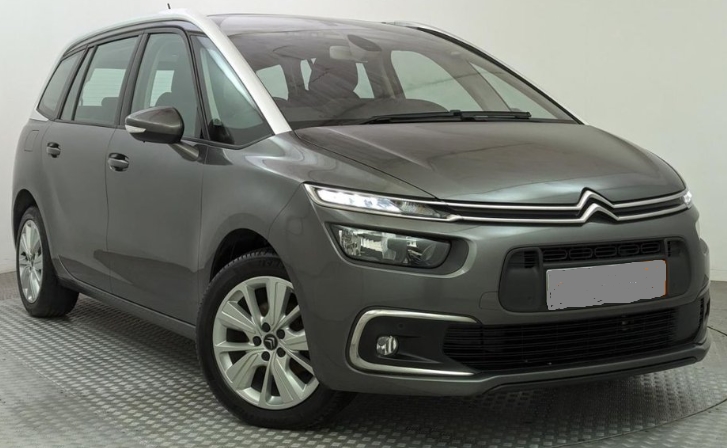
Citroën introduced the all-new second-generation Grand C4 Picasso in 2013. The redesign represented a significant leap forward in engineering, efficiency, and technology.
Built on the PSA Group’s new EMP2 platform, the second-generation model was lighter, more fuel-efficient, and more spacious despite similar exterior dimensions. The new architecture also improved ride quality, handling, and overall refinement.
Exterior Design
The second-generation Grand C4 Picasso adopted a much more modern appearance. Key styling elements included:
- Slim LED daytime running lights
- Split-headlight front design
- Large glass surfaces
- Aerodynamic bodywork
- Distinctive rear lighting
- Improved proportions and a more premium appearance
The design helped distinguish the vehicle from traditional boxy MPVs and reflected Citroën’s evolving styling philosophy.
Interior Improvements
The cabin received major upgrades, including:
- Fully digital instrument displays
- Large touchscreen infotainment system
- Improved seating comfort
- Increased cargo capacity
- Better sound insulation
- Enhanced safety systems
The vehicle retained its seven-seat configuration while improving passenger room in all three rows.
Trim Levels (2013–2016)
During the early years of the second generation, trim levels varied by market but commonly included:
- Attraction
- Seduction
- Selection
- Intensive
- Feel
- Exclusive
- Exclusive+
- Platinum
Higher-end versions featured navigation systems, panoramic roofs, leather upholstery, adaptive cruise control, and advanced driver-assistance systems.
Engine Options
Gasoline engines included:
- 1.2-liter PureTech turbocharged three-cylinder
- 1.6-liter THP turbocharged four-cylinder
Diesel engines included:
- 1.6-liter e-HDi
- 1.6-liter BlueHDi
- 2.0-liter BlueHDi
The introduction of BlueHDi technology improved fuel economy and reduced emissions.
Facelift Model (2016–2018)
In 2016, Citroën launched a substantial facelift for the Grand C4 Picasso.
The update brought:
- Revised front-end styling
- New rear lighting signatures
- Updated infotainment systems
- Enhanced connectivity features
- Improved navigation technology
- Additional driver-assistance systems
- New personalization options
The facelift helped maintain the model’s competitiveness as consumer preferences increasingly shifted toward SUVs and crossovers.
Trim Levels (2016–2018)
During the facelift years, common trim levels included:
- Touch Edition
- Live
- Feel
- Feel Edition
- Flair
- Shine
- Shine Pack
- Origins Edition (later special edition)
The Shine and Shine Pack trims generally represented the highest specification levels, offering features such as:
- Leather upholstery
- Advanced navigation systems
- Panoramic glass roof
- Power tailgate
- Premium audio systems
- Full suite of driver-assistance technologies
Updated Engine Lineup
Gasoline:
- PureTech 110
- PureTech 130
- THP 165
Diesel:
- BlueHDi 100
- BlueHDi 120
- BlueHDi 150
- BlueHDi 160
Automatic transmissions became increasingly popular during this period, particularly with the introduction of improved EAT6 and later EAT8 automatic gearboxes.
Transition to the SpaceTourer Name
In early 2018, Citroën renamed the C4 Picasso and Grand C4 Picasso ranges as the C4 SpaceTourer and Grand C4 SpaceTourer. The mechanical design remained largely unchanged, but the new name aligned with Citroën’s broader branding strategy.
As a result, 2018 marked the final year that the Grand C4 Picasso name appeared on new vehicles.
Sales Success and Market Impact
The Grand C4 Picasso enjoyed considerable commercial success throughout its lifespan. Buyers appreciated its combination of:
- Excellent interior space
- Flexible seating arrangements
- Comfortable ride quality
- Innovative design
- Efficient diesel engines
- Family-friendly practicality
For many years, it competed directly against models such as the Renault Grand Scénic, Ford Grand C-Max, Volkswagen Touran, Opel Zafira, and Peugeot 5008.
The model became especially popular among families needing occasional third-row seating without moving to a larger van-based people carrier.
Legacy
The Grand C4 Picasso helped define the modern European compact MPV segment. Its panoramic windshield, modular seating, and focus on passenger comfort distinguished it from many competitors.
The second-generation model demonstrated how MPVs could combine efficiency, practicality, and modern styling while maintaining outstanding functionality.
Today, used examples remain popular thanks to their spacious interiors, economical engines, and versatile design.
Future Outlook
Although Citroën discontinued the Grand C4 Picasso name and later ended production of the Grand C4 SpaceTourer, the vehicle’s influence remains visible throughout the company’s lineup.
As consumer demand shifted toward SUVs, models such as the Citroën C5 Aircross inherited many of the Grand C4 Picasso’s family-oriented characteristics, including comfort-focused suspension, spacious interiors, and flexible seating arrangements.
While a direct successor to the Grand C4 Picasso appears unlikely given the global decline of the MPV segment, the vehicle remains an important chapter in Citroën’s history. It represents one of the most innovative and practical family vehicles the company has ever produced and continues to be remembered as a benchmark for comfort, versatility, and intelligent design.