Tank 400: The Evolution of a Modern Electrified Off-Road SUV
The Great Wall Motor Tank 400 represents a key step in the evolution of China’s rugged SUV segment, bridging the gap between traditional off-road capability and modern electrification. Positioned between the smaller Tank 300 and the more luxurious Tank 500, the Tank 400 has rapidly evolved since its debut, introducing new powertrains, trim levels, and technologies in just a few years.
From its concept unveiling in 2021 to its expanding lineup through 2026, the Tank 400 has become one of the most versatile models in the Tank brand. This article provides a comprehensive look at its evolution, including production years, trims, engineering developments, and future outlook.
Origins and Concept Development (2021–2023)
The Tank 400 was first revealed as a concept vehicle in 2021 at Auto Shanghai, alongside the Tank 500. It was designed to expand the Tank lineup with a more aggressive, futuristic off-road SUV that combined ruggedness with advanced hybrid technology.
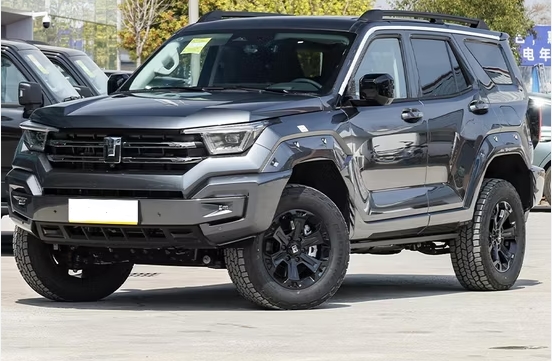
Unlike the retro-inspired Tank 300, the 400 adopted a more angular, modern design language, signaling a shift toward a younger and more tech-focused audience.
Key Early Milestones
- 2021: Concept debut at Auto Shanghai
- April 2023: Production model revealed
- August 25, 2023: Sales officially begin in China
From the outset, the Tank 400 was positioned as a mid-size body-on-frame SUV, combining durability with advanced electrification.
.

.
First Generation Launch (2023–2025)
- Production years: 2023–2025 (initial generation)
- Class: Mid-size SUV
- Platform: GWM Tank ladder-frame chassis
- Assembly: Tianjin, China
The Tank 400 entered production in 2023 as the third model in the Tank lineup, following the Tank 300 and Tank 500.
Core Specifications (Launch Model)
- Engine: 2.0L turbocharged inline-4
- Hybrid option: Hi4-T plug-in hybrid system
- Output: Up to ~408 horsepower (PHEV)
- Transmission: 9-speed automatic
- Drivetrain: Four-wheel drive
The vehicle’s ladder-frame construction ensured strong off-road durability, while the hybrid system introduced modern efficiency.
Initial Trim Levels and Variants (2023–2024)
At launch, the Tank 400 lineup was relatively simple, focusing primarily on plug-in hybrid variants.
1. Tank 400 Hi4-T Functional (2023–Present)
- Introduced: 2023
- Powertrain: 2.0L turbo + electric motor
- Output: ~402 horsepower
- Electric range: ~65 miles (CLTC ~105 km)
This trim served as the entry-level hybrid model, offering full off-road capability with electrified efficiency.
2. Tank 400 Hi4-T Extended Range (EREV) (2023–Present)
- Role: Higher-spec hybrid variant
- Features:
- Same 2.0L PHEV system
- Enhanced equipment and comfort features
- Slightly higher pricing tier
This trim focused on combining performance with improved luxury and usability.
Key Characteristics of Early Trims
- Exclusive focus on plug-in hybrid technology
- Standard four-wheel drive
- Five-seat configuration
- Strong emphasis on off-road capability
These early trims established the Tank 400 as a hybrid-first SUV, unlike many competitors.
Powertrain Expansion and Diversification (2025)
By 2025, the Tank 400 lineup expanded significantly, introducing multiple new engine options and a broader range of trims.
New Powertrain Options (2025)
1. 2.0L Turbo Gasoline (2025–Present)
- Output: ~245 horsepower
- Role: Entry-level internal combustion option
2. 2.0L Mild Hybrid (2025–Present)
- Output: ~252 horsepower
- Technology: 48V hybrid system
3. 2.4L Turbo Diesel (2025)
- Output: ~186 horsepower
- Production window: February–October 2025
The addition of gasoline and diesel engines marked a major shift, making the Tank 400 more accessible in global markets.
Major Evolution: Facelift and Second Phase (2025–Present)
The most significant update in the Tank 400’s evolution came with the 2025 facelift, which introduced new styling and advanced hybrid systems.
- Facelift production: 2025–present
- Updated dimensions: Slightly revised exterior size and design
Key Changes
- Refined exterior styling
- Improved interior materials
- Expanded powertrain lineup
- Introduction of high-performance hybrid systems
Hi4-Z High-Performance Hybrid (2025–Present)
One of the most important developments was the introduction of the Hi4-Z system.
Tank 400 Hi4-Z Smart (2025–Present)
- Powertrain: 2.0L turbo + dual electric motors
- Output: Up to ~852–864 horsepower
- 0–60 mph: ~4.1 seconds
- Battery: ~59 kWh
- Electric range: ~124 miles (CLTC ~200 km)
This variant transformed the Tank 400 into a high-performance hybrid SUV, rivaling far more expensive competitors.
Updated Hi4-T Variant (2025–Present)
The facelift also introduced an updated Hi4-T system:
- Output: ~422 horsepower
- Battery: ~37.1 kWh
- 0–60 mph: ~6.5 seconds
This version refined the original hybrid system, improving efficiency and performance.
Trim Level Summary (2023–Present)
Across its evolution, the Tank 400 has included the following trims and variants:
Initial Hybrid Trims (2023–Present)
- Hi4-T Functional
- Hi4-T Extended Range (EREV)
Expanded Lineup (2025–Present)
- 2.0T Gasoline (base trim)
- 2.0T Mild Hybrid
- 2.4T Diesel (limited production)
Advanced Hybrid Trims (2025–Present)
- Hi4-T (updated version)
- Hi4-Z Smart (high-performance flagship)
These trims reflect a shift from a simple hybrid lineup to a diverse, multi-powertrain portfolio.
Engineering and Technology Evolution
1. Body-on-Frame Architecture
The Tank 400 retains a ladder-frame chassis, providing:
- High durability
- Strong towing capability
- Excellent off-road performance
2. Hybrid Technology Progression
The vehicle has evolved through multiple electrification stages:
- Hi4-T plug-in hybrid (2023)
- Mild hybrid and ICE options (2025)
- Hi4-Z high-performance hybrid (2025)
This progression highlights rapid technological advancement.
3. Off-Road Capability
- Locking differentials
- Advanced terrain modes
- High approach and departure angles
These features maintain the Tank brand’s off-road focus.
4. Interior and Digital Features
- Large infotainment display
- Digital instrument cluster
- Advanced driver assistance systems
The interior shares similarities with the Tank 500, emphasizing luxury.
Design Evolution
The Tank 400 stands out for its bold, futuristic styling:
- Angular body lines
- Wide stance and aggressive proportions
- Modern LED lighting
Dimensions have remained consistent:
- Length: ~196 inches
- Width: ~77 inches
- Height: ~75 inches
The 2025 facelift introduced subtle refinements rather than a full redesign.
Market Performance and Reception
The Tank 400 has achieved strong sales growth:
- 2023: ~9,500 units
- 2024: ~44,600 units
- 2025: ~44,000 units
This rapid growth reflects strong demand for electrified off-road SUVs.
Position in the Global Market
The Tank 400 competes with:
- Jeep Wrangler
- Toyota Land Cruiser Prado
- Ford Bronco
Its key advantages include:
- Hybrid powertrains
- Competitive pricing
- Modern design
Future Outlook
The Tank 400 is expected to continue evolving as electrification accelerates.
Potential Future Developments
- Expanded global availability
- Further improvements to hybrid systems
- Possible fully electric variant
- Enhanced autonomous driving features
The success of the Hi4-Z system suggests performance hybrids will remain central to its future.
The Tank 400 has evolved rapidly from a concept in 2021 to a technologically advanced SUV by 2026. Initially launched as a plug-in hybrid off-roader, it has expanded into a diverse lineup featuring gasoline, diesel, and high-performance hybrid variants.
With its combination of rugged construction, advanced electrification, and bold design, the Tank 400 represents a new generation of off-road vehicles. As Great Wall Motor continues to innovate and expand globally, the Tank 400 is poised to remain a key player in the evolving SUV market.