The Evolution of the Changhe Q35: Changhe’s Compact SUV Experiment
The Changhe Q35 was one of the final passenger vehicles developed by Chinese automaker Changhe before the company faded from the mainstream automotive market. Introduced during the rapid expansion of China’s crossover SUV segment, the Q35 was designed to attract younger buyers seeking affordable styling, modern technology, and urban practicality. Although the model had a relatively short production run, it reflected an important era in the Chinese auto industry, when domestic manufacturers aggressively expanded into the booming compact SUV category.
Background and Development
Changhe was founded in 1970 and initially focused on producing small commercial vehicles and microvans. The company became widely associated with Suzuki through a long-running partnership that allowed it to manufacture Suzuki-based vehicles for the Chinese market. Over time, Changhe shifted toward producing its own branded passenger vehicles, particularly after becoming part of the BAIC Group.
By the mid-2010s, compact crossovers had become one of the fastest-growing vehicle categories in China. In response, Changhe launched a family of SUVs that included the Q25, Q35, and later the larger Q7. The Q35 was positioned above the smaller Q25 and shared its platform and many components with the BAIC Senova X35.
The Q35 officially debuted at the 2016 Chengdu Auto Show and entered production shortly beforehand. Production continued from 2015 through 2020, while model years generally ranged from 2016 to 2020.
.

.
Design and Styling
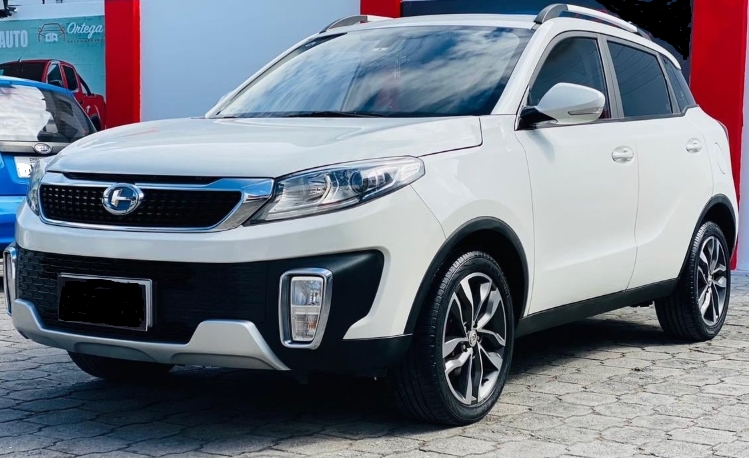
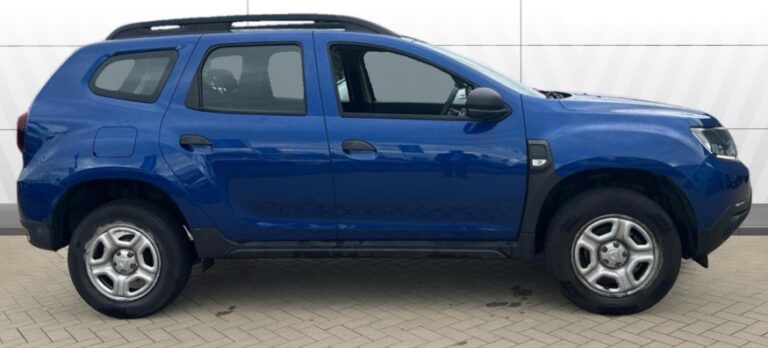
The Changhe Q35 was developed as a compact crossover SUV with a youthful and sporty appearance. Designers gave the vehicle a large chrome front grille, vertically oriented fog lamp housings, roof rails, and a floating-roof effect created by darkened rear pillars. The styling attempted to separate the Q35 from its mechanically related Senova counterpart.
Dimensionally, the Q35 measured approximately 168.7 inches long, 71.5 inches wide, and 65.6 inches high, with a wheelbase of about 99.2 inches. This made it competitive with other entry-level subcompact and compact crossovers sold in China during the same period.
Inside, the cabin emphasized practicality rather than luxury. The dashboard included a centrally mounted touchscreen infotainment system, multifunction steering wheel, and relatively simple climate controls. Higher trims added leather upholstery, upgraded audio systems, and panoramic sunroofs. Cargo capacity was respectable for the segment, with rear seats that could fold flat to increase storage space.
Powertrain and Mechanical Specifications
Throughout its production run, the Q35 remained mechanically straightforward. Most versions used a naturally aspirated 1.5-liter inline-four gasoline engine producing approximately 114 to 116 horsepower and around 148 Nm of torque.
Transmission options included:
- 5-speed manual transmission
- 4-speed automatic transmission
The Q35 used a front-wheel-drive layout and rode on a MacPherson front suspension with a torsion beam rear suspension. While not designed for performance driving, the setup provided acceptable comfort for city and suburban use.
Some international and secondary-market reports later mentioned more powerful engine variations and dual-clutch transmissions, though the core Chinese-market models primarily retained the naturally aspirated 1.5-liter engine paired with simpler transmissions.
Production Years and Trim Levels
2016 Changhe Q35
The Q35 launched in China during 2016 as a new compact crossover. Initial pricing ranged from approximately 65,900 yuan to 89,900 yuan, placing it within the affordable SUV category.
Early trim structures varied slightly depending on region and export market, but commonly included:
- Standard
- Luxury
- Elite
The Standard trim included basic infotainment, Bluetooth connectivity, rear parking sensors, and cloth upholstery. The Luxury trim added features such as upgraded interior materials, alloy wheels, and additional comfort equipment. The Elite trim included premium equipment such as leather seating, panoramic sunroof options, and enhanced audio systems.
2017 Model Year
For 2017, Changhe largely carried over the Q35 unchanged. The company focused on expanding awareness of the model rather than introducing major engineering revisions. Safety equipment on better-equipped trims included:
- ABS with electronic brake-force distribution
- Electronic stability control
- Tire-pressure monitoring systems
- Hill-start assist
- Multiple airbags
The Q35’s youthful styling and low price continued to be major selling points.
2018 Model Year
The 2018 model year represented the Q35’s strongest export period. Changhe began marketing the vehicle in regions outside China, including parts of the Middle East, Africa, and South America. In Egypt, the Q35 was offered with a relatively high equipment level and became one of the more visible Changhe-branded exports.
Export-market trims often included features such as:
- 17-inch alloy wheels
- Rearview camera
- Cruise control
- Sunroof
- Folding side mirrors
- 7-inch touchscreen display
- Six-speaker audio systems
The vehicle’s affordability made it attractive in developing markets where buyers wanted SUV styling at a low purchase price.
2019 Model Year
By 2019, competition in China’s compact SUV market had intensified dramatically. Major domestic manufacturers such as Geely, Changan, Haval, and Chery introduced more advanced models with turbocharged engines, larger touchscreens, and modern driver-assistance technologies. As a result, the Q35 began losing market momentum.
Changhe made only limited updates during this period. Most changes involved equipment packaging and market-specific configurations rather than major redesigns.
2020 Final Production Year
Production of the Q35 effectively ended during 2020. Sales had declined sharply by that point, and Changhe itself was experiencing broader corporate struggles. According to sales tracking data, annual Q35 sales fell significantly after earlier peaks in 2016 and 2017.
The final versions of the Q35 remained mechanically similar to earlier models, retaining the same naturally aspirated engine and front-wheel-drive layout. No second-generation version was introduced.
Sales Performance
The Q35 experienced moderate success shortly after launch. Sales were strongest during the model’s first two full years on the market. Chinese sales figures show:
- 2016: approximately 16,032 units
- 2017: approximately 13,653 units
- 2018: approximately 12,140 units
- 2019: approximately 4,447 units
- 2020: fewer than 1,000 units
These figures reflected the increasingly difficult environment faced by smaller Chinese automakers competing against larger domestic and international brands.
Legacy and Industry Importance
Although the Changhe Q35 was never a globally recognized vehicle, it represented an important stage in the development of Chinese crossover SUVs. During the 2010s, manufacturers throughout China rapidly shifted away from sedans and compact vans toward SUVs, responding to changing consumer preferences.
The Q35 also demonstrated how smaller automakers attempted to remain competitive by sharing platforms and engineering resources within larger automotive groups. Its close relationship to the Senova X35 highlighted BAIC’s strategy of spreading development costs across multiple brands.
For export markets, the Q35 served as an affordable entry point into SUV ownership. Buyers in regions with limited purchasing power often appreciated its combination of modern styling, generous equipment, and relatively low operating costs.
Future Outlook
The Changhe Q35 itself has no direct successor. Changhe as a passenger-car brand largely disappeared after 2020, and reports indicate that the company’s operations were discontinued by 2022.
However, the vehicle remains part of the broader story of China’s automotive transformation. Many lessons learned from vehicles like the Q35 helped Chinese manufacturers refine their approach to design, technology, and export development. Today, Chinese automakers such as BYD, Geely, Chery, and Great Wall have become globally competitive, producing vehicles far more advanced than early crossover models like the Q35.
While the Changhe Q35 may not be remembered as a groundbreaking SUV, it remains a notable example of China’s rapidly evolving automotive industry during the late 2010s.