The Evolution of the Changhe Q7: Changhe’s Ambitious Mid-Size SUV
The Changhe Q7 was one of the most ambitious vehicles ever produced by the Chinese automaker Changhe. Introduced during a period when Chinese manufacturers were rapidly expanding into the crossover and SUV market, the Q7 represented Changhe’s attempt to move beyond small commercial vans and compact economy cars into a more premium and family-oriented segment. Although the model had a relatively short production life, the Q7 became notable for its bold styling, generous equipment levels, and competitive pricing.
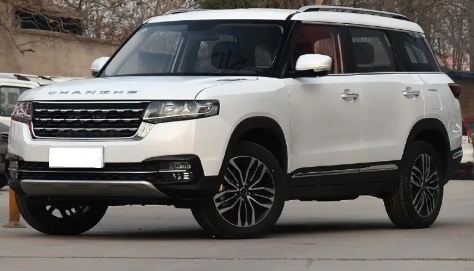
Produced from 2017 through 2020 for the 2018–2020 model years, the Changhe Q7 was aimed primarily at buyers in China’s growing second- and third-tier cities. The SUV combined modern technology, large interior space, and a design that drew significant attention because of its resemblance to Land Rover products, particularly the Range Rover lineup.
Background of Changhe
Changhe, officially Jiangxi Changhe Automobile Co. Ltd., was founded in 1970 in Jiangxi Province, China. The company initially focused on commercial vehicles and later became closely associated with Suzuki through a long-running partnership. Over the decades, Changhe produced small vans, compact passenger cars, and affordable utility vehicles. Eventually, the company became part of BAIC Group, one of China’s major state-owned automotive corporations.
By the mid-2010s, Chinese consumers increasingly preferred SUVs and crossovers. Manufacturers across China rushed to introduce larger and more upscale models, and Changhe responded by developing the Q7. The vehicle was positioned above smaller Changhe crossovers such as the Q25 and was intended to improve the company’s image in the growing SUV market.
.
NO MORE dead batteries with this:

.
Debut and Development
The Changhe Q7 made its public debut at the 2017 Guangzhou Auto Show. Production officially began in late 2017, while sales started in March 2018 in the Chinese domestic market.
The Q7 was built on a platform related to the BAIC BJ20. It used a front-engine, front-wheel-drive layout and featured a unibody crossover design rather than a traditional body-on-frame SUV structure. Despite its moderate price, the vehicle attempted to present a premium appearance through a large grille, floating roof styling, and upscale interior technology.
Dimensionally, the Q7 measured approximately 183.3 inches long, 73 inches wide, and 67.7 inches tall, with a wheelbase of 105.1 inches. These measurements placed it firmly within the mid-size crossover category. The SUV offered either five-seat or optional seven-seat configurations depending on the trim level and market specification.
Powertrain and Mechanical Specifications
Throughout its production run, the Changhe Q7 was powered primarily by a turbocharged 1.5-liter inline-four gasoline engine. The engine produced approximately 150 horsepower and around 200–210 Nm of torque depending on specification references. Transmission choices included a six-speed manual gearbox or a continuously variable transmission (CVT).
The vehicle was designed mainly for urban and suburban driving rather than off-road performance. Unlike many SUVs that emphasized all-wheel-drive capability, the Q7 remained front-wheel drive only. However, its suspension tuning and elevated ride height appealed to family buyers looking for comfort and practicality.
Fuel economy figures varied depending on trim and transmission choice, but the small turbocharged engine was intended to balance performance with efficiency in a competitive Chinese market.
Trim Levels and Model Variants
The Changhe Q7 lineup evolved modestly during its short production life. The company offered several trim levels with varying combinations of comfort, seating arrangements, and technology features.
2018 Launch Models
When the Q7 launched in 2018, Changhe introduced multiple variants based on manual or CVT transmissions, five-seat or seven-seat layouts, and equipment packages. Documented trims included:
- Comfort Model
- Luxury Model
- Elite Model
Some examples included:
- 1.5T Manual Two-Wheel-Drive 5-Seat Comfort Model
- 1.5T CVT Two-Wheel-Drive 7-Seat Luxury Model
- 1.5T CVT Elite Model
The entry-level Comfort trim focused on affordability and practicality. It included features such as air conditioning, power accessories, Bluetooth connectivity, and a touchscreen infotainment system.
The Luxury trim added higher-end convenience features, including upgraded upholstery, improved infotainment, heated front seats, sunroof availability, and additional driver-assistance technologies.
At the top of the lineup, the Elite trim included premium interior finishes, panoramic sunroof availability, larger infotainment displays, leather seating surfaces, and digital instrumentation on higher-spec models.
One of the Q7’s most notable features was its vertically oriented center touchscreen, which resembled systems found in more expensive luxury SUVs. Higher-end models also received digital instrument clusters instead of traditional analog gauges.
2019 Model Year
For 2019, the Changhe Q7 remained largely unchanged mechanically. Changhe continued offering the same core engine and transmission choices while refining equipment packages and dealer availability.
The trim structure still centered around Standard or Comfort, Luxury, and Elite-style configurations. The company emphasized value pricing and generous technology features compared with similarly priced competitors.
Sales during 2019 reflected moderate consumer interest. The Q7 sold approximately 5,786 units in China that year, following roughly 6,156 units sold during 2018.
2020 Final Production Year
Production of the Changhe Q7 effectively ended during 2020. By this point, Changhe itself was struggling within the highly competitive Chinese automotive market. The company faced declining sales, increased competition from better-known domestic brands, and changing consumer expectations regarding electrification and advanced technology.
Only limited numbers of Q7 vehicles were sold in 2020, with reported Chinese sales dropping to just 549 units.
The final production vehicles retained the same general design and mechanical package introduced in 2018. No major redesign or second generation was ever developed.
Design and Public Reception
The Changhe Q7 attracted widespread attention because of its styling. Many observers noted that the vehicle strongly resembled contemporary Range Rover models, especially in profile and roofline design. While some criticized the similarity, others appreciated the upscale appearance at a far lower price point.
Inside, the Q7 impressed buyers with a spacious cabin and technology features uncommon in affordable Chinese SUVs at the time. The large portrait-style touchscreen became one of the vehicle’s signature elements.
Pricing also contributed to the vehicle’s appeal. At launch, the Q7 ranged from approximately 87,900 yuan to 148,900 yuan, making it significantly less expensive than imported or joint-venture competitors.
International Presence
Although primarily intended for China, some Changhe Q7 models reached export markets through independent importers. In certain regions, the SUV was marketed as the BAIC Q7 because of Changhe’s connection to BAIC Group. Imported examples appeared in countries including Vietnam and parts of Eastern Europe.
These export vehicles were usually equipped with high-level trims and automatic transmissions to appeal to buyers seeking affordable, well-equipped SUVs.
Future Outlook and Legacy
The Changhe Q7 never received a direct successor. Changhe itself ceased operations as an active automotive brand after years of declining relevance and increasing consolidation within China’s auto industry. By 2022, the company’s products had been discontinued and its official website had gone offline.
Even so, the Q7 remains an interesting example of China’s automotive development during the late 2010s. It demonstrated how smaller Chinese manufacturers attempted to compete with larger domestic and international brands by offering luxury-inspired styling, advanced technology, and aggressive pricing.
Today, surviving Changhe Q7 models continue to circulate in the used-car market in China and some export regions. While the SUV never became a major global success, it represented an important chapter in Changhe’s history and reflected the rapid transformation of China’s automotive industry during the crossover boom of the late 2010s.