The Evolution of the Jinbei Granse: China’s Premium Toyota Granvia-Derived Van
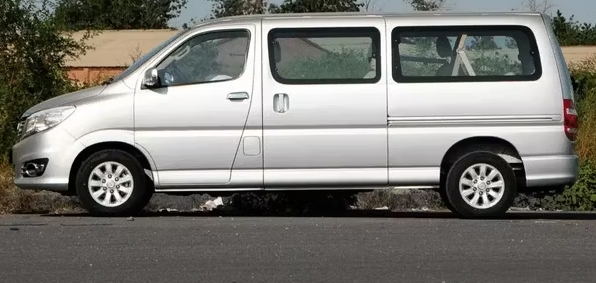
The Jinbei Granse is one of the most significant passenger vans ever produced by the Chinese manufacturer Jinbei. Developed from the Toyota Granvia and closely related to the Toyota HiAce family, the Granse was designed to offer a more refined and upscale alternative to the utilitarian Jinbei Haise. Over an 18-year production run from 2002 to 2020, the Granse evolved through multiple facelifts, numerous powertrain options, and a wide range of passenger and commercial configurations. During its lifetime, it served as a family vehicle, executive shuttle, tourism transporter, airport van, cargo carrier, and government fleet vehicle.
While many Chinese commercial vehicles focused primarily on affordability, the Granse was positioned as a premium offering within Jinbei’s lineup. It combined Toyota-derived engineering with localized production, giving buyers access to a spacious and durable van at a lower price than imported competitors. By the time production ended in 2020, the Granse had become one of the best-known premium vans in the Chinese market and an important chapter in Jinbei’s history.
Origins of the Jinbei Granse
The origins of the Granse can be traced to Jinbei’s long-standing relationship with Toyota. Beginning in the early 1990s, Jinbei produced licensed versions of the Toyota HiAce for the Chinese market. These vehicles became highly successful, helping establish Jinbei as one of China’s leading manufacturers of commercial vans.
In 2002, Jinbei expanded its lineup by introducing the Granse, known in Chinese as “Geruisi.” Unlike the Haise, which was based primarily on the Toyota HiAce, the Granse was derived from the Toyota Granvia, a more passenger-oriented and upscale van. The new model was intended to attract business users, hotels, tourism operators, and government agencies that required greater comfort and refinement than traditional commercial vans offered.
.
NO MORE dead batteries with this:

.
Production Years
The Jinbei Granse remained in production from 2002 through 2020.
Production can be divided into four major phases:
- First Generation (SY6471ES): 2002–2005
- First Facelift (SY6470): 2005–2009
- Granse 3 Second Facelift: 2009–2020
- Third Facelift: 2014–2020
Although newer versions were introduced, Jinbei often continued producing older variants simultaneously, allowing customers to choose between lower-priced and higher-specification models. This strategy was common among Chinese commercial vehicle manufacturers and helped extend the Granse’s market presence.
First Generation Jinbei Granse (2002–2005)
The original Granse debuted in 2002 and closely mirrored the Toyota Granvia sold in other markets.
Its design featured:
- Rounded front-end styling
- Large passenger cabin
- Sliding side doors
- Multiple seating layouts
- Rear-wheel-drive architecture
The vehicle immediately stood apart from the Haise by emphasizing passenger comfort rather than pure utility.
Models and Trim Levels
The early Granse lineup included:
- Standard Passenger Van
- Deluxe Passenger Van
- Luxury Passenger Van
- Executive Shuttle
- Business Edition
- Cargo Van
Depending on the market, seating capacities ranged from seven to eleven passengers.
Engine Options
The first-generation Granse offered one of the broadest engine ranges in Jinbei’s lineup:
- 2.0-liter V19 gasoline engine
- 2.2-liter V22 gasoline engine
- 2.4-liter Toyota 2TZ-FZE gasoline engine
- 2.5-liter DK4A diesel engine
- 2.7-liter Toyota 2TR-FE gasoline engine
Both five-speed manual and four-speed automatic transmissions were available. This wide selection allowed buyers to prioritize either affordability, fuel economy, or performance.
First Facelift (2005–2009)
In 2005, Jinbei introduced the first major facelift.
Externally, the vehicle received:
- Revised front grille
- Updated headlights
- Clear-lens taillights
- Refreshed bumpers
- Improved interior materials
The facelift aligned the Granse more closely with contemporary Toyota HiAce and Granvia updates seen in international markets. Mechanical changes were relatively minor, but refinement and comfort improved significantly.
Models and Trim Levels
The facelifted lineup expanded to include:
- Standard
- Comfort
- Deluxe
- Luxury
- Executive
- Business Shuttle
Several seating arrangements were offered, including seven-seat executive versions and larger nine- and eleven-seat passenger configurations.
Higher-end trims introduced:
- Improved air conditioning
- Power accessories
- Enhanced upholstery
- Upgraded audio systems
- Better sound insulation
These changes strengthened the Granse’s position as a premium domestic van.
Granse 3 (2009–2020)
The most significant update arrived in 2009 with the introduction of the Granse 3.
Unlike previous versions, which closely followed Toyota styling, the Granse 3 featured a front and rear design developed specifically by Jinbei. This represented a major step toward creating an independent identity for the vehicle.
Key changes included:
- Redesigned front fascia
- New grille design
- Updated headlights
- Revised rear lighting
- Modernized dashboard
- Improved safety equipment
Although the underlying architecture remained familiar, the vehicle appeared considerably more contemporary.
Models and Trim Levels
The Granse 3 lineup became one of the broadest in the vehicle’s history.
Common trims included:
- Classic
- Comfort
- Luxury
- Premium
- Business Executive
- Executive Flagship
- First-Class Executive
Documentation from the period also shows highly equipped models such as:
- Business Flagship 7-Seat
- First-Class Super Luxury 7-Seat
- Luxury Automatic
- Premium Executive Automatic
These upper-tier variants were designed to compete with imported executive vans and often featured captain’s chairs, upgraded interiors, and automatic transmissions.
Third Facelift (2014–2020)
The final major evolution of the Granse arrived in 2014.
This version received the most extensive visual redesign of the model’s lifespan.
Updates included:
- Completely revised front end
- New rear styling
- Updated interior trim
- Improved seating options
- Modernized equipment packages
The vehicle maintained the basic structure of previous Granse models but appeared significantly more modern. It remained in production alongside the Granse 3 until 2020.
Models and Trim Levels
By the mid-2010s, available trims generally included:
- Classic
- Comfort
- Luxury
- Executive
- Premium Executive
- Long-Wheelbase Luxury
- Short-Wheelbase Luxury
A documented example from 2014 was the Granse 2.4L 9-Seat Luxury Long Wheelbase model, which targeted business transportation and tourism operators.
Commercial Variants
The Granse platform also spawned several commercial derivatives.
Jinbei Kuaiyun
The Kuaiyun was a cargo-oriented version of the Granse designed for commercial transport and delivery services.
Jinbei Xinkuaiyun
An updated cargo model that continued the concept with refreshed styling and improved equipment.
These variants expanded the Granse platform beyond passenger transportation and helped increase overall sales throughout its production life.
Market Position and Export Success
The Granse occupied an unusual position within the Chinese market.
It competed against:
- Imported Toyota vans
- Domestic commercial vehicles
- Executive shuttle buses
- Emerging MPVs
Its strengths included:
- Toyota-derived engineering
- Spacious interiors
- Multiple seating configurations
- Wide engine selection
- Competitive pricing
The vehicle was exported to several international markets, including parts of South America, Africa, and Southeast Asia. In many regions, it became known as a durable and affordable alternative to imported Japanese vans.
Legacy and Future Outlook
Production of all Granse variants ended during 2020. The vehicle was effectively succeeded by the Jinbei Haise King (Haishiwang), a newer generation van designed to modernize Jinbei’s commercial vehicle lineup. The Haise King adopted updated styling, improved safety equipment, and more modern powertrains while continuing the practical philosophy that had made the Granse successful.
The legacy of the Jinbei Granse is considerable. It demonstrated that a Chinese manufacturer could successfully develop a premium passenger van using proven international engineering while adapting the vehicle to local market needs. Over nearly two decades, it evolved from a near-direct Toyota Granvia derivative into a distinctly Jinbei product with its own styling and market identity.
Today, many Granse vans remain in service throughout China and export markets, particularly in shuttle operations, tourism fleets, and commercial transportation. Its long production run, extensive trim lineup, and continuous evolution make it one of the most important vans ever produced by Jinbei and a noteworthy chapter in the development of China’s automotive industry.