The Evolution of the Jinbei H2L: China’s Long-Wheelbase Commercial Van
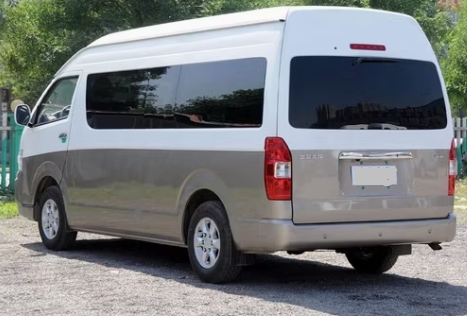
The Jinbei H2L is an important but often overlooked vehicle in the history of China’s commercial transportation industry. Produced by Jinbei Automobile, one of China’s best-known manufacturers of vans and commercial vehicles, the H2L was developed as a long-wheelbase version of the Jinbei H2. Designed to provide greater passenger capacity, increased cargo volume, and improved versatility, the H2L became a popular choice among shuttle operators, tourism companies, government agencies, fleet customers, and small businesses.
Building upon decades of experience producing Toyota HiAce-derived vans, Jinbei positioned the H2L as a practical and affordable alternative to imported commercial vehicles. While the model never achieved the global recognition of the Toyota HiAce or Ford Transit, it became a familiar presence throughout China and various export markets. Its combination of simplicity, durability, and flexibility helped establish it as a reliable transportation solution during a period of rapid economic growth and expanding infrastructure development.
Origins of the Jinbei H2L
To understand the H2L, it is important to understand the broader history of Jinbei’s van lineup.
Since the early 1990s, Jinbei had built its reputation on producing commercial vans derived from the Toyota HiAce. Through licensing agreements and localized development, the company created a wide range of passenger and cargo vehicles that became common throughout China.
As customer demand evolved during the 2000s, businesses increasingly sought larger vans capable of carrying more passengers and cargo. Jinbei responded by expanding its Grand Haise family of vehicles, introducing multiple wheelbase lengths and body styles.
The Jinbei H2 emerged as a modernized member of this lineup, while the H2L was developed as its long-wheelbase variant. The additional length allowed operators to transport more passengers or equipment without moving into the significantly larger bus segment.
.
NO MORE dead batteries with this:

.
Development and Launch
The Jinbei H2L entered production during the late 2000s, with market availability beginning around 2008 and 2009 depending on region and configuration.
Unlike some commercial vehicles that receive entirely new platforms with each generation, the H2L evolved from Jinbei’s proven Haise and Grand Haise architecture. This approach allowed the company to reduce development costs while benefiting from an established reputation for durability and ease of maintenance.
The vehicle featured a larger body than the standard H2 and was designed primarily for:
- Passenger transportation
- Tourism operations
- Airport shuttle services
- Corporate transportation
- Government fleets
- Cargo hauling
- Specialized commercial conversions
The H2L quickly became one of the more versatile products in the Jinbei commercial vehicle range.
Production Years
The Jinbei H2L was produced from approximately 2008 through the mid-2010s, although availability varied depending on market and configuration.
Production timeline:
- 2008: Initial introduction
- 2009–2011: Expansion of trim levels and engine options
- 2012–2014: Continued production with equipment upgrades
- 2015–2017: Gradual phase-out as newer Jinbei vans entered the market
In some export markets, inventory and localized production continued beyond the primary production period.
Unlike mainstream passenger vehicles that follow clearly defined model-year updates, commercial vehicles such as the H2L often remain in production with minimal changes for extended periods. Consequently, specific production dates sometimes overlap depending on regional sales programs.
Design Philosophy
The H2L followed the traditional design philosophy that had made Jinbei vans successful for decades.
Key design priorities included:
- Maximum interior space
- Ease of maintenance
- Durable mechanical components
- Flexible seating arrangements
- Low operating costs
- Commercial practicality
The extended wheelbase significantly increased passenger and cargo capacity compared with the standard H2.
Externally, the H2L featured:
- A tall roofline
- Large side windows
- Sliding passenger doors
- Box-shaped body construction
- High seating position
- Large rear cargo access
The design emphasized function over style, a common characteristic among commercial vans worldwide.
Models and Trim Levels
One challenge in documenting the H2L is that Jinbei frequently adjusted equipment levels based on customer requirements, fleet contracts, and regional market conditions. Nevertheless, several trim categories remained consistent throughout production.
Standard H2L
The Standard model served as the entry-level configuration.
Features typically included:
- Vinyl or cloth upholstery
- Basic climate controls
- Manual windows
- Steel wheels
- Simple audio system
- Passenger seating for multiple occupants
This version was primarily targeted at fleet operators and commercial users.
Comfort H2L
The Comfort trim added convenience features aimed at improving passenger experience.
Common equipment included:
- Enhanced cloth seating
- Improved interior trim
- Air conditioning
- Power accessories
- Upgraded sound system
- Additional storage compartments
The Comfort model became popular among tourism operators and small businesses.
Deluxe H2L
The Deluxe trim introduced more premium features.
Equipment often included:
- Higher-quality interior materials
- Improved passenger seating
- Decorative trim accents
- Enhanced climate control systems
- Additional sound insulation
- Improved lighting features
This version was frequently used for executive transportation and hotel shuttle services.
Business Edition
Some markets offered a Business Edition focused on corporate transportation.
Features could include:
- Individual passenger seating
- Enhanced rear cabin amenities
- Privacy glass
- Premium upholstery
- Additional comfort equipment
Business-oriented versions helped the H2L compete with more expensive imported vans.
Cargo and Utility Variants
In addition to passenger models, Jinbei offered cargo-focused configurations.
These included:
- Panel van versions
- Cargo transport models
- Utility fleet vehicles
- Specialized service vehicles
Cargo variants prioritized load capacity over passenger accommodations.
Engine Options Throughout Production
The H2L utilized a variety of gasoline and diesel engines during its production life.
Depending on model year and market, engines included:
2.0-Liter Gasoline Engine
One of the most common powerplants.
Characteristics included:
- Four-cylinder design
- Manual transmission
- Reasonable fuel economy
- Low maintenance costs
2.2-Liter Gasoline Engine
Introduced to provide additional performance.
Benefits included:
- Increased horsepower
- Improved highway cruising
- Better passenger-load capability
2.4-Liter Gasoline Engine
Available in higher-end models.
Features included:
- Stronger torque output
- Improved acceleration
- Better performance when fully loaded
Diesel Engines
Several diesel options were offered depending on market requirements.
Advantages included:
- Superior fuel efficiency
- Increased low-speed torque
- Lower operating costs for commercial operators
Most engines were paired with five-speed manual transmissions, although some later models offered additional transmission choices.
Passenger Capacity and Configurations
One of the H2L’s greatest strengths was flexibility.
Depending on configuration, seating capacities included:
- 9 passengers
- 11 passengers
- 13 passengers
- 14 passengers
- 15 passengers
This variety allowed operators to tailor vehicles to specific transportation requirements.
Common uses included:
- School transportation
- Airport shuttles
- Hotel transportation
- Tour operations
- Employee commuting
- Public transportation services
The long-wheelbase design improved both passenger comfort and cargo capacity.
Market Performance
The H2L entered a highly competitive market that included vehicles from:
- Toyota
- Foton
- King Long
- Dongfeng
- Changan
Despite strong competition, the H2L maintained several advantages:
- Affordable purchase price
- Widely available replacement parts
- Proven mechanical design
- Strong dealer support
- Familiar operating characteristics
These factors contributed to steady sales throughout its production run.
The vehicle proved particularly popular among operators seeking practical transportation solutions without the expense associated with imported alternatives.
Export Markets
The H2L was sold in various international markets, particularly in developing regions.
Export destinations included:
- Africa
- South America
- Southeast Asia
- The Middle East
Its simple engineering and robust construction made it well suited for regions where reliability and ease of repair were more important than advanced technology.
Legacy and Future Outlook
Although the Jinbei H2L is no longer a major part of Jinbei’s current lineup, its influence remains evident throughout the company’s modern commercial vehicle range.
The vehicle demonstrated the effectiveness of a practical, long-wheelbase commercial van tailored to local market needs. It also helped strengthen Jinbei’s reputation as one of China’s leading manufacturers of passenger and cargo vans.
As China’s commercial vehicle market increasingly transitions toward electric powertrains, improved safety systems, and advanced connectivity features, vehicles such as the H2L represent an earlier era of transportation focused on durability, affordability, and simplicity.
Modern successors have largely replaced the H2L in Jinbei’s portfolio, offering more efficient engines, enhanced safety equipment, and improved comfort. However, many H2L vans remain in service today, particularly in commercial fleets where their reliability and low operating costs continue to be valued.
Looking back, the Jinbei H2L served as an important bridge between traditional commercial vans and the more sophisticated transportation solutions that followed. Its combination of passenger capacity, flexibility, and affordability ensured its place in the history of China’s commercial vehicle industry, making it one of the more significant long-wheelbase vans produced by Jinbei during the company’s decades-long evolution.