The Evolution of the Joylong iFly: China’s Affordable Luxury MPV
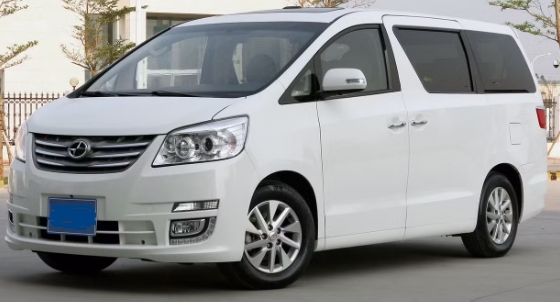
The Joylong iFly is a full-size multi-purpose vehicle (MPV) produced by Jiangsu Joylong Automobile, a Chinese manufacturer established in 2007. Introduced for the 2014 model year, the iFly was developed to provide buyers with a spacious and well-equipped family and executive vehicle at a significantly lower price than imported luxury MPVs. Although the vehicle has often attracted attention for its styling, which closely resembles the second-generation Toyota Alphard, the iFly has carved out its own place in the Chinese market by offering practical transportation, multiple powertrain choices, and an expanding lineup that includes electric variants.
Produced continuously since 2014, the Joylong iFly has evolved gradually rather than through complete redesigns. Its updates have focused primarily on new engines, improved equipment, and the addition of battery-electric models to meet the growing demand for new-energy vehicles.
Development and History
Jiangsu Joylong Automobile was founded in 2007 in Yangzhou, Jiangsu Province, China. The company specializes in commercial vehicles, vans, minibuses, and MPVs, with many of its products exported to markets throughout Asia, Africa, the Middle East, and South America. Before introducing the iFly, Joylong was best known for its commercial vans and buses.
Development of the iFly began during the early 2010s. Prototype vehicles were first photographed in 2013, revealing an MPV whose exterior design closely resembled Toyota’s popular Alphard. Industry observers noted the similarities immediately, and the vehicle became one of several Chinese MPVs inspired by the Japanese luxury people mover. Despite the controversy, Joylong proceeded with production, targeting customers seeking Alphard-like styling at a much lower purchase price.
The production version officially debuted at the 2014 Beijing Auto Show before entering the Chinese market later that year. From the beginning, the iFly was offered as a seven-passenger MPV designed for family transportation, executive travel, and commercial shuttle service.
.
You’ve got that cool car, but is it resting in its own cool place?
It’s visually pleasing for the surrounding areas outside of your home to look as awesome as what’s stored inside your garage! If you desire a truly inspirational environment for your landscape, you should check into these easy plans! You’ll happy with the end results!

.
2014–2020: The Original Joylong iFly
Production of the Joylong iFly began in 2014 and established the basic formula that continues today. The vehicle featured a front-engine, front-wheel-drive layout powered by a Mitsubishi-sourced 2.4-liter four-cylinder gasoline engine.
The engine produced approximately 147 horsepower and 148 lb-ft (200 Nm) of torque. Buyers could choose either a four-speed automatic transmission or, in certain markets and configurations, other transmission options introduced during later production.
The iFly emphasized passenger comfort with features including:
- Seven-passenger seating
- Sliding rear doors
- Leather upholstery on higher equipment levels
- Automatic climate control
- Touchscreen infotainment
- Alloy wheels
- Rear parking camera
- Multiple USB charging ports
Throughout these early production years, Joylong did not publicly market an extensive hierarchy of named trim levels comparable to those used by larger international manufacturers. Instead, the company primarily differentiated models through optional equipment packages and drivetrain configurations. Publicly documented trim names remain limited, making it difficult to verify additional named grades beyond the standard iFly model.
Electric Expansion: Joylong EF5
As China’s electric vehicle market expanded, Joylong introduced the battery-electric EF5. Although marketed under its own model designation, the EF5 is directly derived from the iFly platform and shares its body structure and overall design.
The EF5 features:
- Rear-wheel drive
- Permanent magnet synchronous electric motor
- 52.8-kWh lithium-ion battery
- Approximately 112 miles (180 km) of range under the NEDC testing cycle
- Single-speed fixed transmission
The EF5 allowed Joylong to enter China’s growing commercial electric vehicle segment while maintaining the practicality of the original gasoline-powered MPV.
2021: Introduction of the iFly F9
One of the most significant updates arrived in 2021 with the introduction of the Joylong iFly F9.
Rather than redesigning the vehicle, Joylong retained the familiar exterior while introducing a new powertrain. The F9 replaced the older 2.4-liter engine with a naturally aspirated 2.0-liter four-cylinder gasoline engine producing approximately 144 horsepower and 148 lb-ft (200 Nm) of torque.
The revised engine improved efficiency while maintaining similar performance for daily driving. Exterior styling changes were minimal, with most improvements focused on updated interior equipment and refinements to comfort features.
Documented models during this period included:
- Joylong iFly
- Joylong iFly F9
- Joylong EF5 (electric)
These represented the primary production variants rather than separate luxury trim levels.
Joylong EF9
Joylong later expanded its electric offerings with the introduction of the EF9, another battery-electric version based on the iFly platform.
Compared with the EF5, the EF9 features:
- 102.8-kWh lithium-ion battery
- Larger battery capacity
- Rear-wheel-drive electric powertrain
- Improved driving range
- One-speed reduction gearbox
The EF9 targets customers requiring greater driving range for executive transportation or commercial passenger service while maintaining the spacious seven-seat interior of the gasoline model.
Rebadged Variants
The iFly platform has also served as the basis for the Doda V8, a rebadged version produced by BAIC Ruili. Initially previewed in 2016 and officially launched in 2018, the Doda V8 shares much of the iFly’s body structure while receiving different branding and certain powertrain changes depending on the market.
This demonstrates the flexibility of the underlying platform and its suitability for multiple manufacturers within China’s automotive industry.
Production Years and Model Lineup
2014–Present
- Joylong iFly (2.4-liter gasoline)
2021–Present
- Joylong iFly F9 (2.0-liter gasoline)
Electric Variants
- Joylong EF5
- Joylong EF9
Based on publicly available manufacturer information, these represent the documented production models derived from the iFly platform. Joylong has not published a comprehensive list of named trim levels such as Base, Luxury, Premium, or Elite. Instead, differences have generally consisted of equipment packages, seating materials, technology options, and powertrain choices rather than officially designated trims.
Design
The iFly features a tall, box-shaped profile intended to maximize passenger and cargo space. Large sliding rear doors improve access to the second and third rows, while the long wheelbase provides generous interior room.
Although frequently compared to the Toyota Alphard because of its exterior appearance, the iFly uses its own chassis, powertrains, and interior components developed specifically for Joylong.
Its practical layout has made it suitable for numerous applications, including family transportation, airport shuttle services, executive fleets, and hotel transportation.
Market Position
The Joylong iFly competes primarily with domestic Chinese MPVs and affordable people movers rather than directly challenging premium imported luxury vans. Its combination of generous passenger capacity, competitive pricing, and multiple powertrain options has helped it remain in production for more than a decade.
The addition of electric variants has also allowed Joylong to participate in China’s rapidly expanding new-energy vehicle market without requiring a completely new vehicle platform.
Future Outlook
As of 2026, the Joylong iFly remains in production. While Joylong has not announced a next-generation replacement, future updates will likely focus on expanded electric vehicle technology, improved battery performance, enhanced driver-assistance systems, and updated infotainment features.
Given tightening emissions regulations and growing demand for battery-electric commercial vehicles, the EF5 and EF9 are expected to become increasingly important members of the lineup. Meanwhile, the gasoline-powered iFly and iFly F9 may continue serving markets where internal-combustion vehicles remain popular.
Although it has never achieved the international recognition of more established MPVs, the Joylong iFly has become one of Joylong Automobile’s most recognizable passenger vehicles. Its long production run, diverse powertrain offerings, and adaptability have enabled it to remain competitive in China’s constantly evolving MPV market, demonstrating the company’s ability to balance affordability, practicality, and modernization while serving both private buyers and commercial operators.