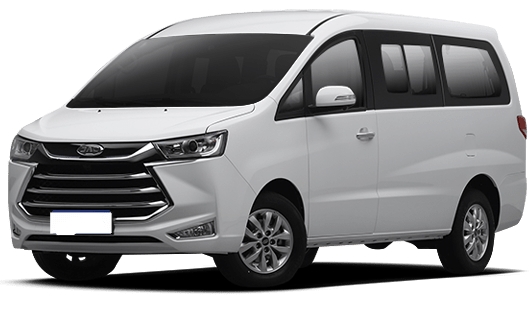
The Evolution of the Lifan X70: A Practical Crossover in Lifan’s Final Era
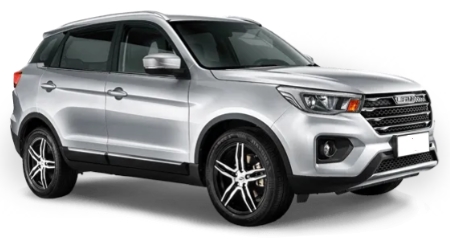
The Lifan X70 represents one of the last major gasoline-powered vehicles developed by Lifan Motors before the company underwent restructuring and shifted toward electrification partnerships. Introduced in the late 2010s, the X70 was designed to compete in the highly competitive compact SUV segment, offering practicality, affordability, and global market ambitions. Though its production life was relatively short, the X70 provides insight into Lifan’s strategy during a critical transitional period.
Origins and Development
The development of the Lifan X70 began well before its official release. The vehicle was first previewed as a concept at the Auto Shanghai 2015, where Lifan showcased its intentions to expand its SUV lineup.
Two years later, the production-ready model was unveiled at the Lifan Global Dealers’ Conference 2017, signaling that the company was ready to bring a new compact crossover to market.
This timing was significant. By the mid-2010s, compact SUVs had become one of the fastest-growing vehicle segments globally, particularly in emerging markets. Lifan aimed to capitalize on this demand with a model that balanced size, affordability, and simplicity.
.

.
Production Timeline and Lifecycle
The Lifan X70 had a clearly defined and relatively brief production run.
Production Years:
- 2018 – Start of production and market launch
- 2019 – Continued production with minimal updates
- 2020 – End of production following Lifan’s financial restructuring
Production took place in China, with the vehicle also exported to markets such as Russia and parts of South America.
Unlike many competitors, the X70 did not receive a major facelift or second generation. It remained a single-generation model throughout its lifecycle.
Platform, Dimensions, and Design
The X70 was built as a compact crossover SUV, positioned above smaller models like the X50 but below larger offerings such as the X80.
Key Specifications:
- Length: 172.8 inches (4390 mm)
- Width: 71.7 inches (1820 mm)
- Height: 67.5 inches (1715 mm)
- Wheelbase: 102.8 inches (2610 mm)
Layout:
- Front-engine, front-wheel drive
- Five-door SUV body style
- Seating capacity: 5 passengers
Design Characteristics:
The X70 featured a conventional SUV design with:
- A prominent front grille
- Angular headlights
- Elevated ride height
Its styling followed mainstream trends rather than attempting bold innovation, helping it appeal to a broad audience.
Powertrain and Performance
One of the defining characteristics of the Lifan X70 was its simple and consistent powertrain lineup.
Engine:
- 2.0-liter inline-4 gasoline engine
- Output: approximately 134–140 horsepower (100 kW)
Transmission Options:
- 5-speed manual
- Continuously variable transmission (CVT) (in some markets)
Performance:
- Top speed: up to approximately 112 mph (180 km/h)
- Acceleration (0–62 mph): about 13.8 seconds
These figures highlight the X70’s focus on everyday usability rather than performance. It was designed primarily for urban commuting and family use.
Models and Trim Levels
Unlike more globally established brands, Lifan did not always standardize trim naming across markets. However, the X70 was offered in multiple configurations that can be grouped into consistent trim tiers.
2018 Launch Models
At launch, the X70 lineup centered around a single engine paired with different equipment levels.
Core Configurations:
- 2.0L Manual Base
- 2.0L Manual Mid-Level
- 2.0L CVT Higher Trim
Typical Trim Structure:
Although names varied, trims generally followed this hierarchy:
- Base / Standard
- Comfort
- Luxury / Flagship
These trims differed primarily in features rather than mechanical components.
Trim Features Breakdown (2018)
Base (Standard):
- Cloth upholstery
- Manual air conditioning
- Basic infotainment system
- Steel or basic alloy wheels
Comfort:
- Upgraded infotainment system
- Larger alloy wheels
- Improved interior materials
- Additional convenience features
Luxury / Flagship:
- Touchscreen infotainment system
- Leather seating
- Rearview camera and parking sensors
- Enhanced interior trim
While exact features varied by market, this structure remained consistent.
2019 Model Year
The 2019 X70 saw minor refinements rather than major changes.
Updates Included:
- Slight improvements in infotainment software
- Additional convenience features in higher trims
- Broader availability of CVT transmission
The trim hierarchy remained unchanged:
- Base
- Comfort
- Luxury
No new engine options or major design updates were introduced.
2020 Final Model Year
By 2020, Lifan was facing severe financial challenges, which affected its vehicle lineup.
Final-Year Characteristics:
- Reduced trim availability in some markets
- Continued offering of core configurations
- Minimal updates or new features
Production ended later in 2020, marking the conclusion of the X70’s lifecycle.
Technology and Features
The Lifan X70 was positioned as a budget-friendly SUV, and its technology reflected this focus.
Standard Features:
- Air conditioning
- Power windows and mirrors
- Basic infotainment system
- USB connectivity
Higher Trim Features:
- Touchscreen display
- Navigation system
- Rearview camera
- Keyless entry and push-button start
Although these features were competitive for its price point, they lagged behind more advanced systems offered by larger global manufacturers.
Market Position and Use Cases
The X70 was designed to appeal to a wide range of buyers, particularly in emerging markets.
Primary Use Cases:
- Family transportation
- Daily commuting
- Ride-hailing services
- Budget-conscious SUV buyers
Its affordability and simplicity made it attractive to first-time SUV buyers.
Role Within Lifan’s Lineup
The X70 occupied a central position in Lifan’s SUV portfolio:
- Above: X50 (subcompact SUV)
- Below: X80 (mid-size SUV)
It served as a core volume model, intended to generate steady sales in a competitive segment.
Challenges and Limitations
Despite its practical design, the X70 faced several challenges:
1. Limited Innovation
The model did not introduce significant technological advancements.
2. Strong Competition
The compact SUV segment was crowded with both domestic and international competitors.
3. Brand Recognition
Lifan struggled to compete with better-known brands.
4. Financial Instability
Lifan’s financial difficulties ultimately led to reduced development and eventual discontinuation.
Legacy and Industry Context
The Lifan X70 represents a transitional vehicle in the company’s history.
Key Contributions:
- Expanded Lifan’s presence in the compact SUV segment
- Demonstrated the company’s ability to produce globally marketable vehicles
- Served as a stepping stone before the company’s restructuring
Its discontinuation coincided with broader changes in the Chinese automotive industry, including:
- Increased consolidation
- Rapid electrification
- Growing competition
Future Outlook
Although the X70 itself is no longer in production, its legacy continues in Lifan’s successor ventures.
Post-X70 Developments:
Lifan underwent restructuring and became part of new partnerships, including the formation of Livan Automotive.
Future Trends:
- Transition from gasoline vehicles to electric vehicles
- Expansion of battery-swapping technology
- Development of new EV platforms
While no direct successor to the X70 has been announced, future models may fulfill a similar role in a fully electric lineup.
The Lifan X70, produced from 2018 to 2020, stands as a practical and accessible compact SUV that reflected Lifan Motors’ ambitions during its final years as an independent automaker. Offered in multiple trims—typically structured as Base, Comfort, and Luxury—it provided a straightforward combination of a 2.0-liter engine, front-wheel drive, and essential features.
Although it did not achieve long-term success or receive significant updates, the X70 played an important role in Lifan’s evolution. It bridged the gap between the company’s earlier, simpler vehicles and its eventual transition toward electrified mobility through partnerships like Livan Automotive.
In retrospect, the X70 is best understood not as a breakthrough model, but as a representative product of its time—a vehicle shaped by rapid market growth, intense competition, and an industry on the verge of transformation.