The Evolution of the SRM E3L: The Rise of a Practical Electric Commercial Van
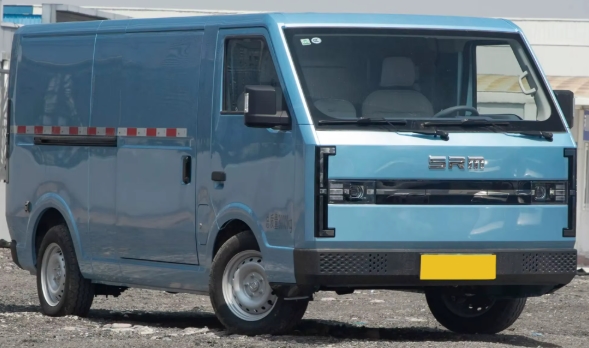
The SRM E3L is a battery-electric light commercial van developed by China’s Shineray Group under the SRM brand. Introduced in 2024, the E3L represents the company’s growing commitment to commercial electrification and urban logistics. Designed primarily for delivery services, fleet operators, small businesses, and municipal users, the E3L combines a compact footprint with a spacious cargo area and an affordable electric drivetrain.
Although still a relatively new vehicle, the E3L has quickly become an important part of SRM’s expanding electric vehicle lineup. Its development reflects broader changes occurring throughout the global commercial vehicle industry, where governments, businesses, and consumers are increasingly seeking low-emission transportation solutions.
Origins of the SRM E3L
The E3L was developed as part of SRM’s new generation of electric commercial vehicles. The vehicle belongs to the SRM E3 family, which was launched in May 2024. The lineup consists of two primary variants:
- SRM E3
- SRM E3L
The standard E3 serves as the shorter-wheelbase model, while the E3L features a longer wheelbase and extended body length to provide additional cargo capacity. Both vehicles share the same overall design, chassis architecture, and electric powertrain. The E3L was specifically created for operators requiring greater hauling capability without moving to a larger and more expensive commercial vehicle.
The design philosophy behind the E3L emphasizes practicality, durability, and efficiency. Its box-shaped body maximizes interior volume, while its simple construction helps reduce manufacturing and maintenance costs.
.
MANY auto lovers not only spend time in their garages to tinker on their autos, but have other projects going on in there as well. Wood working is a popular pastime for the creative type of individual. Not sure what to make next? Or thinking about getting into this kind of hobby? There’s lots of possibilities… Here’s some of them…

.
2024: Launch of the SRM E3L
Production of the SRM E3L began in 2024 alongside the standard E3. The vehicle was assembled in China and marketed primarily as a light commercial vehicle for urban distribution and last-mile delivery operations.
At launch, the E3L featured:
- Rear-wheel drive
- Single-speed reduction gearbox
- Permanent-magnet synchronous electric motor
- Maximum output of 80 horsepower (60 kW)
- Peak torque of 162 lb-ft (220 Nm)
- CATL lithium iron phosphate (LFP) battery technology
The E3L received a larger battery pack than the standard E3. Capacity was rated at approximately 41.86 kWh, delivering a CLTC driving range of about 163 miles (263 kilometers). This made the E3L particularly suitable for urban delivery routes and local transportation services.
Dimensionally, the E3L measured:
- Length: 192.9 inches (4,900 mm)
- Width: 70.1 inches (1,780 mm)
- Height: 78.3 inches (1,990 mm)
- Wheelbase: 112.8 inches (2,865 mm)
Compared with the standard E3, the E3L’s longer wheelbase increased cargo volume and load flexibility.
Initial Models and Configurations
Unlike many passenger vehicles that offer numerous luxury-oriented trim levels, the E3L was developed primarily as a commercial vehicle. As a result, SRM focused on body configurations and battery options rather than extensive trim differentiation.
During the 2024 launch period, the E3L was offered in two primary body styles:
Cargo Van
The cargo van configuration was aimed at logistics operators, courier services, tradespeople, and delivery companies. This version prioritized maximum cargo capacity and payload capability.
Features included:
- Two-seat cabin
- Large rear cargo compartment
- Sliding side doors
- Rear cargo access doors
- Simplified commercial interior
Passenger Van
The passenger-oriented version was designed for shuttle services, business transportation, and municipal fleets.
Features included:
- Additional seating configurations
- Side-access passenger doors
- Enhanced passenger accommodations
- Multi-purpose transport capability
Both variants utilized the same electric powertrain.
2024–2025: Expansion of the Lineup
Following its launch, SRM expanded the E3L lineup with additional battery and range variants. By late 2024 and early 2025, several configurations appeared in Chinese vehicle databases and export market listings. These included variants with differing battery capacities, range ratings, and commercial applications.
Known E3L variants introduced during this period included:
E3L Cargo Series
- Standard Range Cargo Van
- Extended Range Cargo Van
- High-Capacity Logistics Variant
E3L Passenger Series
- Standard Passenger Van
- Extended Range Passenger Van
- Shuttle Transport Variant
Some markets also listed model distinctions based on driving range, including:
- 163-mile (263-km) range version
- 171-mile (275-km) range version
- 205-mile (330-km) range version
- 227-mile (365-km) range version
- 236-mile (380-km) range version
These expanded offerings reflected SRM’s effort to meet the varying needs of fleet operators and municipal customers. Newer variants also introduced a more powerful 95-horsepower electric motor in certain markets.
Technical Development
One of the most notable aspects of the E3L’s evolution has been its battery technology. From the beginning, SRM partnered with CATL, one of the world’s leading battery manufacturers.
Battery options across the E3 and E3L family have included:
- 32.14 kWh LFP battery
- 38.64 kWh LFP battery
- 41.86 kWh LFP battery
The use of lithium iron phosphate chemistry provides several advantages:
- Lower battery cost
- Improved durability
- Enhanced thermal stability
- Long service life
These characteristics make LFP batteries particularly well suited to commercial fleet applications, where durability and operating costs are often more important than maximum driving range.
Design and Practicality
The E3L’s styling is intentionally functional. The vehicle features a highly angular exterior with flat body panels and a tall roofline. This approach maximizes cargo volume while minimizing production complexity.
Industry observers have frequently compared the E3L’s appearance to traditional European and Japanese commercial vans of the 1980s and 1990s. Despite its simple design, the vehicle was engineered specifically for modern electric operation and urban commercial use.
The E3L’s key strengths include:
- Large cargo volume
- Compact urban footprint
- Low operating costs
- Zero tailpipe emissions
- Simple maintenance requirements
- Flexible passenger and cargo configurations
These characteristics have helped the vehicle gain attention among small business operators and commercial fleet managers.
International Expansion
Although initially developed for the Chinese market, the E3L has gradually appeared in several export markets. Dealers and distributors have introduced the vehicle in parts of Eastern Europe, Central Asia, and other regions where affordable commercial EVs are attracting increasing interest.
International expansion remains an important component of SRM’s growth strategy. As commercial vehicle electrification accelerates worldwide, the E3L may find opportunities in markets seeking cost-effective alternatives to more expensive electric vans from established global manufacturers.
Future Outlook
As of 2026, the SRM E3L remains in production and continues to evolve. Future updates are likely to focus on:
- Increased battery capacity
- Improved driving range
- Faster charging capabilities
- Enhanced safety technologies
- Expanded export availability
- Additional commercial body styles
Given the rapid pace of electric vehicle development, future E3L models may also receive upgraded driver-assistance systems, connected fleet-management technologies, and more powerful electric motors.
The SRM E3L represents a significant step forward for SRM’s commercial vehicle division. Introduced in 2024 as the extended-wheelbase member of the E3 family, the E3L was designed to meet the growing demand for practical and affordable electric delivery vehicles. Through expanded range options, multiple body configurations, and ongoing technical improvements, the model has established itself as a competitive entrant in China’s electric commercial vehicle market.
While still early in its lifecycle, the E3L demonstrates how manufacturers are adapting traditional commercial van concepts for the electric era. With continued development and increasing international availability, the E3L appears well positioned to play a growing role in the future of urban commercial transportation.