The Evolution of the Yiwei Huaxianzi: A Compact EV Built for the Mass Market
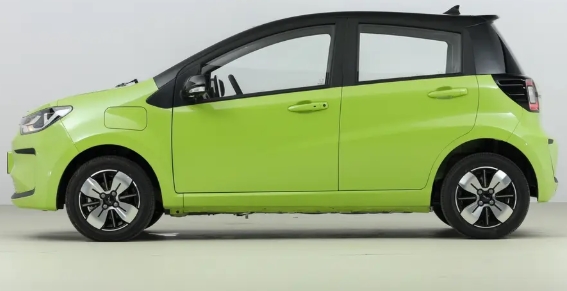
The Yiwei Huaxianzi—often translated as “Flower Fairy”—is a subcompact electric hatchback produced under the Yiwei (also spelled Yiwei or Yi) new energy vehicle brand of the JAC Group in China. Introduced in the early 2020s, the Huaxianzi represents one of JAC’s most important steps toward affordable electric mobility, combining city-friendly dimensions with increasingly advanced battery technology, including a notable sodium-ion battery variant. The model is closely related to the earlier JAC Sehol E10X, which served as its structural and engineering foundation.
Since its introduction, the Huaxianzi has been positioned as an entry-level electric vehicle aimed at urban commuters, fleet operators, and international export markets. Its evolution reflects both the rapid development of China’s EV industry and the broader shift toward low-cost, high-efficiency electric transportation.
Origins and Development History
The Huaxianzi name first appeared in the early Yiwei product strategy announced in 2023, when JAC launched Yiwei as its dedicated new energy sub-brand. Yiwei was created to separate mainstream electric vehicles from JAC’s traditional lineup and to support export expansion and next-generation EV technologies.
The Huaxianzi is based heavily on the JAC Sehol E10X platform, a compact city car originally designed for affordability and ease of production. Yiwei re-engineered the model with updated styling, improved interior electronics, and—most importantly—new battery chemistry options.
Key launch milestones:
- 2023 – Yiwei brand officially launched
- Late 2023 – Huaxianzi production version begins rollout
- Early 2024 – First mass-produced sodium-ion battery EV deliveries include Huaxianzi variants
By 2024, the Huaxianzi became globally significant as one of the first production vehicles to use sodium-ion battery technology at scale.
.
NO MORE dead batteries with this:

.
Production Years
- 2023–present (Yiwei Huaxianzi / E10X-based EV under Yiwei branding)
The model remains in production as of the mid-2020s, with incremental updates rather than full generational redesigns.
Design and Platform Evolution
The Huaxianzi is a five-door subcompact hatchback designed primarily for dense urban environments. It maintains a small footprint while maximizing interior space through short overhangs and a tall roofline.
Core platform:
- Derived from JAC’s small EV architecture used in the Sehol E10X
- Front-wheel drive layout
- Integrated battery floor structure
- Focus on cost efficiency and modular production
The Yiwei update introduced:
- Revised front-end styling with a closed EV grille design
- Updated lighting signature
- Improved infotainment systems
- Enhanced safety structure for export compliance
While not a luxury EV, it is significantly more modern than its predecessor in terms of electronics and energy systems.
Powertrain and Battery Technology
The Huaxianzi is most notable for its role in battery experimentation, particularly the introduction of sodium-ion chemistry.
Standard lithium-ion versions
Most conventional Huaxianzi variants use lithium iron phosphate (LFP) battery packs, offering:
- Around 23 kilowatt-hours to low-40 kilowatt-hour configurations depending on export or domestic trim
- City-focused range typically between roughly 140 miles and 220 miles under China’s CLTC testing cycle
- Front-mounted electric motor output generally between 40 kilowatts and 70 kilowatts
These versions prioritize affordability and durability over performance.
Sodium-ion battery version (major milestone)
In 2024, Yiwei introduced a Huaxianzi variant equipped with sodium-ion batteries, supplied by HiNa Battery. This marked one of the first mass-production uses of sodium-ion technology in a passenger car.
Key characteristics included:
- Improved low-temperature performance compared to early lithium batteries
- Lower cost potential due to sodium abundance
- Slightly lower energy density than premium lithium packs
- Designed for urban commuting rather than long-distance travel
This version positioned the Huaxianzi as a technological testbed for future low-cost EV development.
Models and Trim Levels
Across its production lifecycle, the Huaxianzi has been offered in a relatively simple but evolving trim structure. While exact naming varies by year and export market, the lineup generally includes the following configurations:
Core trim levels:
- Base / Standard
- Comfort
- Luxury
- Elite (or Premium in some export markets)
Drivetrain and configuration options:
- Standard-range lithium-ion version
- Extended-range lithium-ion version
- Sodium-ion battery version (limited production and pilot deployment)
Equipment differences by trim:
Base / Standard
- Manual or basic automatic climate control
- Small digital instrument display
- Basic infotainment system
- Steel wheels in some configurations
- Essential safety features only
Comfort
- Larger central touchscreen
- Rear parking sensors
- Improved interior materials
- Power windows and mirrors
Luxury
- Upgraded infotainment interface
- Rearview camera system
- Alloy wheels
- Enhanced interior trim and upholstery
Elite / Premium
- Full digital cockpit interface (depending on model year)
- Connectivity upgrades and smartphone integration
- Additional driver assistance features (limited Level 1–2 systems)
- Optional convenience features such as keyless entry
Export versions often simplified trim naming but retained similar equipment tiers.
Market Role and Sales Positioning
The Huaxianzi is not intended to compete with high-performance or long-range EVs. Instead, it targets:
- Urban commuters in China’s smaller cities
- Ride-hailing and fleet operators
- Emerging overseas EV markets in Latin America, the Middle East, and Southeast Asia
Its pricing strategy places it firmly in the entry-level EV category, making it one of the more accessible electric vehicles from a major Chinese manufacturer.
The model has also been part of Yiwei’s export push, alongside other Yiwei vehicles, contributing to shipments of tens of thousands of units in international batches during 2024.
Relationship to Other Yiwei Models
The Huaxianzi sits at the lower end of Yiwei’s lineup, alongside models like the Yiwei 3. While the Yiwei 3 is slightly larger and more modern, the Huaxianzi remains the most affordable and compact option.
Key distinctions:
- Huaxianzi: smallest, cheapest, urban-focused hatchback
- Yiwei 3: larger subcompact EV with higher performance and range
This tiered approach allows Yiwei to cover both domestic budget buyers and export demand with overlapping platforms.
Technological Significance
The Huaxianzi’s biggest contribution is not styling or performance—it is battery innovation. The sodium-ion variant demonstrated that alternative chemistries could be mass-produced in passenger vehicles, potentially reducing dependence on lithium supply chains.
This aligns with broader industry trends in China, where manufacturers are aggressively exploring:
- Sodium-ion batteries for low-cost EVs
- Cell-to-body integration for structural efficiency
- Highly integrated electric drive units
The Huaxianzi plays a key role as an early production example of these ideas.
Future Outlook
The future of the Yiwei Huaxianzi will likely be shaped by three major trends:
1. Battery diversification
More sodium-ion variants may appear if costs continue to fall and performance improves, particularly for short-range city EVs.
2. Platform consolidation
JAC may gradually unify Huaxianzi under newer architectures shared with other Yiwei models, improving manufacturing efficiency.
3. Export-focused updates
As global demand for low-cost EVs grows, simplified versions of the Huaxianzi could be tailored for developing markets, possibly with:
- Reduced feature sets
- Region-specific charging systems
- Modified range tuning for cost control
However, competition in the entry-level EV segment is intensifying, especially from domestic Chinese rivals offering more advanced styling and software ecosystems at similar prices.
The Yiwei Huaxianzi represents a transitional moment in China’s electric vehicle industry. Built on a proven compact platform but enhanced with modern EV technology and experimental sodium-ion batteries, it bridges the gap between first-generation budget EVs and the more advanced electric cars emerging today.
While it is unlikely to become a global headline model, its importance lies in its role as a practical, scalable, and technologically exploratory city car. In many ways, the Huaxianzi reflects the broader direction of the Chinese EV market: rapid iteration, aggressive cost reduction, and constant experimentation with next-generation battery chemistry.