The History of Changan’s Kaicene and Kuayue (KYC) Sub-Brands
China’s Commercial Vehicle Specialists
Among China’s largest automobile manufacturers, Changan Automobile has built a reputation not only through passenger cars and sport utility vehicles, but also through an extensive range of commercial vehicles. Two of the most important names in Changan’s commercial vehicle operations are Kaicene and Kuayue, often known internationally as KYC. Together, these brands have supplied millions of vans, microvans, pickups, light trucks, and commercial vehicles to businesses, fleet operators, and entrepreneurs throughout China and overseas markets.
Although they receive far less attention than Changan’s passenger-car brands, Kaicene and Kuayue have played a crucial role in China’s economic development by providing affordable transportation and logistics solutions. Their history spans decades of industrial growth, ownership restructuring, technological modernization, and expansion into global markets.
The Origins of Changan Automobile
To understand Kaicene and Kuayue, it is first necessary to understand Changan Automobile.
Changan traces its origins to 1862, when the Shanghai Foreign Gun Bureau was established during the Qing Dynasty. Over time, the organization evolved through numerous state-owned industrial entities before eventually entering automobile production during the twentieth century. Today, Changan is one of China’s “Big Four” state-owned automotive manufacturers alongside SAIC, FAW, and Dongfeng.
Unlike companies founded by individual entrepreneurs such as Henry Ford or Soichiro Honda, Changan developed as a government-owned industrial enterprise. As a result, neither Kaicene nor Kuayue has a single identifiable founder in the traditional sense.
The Birth of Changan’s Commercial Vehicle Division
Chana Commercial Vehicles
Before the Kaicene name existed, Changan marketed many of its commercial vehicles under the Chana brand.
Beginning during the 1980s and 1990s, Chana became known for producing:
- Microvans
- Mini trucks
- Small pickups
- Light commercial vehicles
One of the brand’s most successful products was the Chana Star series, first introduced in 1999. Originally derived from Suzuki-based designs, the Star family became one of China’s most recognizable microvan and mini-truck platforms. The model remains in production today in updated forms under the Kaicene brand.
These vehicles helped establish Changan as a major force in China’s rapidly expanding commercial transportation sector.
Formation of Kaicene
Established: 2019
Years of Operation: 2019–Present
Kaicene was officially established in 2019 as Changan Automobile’s dedicated commercial-vehicle brand. The goal was to separate commercial products from Changan’s passenger-car lineup and create a specialized identity focused on logistics, transportation, and business customers.
The name “Kaicene” is derived from the Chinese brand name Kaicheng and was intended to represent intelligent logistics and professional transportation solutions.
When the new brand launched, numerous existing Chana commercial vehicles were transferred into the Kaicene lineup.
This restructuring was similar to strategies used by manufacturers such as:
- Toyota (Toyota and Hino)
- Hyundai (Hyundai and Hyundai Commercial)
- Ford (Ford Pro commercial operations)
The move allowed Changan to market commercial vehicles more effectively while developing products tailored specifically for business users.
Early Kaicene Product Line
At launch, Kaicene inherited a large portfolio of existing vehicles.
Major models included:
Vans and MPVs
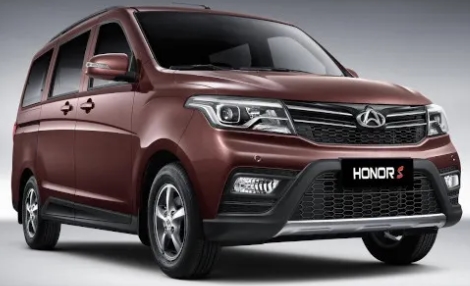
- Honor
- Honor S
- Raesor M60
- Raesor M80
- Raesor M90
Light Trucks
- Star Truck
- Star 5
- Shenqi T20
- Shenqi T30
Pickups
- F30
- F300
- F70
These products served markets ranging from urban delivery services to agricultural operations and small-business transportation.
The Kaicene F70 Milestone
One of Kaicene’s most significant achievements came with the launch of the F70 pickup in 2019.
The F70 was developed through cooperation between Changan and PSA Group, the French automotive company that owned Peugeot and Citroën at the time. Unlike previous Changan pickups, the F70 was engineered as a global vehicle capable of competing with established international models such as the Toyota Hilux and Ford Ranger.
The platform later became the foundation for:
- Peugeot Landtrek
- Fiat Titano
- Ram 1200
- Various regional pickup truck derivatives
This represented one of the first major examples of a Chinese-developed commercial vehicle platform achieving significant international adoption.
Kaicene’s Growth and Export Expansion
During the early 2020s, Kaicene expanded rapidly into international markets.
Exports reached regions including:
- Southeast Asia
- Latin America
- Africa
- Middle East
- Eastern Europe
The Philippines became one of the earliest markets to receive dedicated Kaicene branding. There, Changan’s commercial models were officially rebranded as Kaicene beginning in 2020. Vehicles such as the Honor S, Star Truck, and X5 Truck were marketed toward small-business owners and fleet operators.
This export strategy helped differentiate Kaicene from domestic-focused Chinese commercial brands.

Kuayue (KYC): A Different Commercial Vehicle Story
Founded: 1994
Years of Operation: 1994–Present
Kuayue, often marketed internationally as KYC, has a different history.
Chongqing Kuayue Group was established in 1994 as a private enterprise in Chongqing. Unlike Changan, which is state-owned, Kuayue developed as a privately controlled industrial group involved in multiple sectors including vehicle manufacturing, real estate, chemicals, agricultural machinery, and automotive components.
Over time, Chongqing Kuayue became closely associated with Changan commercial vehicles and began producing and marketing commercial products using Changan-derived platforms.
Relationship Between Changan and Kuayue
The relationship between Changan and Kuayue has often confused international observers.
Rather than being a complete subsidiary acquisition, Kuayue developed through close cooperation with Changan while producing vehicles based on Changan technology and engineering.
This partnership allowed Kuayue to focus on:
- Mini trucks
- Delivery vans
- Utility vehicles
- Fleet transportation
while benefiting from Changan’s engineering resources.
Development of the KYC Brand
Internationally, many Kuayue vehicles are marketed under the KYC name.
Popular KYC models include:
- KYC V3
- KYC V5
- KYC V7
- KYC X5
- KYC T5
- Kuayuewang series
These vehicles are commonly used by:
- Small businesses
- Delivery companies
- Construction firms
- Agricultural operators
Their affordability and durability have made them popular throughout developing markets.
Major Manufacturing Expansion
One of Kuayue’s most important milestones occurred in 2020.
A new commercial-vehicle production facility began operation in Chongqing’s high-tech industrial zone. The first phase of construction covered approximately 2.56 million square feet and significantly expanded production capacity.
The new factory improved:
- Manufacturing efficiency
- Vehicle quality
- Export capability
- Electric vehicle production readiness
The investment demonstrated Kuayue’s long-term commitment to commercial-vehicle manufacturing.
Hardships and Challenges
Increasing Competition
Both Kaicene and Kuayue have faced intense competition from:
- SAIC-GM-Wuling
- Dongfeng
- Foton
- JAC
- Great Wall
Throughout the 2010s and 2020s, China’s commercial-vehicle market became increasingly crowded.
To remain competitive, both brands expanded product offerings and invested heavily in technology.
Shift Toward Electrification
The rise of electric vehicles presented another challenge.
Commercial customers increasingly demanded:
- Lower operating costs
- Reduced emissions
- Compliance with urban environmental regulations
Kaicene responded by introducing electric commercial vehicles such as the EM80 and other battery-powered logistics vehicles. Kuayue similarly expanded development of electric vans and delivery vehicles.
Marketing Strategies
Unlike consumer-focused automotive brands that emphasize lifestyle advertising, Kaicene and KYC typically focus on practical business benefits.
Common marketing themes include:
- Payload capacity
- Reliability
- Fuel economy
- Low operating costs
- Profitability for business owners
Many campaigns specifically target entrepreneurs and small-business operators.
For Kaicene, the slogan of intelligent logistics and professional transportation became a key branding element.
Racing Programs
Unlike manufacturers such as Great Wall or Toyota, neither Kaicene nor Kuayue has maintained a significant factory-backed motorsports program.
The brands instead focus on:
- Commercial durability testing
- Fleet demonstrations
- Logistics exhibitions
- Industry trade shows
Any racing involvement has been limited and largely promotional rather than competitive.
Factory Operations
Today, Kaicene vehicles are produced through Changan’s manufacturing network in Chongqing and other Chinese facilities.
Production includes:
- Vehicle assembly
- Engine manufacturing
- Chassis production
- Electric vehicle assembly
- Component manufacturing
Kuayue operates dedicated commercial-vehicle manufacturing facilities, including its major Chongqing production complex. These factories produce vans, trucks, pickups, and increasingly electric commercial vehicles.
Most Popular and Successful Vehicle
Among all Kaicene and Kuayue products, the Changan Star series is arguably the most successful.
Reasons include:
- Production since 1999
- Multiple body styles
- Broad commercial applications
- Strong affordability
- Extensive dealer support
Millions of Star-series vehicles have been produced across multiple generations, making it one of Changan’s longest-running commercial vehicle families.
The Star’s success helped establish the foundation upon which both Kaicene and Kuayue later expanded.
U.S. Consumer Reception
Neither Kaicene nor Kuayue has officially entered the United States market.
As a result:
- Official U.S. sales figures are zero.
- No authorized national dealer network exists.
- Consumer awareness remains extremely limited.
Among automotive enthusiasts familiar with Chinese vehicles, the brands are generally viewed as practical and affordable commercial manufacturers rather than premium brands.
Sales Figures
Precise global sales figures for Kaicene and Kuayue are not consistently reported as independent brands because many sales are aggregated within Changan Automobile’s broader commercial-vehicle operations.
However, Changan itself sells millions of vehicles annually across all brands, while Kaicene remains one of China’s largest commercial-vehicle divisions.
Current Status and Future Outlook
Kaicene
Years in Operation: 2019–Present
Kaicene remains active as Changan’s official commercial-vehicle division and continues expanding its lineup of pickups, vans, light trucks, and electric commercial vehicles.
Kuayue (KYC)
Years in Operation: 1994–Present
Kuayue remains active as a private commercial-vehicle manufacturer and export-focused producer.
Future priorities for both organizations include:
- Electrification
- Smart logistics technologies
- International expansion
- Fleet connectivity systems
- Electric delivery vehicles
- Advanced safety systems
The rapid growth of e-commerce and urban logistics is expected to create continued demand for the kinds of vehicles both brands specialize in producing.
Kaicene and Kuayue represent two important pillars of China’s commercial-vehicle industry. Kaicene emerged in 2019 as Changan Automobile’s dedicated commercial-vehicle brand, inheriting decades of Chana commercial-vehicle expertise and expanding into global markets with products such as the F70 pickup, Honor S, and Star Truck. Kuayue, founded in 1994, developed as a private enterprise that became a major producer of practical commercial vehicles under the KYC name.
Although they lack the international recognition of passenger-car brands, both companies have played vital roles in transportation, logistics, and small-business development throughout China and abroad. As the commercial-vehicle sector transitions toward electrification and intelligent logistics systems, Kaicene and Kuayue appear well positioned to remain important players in the global light-commercial-vehicle market for years to come.