The History of Evergrande Auto (Hengchi, NEVS)
The Rise and Collapse of Evergrande New Energy Vehicle Group, Hengchi, and NEVS
Evergrande Auto, officially known as China Evergrande New Energy Vehicle Group Limited, represents one of the most ambitious—and ultimately troubled—automotive ventures in modern history. During the late 2010s, the company sought to become one of the world’s largest manufacturers of electric vehicles (EVs), backed by the enormous financial resources of the China Evergrande Group, one of China’s biggest real estate developers. Through a series of expensive acquisitions, partnerships, and rapid expansion projects, Evergrande Auto assembled an impressive collection of automotive assets that included the Swedish automaker National Electric Vehicle Sweden (NEVS), numerous international engineering firms, and the newly created Hengchi automobile brand.
At its peak, Evergrande Auto planned to produce millions of electric vehicles annually from multiple factories across China. Billions of U.S. dollars were invested into research, development, manufacturing facilities, and worldwide talent recruitment. However, the collapse of Evergrande’s real estate empire beginning in 2021 severely disrupted those ambitions. Production stalled, suppliers went unpaid, factories suspended operations, and the company became one of the most visible examples of the risks associated with aggressive expansion fueled by debt.
Although Evergrande Auto introduced production-ready vehicles and briefly entered limited production, it never became the global automotive powerhouse its leadership envisioned.
Origins of China Evergrande Group (1996–Present)
The automotive division originated from China Evergrande Group, founded in 1996 by Chinese businessman Xu Jiayin, also known internationally as Hui Ka Yan.
Xu was born in 1958 in Henan Province, China. Raised in a rural village after losing his mother as an infant, he grew up under modest circumstances during a difficult period in Chinese history. He graduated from the Wuhan University of Science and Technology with a degree related to metallurgy before working in the steel industry.
In 1996, Xu established Evergrande in Guangzhou as a residential property developer. Over the next two decades, China experienced a massive housing boom, allowing Evergrande to become one of the country’s largest real estate companies.
By the late 2010s, Evergrande expanded into numerous industries, including:
- Electric vehicles
- Healthcare
- Financial services
- Food and beverages
- Theme parks
- Professional soccer
The company’s strategy emphasized diversification into industries believed to have long-term growth potential.
Entering the Automotive Industry (2018)
Evergrande formally entered the automotive industry in 2018.
Rather than developing a vehicle company from scratch, management pursued an aggressive acquisition strategy. Their objective was to quickly assemble an international network of companies possessing existing automotive expertise.
Billions of dollars were invested in purchasing technology firms, battery companies, engineering businesses, and vehicle manufacturers.
Unlike many startup EV manufacturers that developed a single vehicle before expanding, Evergrande attempted to launch an entire automotive ecosystem almost simultaneously.

Acquisition of NEVS
One of Evergrande’s most significant acquisitions was National Electric Vehicle Sweden (NEVS).
Background of NEVS (2012–Present)
NEVS was founded in 2012 after purchasing the assets of the bankrupt Swedish automaker Saab Automobile.
Saab Automobile had operated from 1945 to 2012 before entering bankruptcy because of prolonged financial losses, declining sales, and unsuccessful ownership changes.
NEVS itself was founded by:
- Chinese businessman Kai Johan Jiang
- The investment company National Modern Energy Holdings
Kai Johan Jiang was born in China before later becoming a Swedish citizen. Before entering the automotive industry, he built businesses focused on renewable energy and sustainable technology.
NEVS purchased Saab Automobile’s principal manufacturing assets in 2012, but did not purchase the rights to the Saab brand name, meaning future vehicles could not legally be sold as Saabs.
Instead, NEVS focused entirely on electric vehicle development.
Evergrande Purchases NEVS
In 2019, Evergrande acquired a controlling interest in NEVS.
The purchase gave Evergrande:
- Saab’s former engineering facilities
- Vehicle platforms
- Experienced Swedish automotive engineers
- Research and development centers
- Manufacturing facilities in Sweden
This acquisition immediately gave Evergrande a much stronger engineering foundation than many newly established EV startups.
Formation of Evergrande Auto
The automotive division became known as China Evergrande New Energy Vehicle Group Limited.
Business operation:
- Originally entered automotive investments in 2018
- Operated under the Evergrande automotive name from 2019 to the present, although operations have been dramatically reduced since 2023.
Its mission was extraordinary.
Chairman Xu Jiayin publicly declared that Evergrande intended to become:
- The world’s largest electric vehicle manufacturer
- The world’s largest EV seller within several years
These goals required investments measured in the tens of billions of U.S. dollars.
The Hengchi Brand
Evergrande introduced its own vehicle brand called Hengchi in 2020.
“Hengchi” roughly translates to “Galloping Forward.”
Unlike NEVS, which focused on engineering, Hengchi became the consumer-facing automobile brand.
Evergrande unveiled an astonishing nine concept vehicles simultaneously, including:
- Hengchi 1
- Hengchi 2
- Hengchi 3
- Hengchi 4
- Hengchi 5
- Hengchi 6
- Hengchi 7
- Hengchi 8
- Hengchi 9
The vehicles covered nearly every market segment:
- Luxury sedans
- Compact crossovers
- Mid-size SUVs
- Full-size SUVs
- Luxury sports sedans
- Multi-purpose vehicles
The unveiling demonstrated Evergrande’s ambition to compete against:
International Engineering Partnerships
Evergrande invested heavily in global engineering.
The company partnered with or acquired expertise from internationally recognized firms involved in:
- Vehicle design
- Powertrain development
- Battery technology
- Chassis engineering
- Autonomous driving systems
Rather than relying solely on internal development, Evergrande outsourced portions of engineering to experienced international suppliers.
This allowed vehicle development to proceed unusually quickly.
Factory Operations
Evergrande invested billions of dollars constructing highly automated manufacturing plants.
Major production facilities included locations in:
- Shanghai
- Guangzhou
- Tianjin
- Zhengzhou
Additional research and manufacturing operations existed in Sweden through NEVS.
The factories featured:
- Automated robotic welding
- Large body assembly operations
- Battery pack assembly
- Paint shops
- Final assembly lines
Management announced extraordinarily ambitious future production targets reaching millions of vehicles annually.
In reality, these factories never approached their intended production capacity.
The Hengchi 5
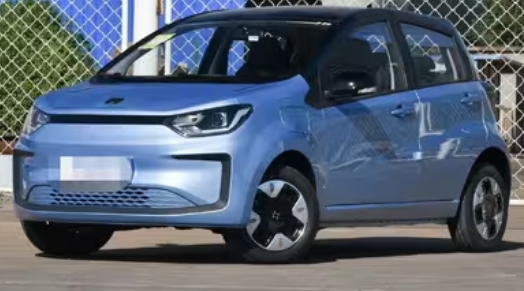
The company’s first production vehicle became the Hengchi 5, a compact electric SUV.
Production began in 2022.
Features included:
- Fully electric drivetrain
- Modern touchscreen interior
- Driver-assistance technologies
- Competitive driving range aimed at China’s growing EV market
The Hengchi 5 remains the only Evergrande vehicle produced in meaningful—though still limited—numbers.
Other Planned Hengchi Vehicles
Although never reaching full production, Evergrande developed:
- Hengchi 1 luxury sedan
- Hengchi 2 sports sedan
- Hengchi 3 large SUV
- Hengchi 6 crossover
- Hengchi 7 luxury sedan
- Hengchi 8 luxury crossover
- Hengchi 9 premium MPV
Several prototypes appeared at public exhibitions before financial problems halted further development.
NEVS Vehicle Programs
Before Evergrande acquired NEVS, the Swedish company had developed electric versions based on Saab engineering.
Examples included:
- NEVS 9-3 EV
- Emily GT prototype
- PONS mobility projects
The Emily GT, revealed publicly after financial difficulties, demonstrated impressive engineering with four in-wheel electric motors and long driving range. However, it never entered commercial production because of funding shortages.
Marketing Strategy
Evergrande’s marketing strategy emphasized scale and prestige.
Major elements included:
- High-profile global launch events
- Extensive Chinese media campaigns
- Celebrity appearances
- Premium branding
- Claims of becoming the world’s largest EV producer
The unveiling of nine Hengchi vehicles at once generated enormous international media attention.
The company also highlighted its partnerships with well-known engineering firms to build consumer confidence.
Milestones
Important milestones included:
2018
- Evergrande enters the EV industry.
2019
- Acquisition of controlling interest in NEVS.
- Massive investments in EV manufacturing.
2020
- Hengchi brand officially unveiled.
- Nine concept vehicles introduced.
2021
- Multiple factories substantially completed.
2022
- Hengchi 5 enters limited production.
Financial Crisis
The defining event in Evergrande Auto’s history occurred beginning in 2021.
China’s property market weakened significantly.
Evergrande Group had accumulated hundreds of billions of dollars in liabilities through years of aggressive borrowing.
As real estate sales slowed, the company struggled to repay debts.
The financial crisis quickly spread throughout the corporation.
Impact on Evergrande Auto
The automotive division suffered numerous problems.
These included:
- Funding shortages
- Delayed supplier payments
- Production interruptions
- Construction delays
- Employee layoffs
- Reduced research spending
Although management continued expressing optimism, development slowed dramatically.
Production Suspensions
By 2023, production had largely stopped.
Some suppliers reportedly halted deliveries because invoices remained unpaid.
Several manufacturing facilities became mostly inactive.
The company attempted to secure new investment but struggled because of Evergrande’s broader financial crisis.
How the Company Tried to Resolve Its Problems
Evergrande Auto pursued several solutions.
These included:
- Seeking outside investors
- Selling assets
- Reducing expenses
- Negotiating with creditors
- Restructuring debt
Despite these efforts, funding remained insufficient to restore large-scale production.
Unlike smaller operational setbacks that companies sometimes overcome through restructuring, Evergrande Auto remained heavily dependent on the financial health of its parent company.
Racing Programs
Evergrande Auto and Hengchi did not participate in major international motorsports.
Neither the Hengchi brand nor NEVS established factory-backed racing programs comparable to those of Porsche, Mercedes-Benz, Audi, or Hyundai.
The company’s focus remained entirely on consumer electric vehicles and production expansion.
What Made Evergrande Auto Different
Several characteristics distinguished Evergrande Auto from traditional manufacturers.
First, it entered the automotive industry despite having no previous history of vehicle manufacturing.
Second, the company attempted to create a complete global EV business almost overnight through acquisitions rather than gradual internal growth.
Third, it invested unprecedented sums before selling significant numbers of vehicles.
Finally, it combined Chinese financing with Swedish automotive engineering through NEVS.
Few automobile companies have attempted expansion on such a scale before establishing a proven production model.
Consumer Reception in the United States
Evergrande vehicles were never officially sold in the United States.
Consequently:
- U.S. sales figures: 0
American consumers primarily became aware of the company through news coverage of Evergrande’s financial crisis rather than through ownership experience.
Automotive journalists generally praised the ambitious styling and impressive manufacturing plans but remained skeptical regarding whether the company could achieve mass production.
Global Sales
Global production remained extremely limited.
The Hengchi 5 accounted for essentially all commercial vehicle sales.
Publicly available figures indicate only a few thousand Hengchi 5 vehicles were delivered before production largely ceased. The company never approached its stated goal of producing hundreds of thousands or millions of vehicles annually.
Because sales volumes remained very small and inconsistent, no Evergrande model achieved substantial worldwide market penetration.
Most Successful Vehicle
The Hengchi 5 was Evergrande Auto’s most successful vehicle.
Reasons include:
- It reached actual customer deliveries.
- It entered commercial production.
- It represented the company’s only genuine production success.
- It demonstrated that Evergrande’s factories could manufacture a finished consumer vehicle.
Although production numbers remained modest, no other Evergrande-developed automobile matched its commercial achievement.
Hardships and Struggles
Major hardships included:
Rapid Expansion (2018–2021)
The company expanded much faster than vehicle demand justified, creating enormous capital requirements.
Parent Company Debt Crisis (2021)
Evergrande Group’s financial collapse eliminated funding for automotive operations.
Supplier Issues (2022–2023)
Delayed payments disrupted manufacturing and slowed production.
Production Suspensions (2023)
Vehicle manufacturing largely stopped because of insufficient operating capital.
Investment Difficulties (2023–Present)
Potential investors remained cautious because of ongoing debt restructuring and uncertainty surrounding Evergrande Group.
Current Status and Outlook
As of 2026, China Evergrande New Energy Vehicle Group still legally exists but operates on a dramatically reduced scale. Its future remains uncertain as the company continues to seek financing while its parent organization undergoes extensive restructuring. Most large-scale manufacturing activity has ceased, and many of the ambitious expansion plans announced during 2019–2021 have been abandoned or indefinitely delayed.
NEVS also remains in existence as a corporate entity, but its automotive operations have been largely inactive after severe financial difficulties. Development programs such as the Emily GT have attracted interest from enthusiasts and potential investors, yet they have not returned to commercial production.
The collapse of Evergrande’s real estate business prevented the automotive division from achieving its original objectives. Instead of becoming one of the world’s largest electric vehicle manufacturers, Evergrande Auto serves as a cautionary example of how rapid expansion, heavy debt, and dependence on a financially troubled parent company can undermine even well-funded industrial ambitions.
Although the company introduced innovative concepts, built modern factories, recruited experienced international engineers, and successfully produced the Hengchi 5 in limited numbers, it never established the stable production volumes, dealer network, or financial foundation needed to compete with established global automakers. Its legacy is therefore defined less by the vehicles it sold than by the extraordinary scale of its ambitions and the dramatic financial collapse that prevented those ambitions from becoming reality.