The Rise and Road of the Geely CK: China’s Subcompact Contender
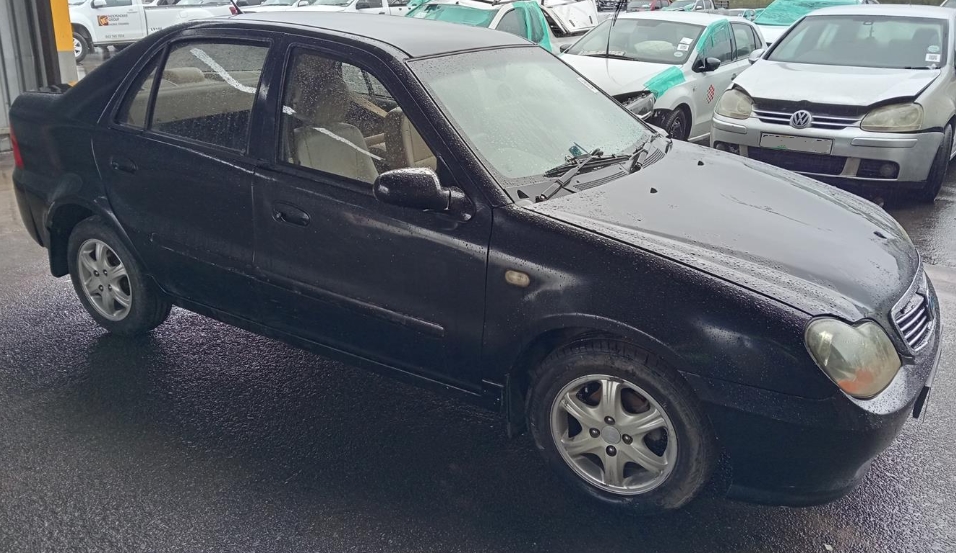
The Geely CK stands as one of the most important early milestones in the modern history of Geely Automobile, the Chinese automaker that has grown from an emerging private brand into a global force in the auto industry. Produced for over a decade and sold under several names across international markets, the CK exemplified China’s early efforts at affordable, home-grown passenger cars and laid a foundation for Geely’s later successes.
Introduction and Historical Context
Launched in May 2005, the Geely CK (Chinese name Ziyoujian, often translated as Freedom Cruiser or Free Cruiser) was Geely’s attempt to build a credible, budget-oriented subcompact sedan for both the domestic Chinese market and export destinations. The CK emerged at a time when China’s automobile industry was rapidly evolving, and many local brands were striving to establish themselves against joint ventures and state-owned competitors.
Geely commissioned joint development with Daewoo, leveraging engineering input that helped it transition from earlier subcompact models — like the Geely Haoqing — toward a more purpose-built four-door sedan. Despite being a budget-focused vehicle, the CK featured a conventional front-engine, front-wheel-drive layout and a selection of small, fuel-efficient petrol engines, making it an entry point for many first-time buyers in urban and developing markets.
.

.
Production Timeline and Global Footprint
The Geely CK was manufactured continuously for more than a decade, with official production spanning May 2005 to January 2016. Over that period, it underwent several updates and facelifts but retained the same basic platform throughout its life.
Although primarily produced in Zhejiang province, China, CK assembly also took place internationally in locations such as Kremenchuk, Ukraine, Montevideo, Uruguay, and Novouralsk, Russia — a testament to Geely’s export ambitions and the model’s appeal in overseas markets. In Russia in particular, it was marketed briefly as the Geely Otaka.
Design and Engineering Fundamentals
The CK’s design philosophy prioritized functionality and affordability. Measuring roughly 4.15 m in length with a 2.43 m wheelbase, its compact size made it suitable for city driving and easy parking. The platform was engineered for simplicity, with MacPherson strut front suspension, rear independent suspension, and accessible mechanicals that were easy to service in markets with limited automotive infrastructure.
Under the hood, the CK was offered with a range of petrol engines throughout its life:
- 1.0 L inline-3: A small displacement three-cylinder unit for the most basic and fuel-efficient variants.
- 1.3 L inline-4: One of the core engines used during the model’s life, valued for its balance of power and economy.
- 1.5 L inline-4: The most common engine in many markets, producing modest power suitable for urban and suburban commuting.
Transmission choices typically included a 5-speed manual and, in later years or higher trims, a 4-speed automatic.
Trim Levels and Model Variants
Throughout its decade-long run, the Geely CK was offered in a variety of trim levels, particularly in China and some export markets such as Latin America and Eastern Europe. While Geely did not always publish a simple, uniform global trim hierarchy, catalog listings and dealer brochures reveal a range of models designed to appeal to different buyers.
Common trims included:
- Base / 1.3 Base: Early entry-level model featuring the 1.3 L engine, basic upholstery, steel wheels, manual windows, and minimal equipment.
- Standard / 1.3 Standard: Added slightly improved interior trim and audio equipment, maintaining the same powertrain.
- Plus / 1.3 Plus: A mid-range trim with added convenience features such as upgraded interior panels or optional air conditioning.
- Convenient / 1.3 Convenient: Positioned as a comfort-oriented trim with some additional creature comforts.
- Luxury / 1.3 Luxury: The highest trim level for 1.3 L variants, offering more refined trim, better seating upholstery, and sometimes extras such as power windows or sound upgrades.
- 1.5 L Variants: Typically labeled as Standard, GLE, or GT in various regional offerings, these trims combined the more powerful 1.5 L engine with manual or automatic transmissions.
Trim names and available options often differed by year and market. In China, the CK was sometimes sold under the Gleagle sub-brand — Gleagle CK — as part of Geely’s brand diversification strategy in the early 2010s before being folded back into the main Geely range on later restart cycles.
Facelifts and Series Updates
Despite using a single generation, the CK received several phased updates:
- Early Pre-Facelift (2005–2007): Distinctive round headlights and a simple grille, paired with budget-oriented appointments.
- Mid-Cycle Update (2007–2011): Restyled front fascia with rectangular headlights and subtle interior upgrades to improve perceived quality — often referred to informally by enthusiasts as CK2.
- Later Updates (2011–2016): Minor styling tweaks, updated safety compliance in some markets, and continuity of production under the Gleagle CK label in China.
Despite these changes, the CK’s core architecture remained largely unchanged, a reflection of Geely’s early focus on cost-effectiveness rather than rapid technological turnover.
Safety, Reception, and Criticisms
One of the CK’s enduring reputational challenges was safety performance. In independent crash tests — including those conducted by Latin NCAP — the CK performed poorly, scoring zero stars in some evaluations due to limited structural protection and lack of advanced restraint systems like side airbags. This reinforced perceptions of early Chinese cars as budget machines rather than competitive global performers.
Critics often cited reliability concerns and a basic interior quality compared to Japanese, Korean, or European rivals. Nevertheless, its ultra-low price and operating economy made it attractive for fleet use, taxi drivers in some export markets, and first-car buyers on tight budgets.
Market Impact and Role in Geely’s Growth
The Geely CK played a strategic role in Geely’s development. Although it was not a global bestseller on the scale of competitors from Toyota or Volkswagen, it represented Geely’s ability to produce a complete car that met the basic needs of consumers in emerging markets. Its international reach — with assembly and sales across multiple continents — offered valuable experience in export logistics and multinational distribution.
As Geely’s financial strength and engineering capabilities expanded, the company shifted toward more competitive models such as the Geely Emgrand EC7 (Emgrand EC7), which featured improved build quality, more powerful engines, and modern safety equipment. The EC7 ultimately became one of Geely’s first truly export-competitive offerings.
End of Production and Legacy
After nearly 11 years of production, the Geely CK was discontinued in January 2016, a decision driven by changing market expectations, stricter safety regulations, and Geely’s desire to refocus on more modern platforms and designs.
Despite its modest reputation, the CK’s long production run underscores its importance as an affordable workhorse in many markets. Used CKs continue to circulate in developing regions due to their low acquisition cost and simple mechanical design, although parts availability can vary by territory.
Future Outlook and Historical Significance
While the CK name is retired, its legacy remains relevant. It represents one of the earliest examples of Chinese independent automotive engineering being exported beyond domestic borders at scale. This experience informed Geely’s broader strategic choices, including its acquisition of Volvo Cars in 2010 and the development of brands like Lynk & Co and Zeekr for global audiences.
In the context of China’s rapidly evolving automotive landscape — now dominated by electrification, connectivity, and advanced safety technology — the CK’s simple, affordable ethos feels distant. Yet, its role in Geely’s maturation cannot be understated: it was a first step toward internationally recognized models and global competitiveness.
Conclusion
The Geely CK was more than just an inexpensive subcompact sedan — it was a building block in Geely’s transformation from a regional budget manufacturer into a multinational automotive player. Produced from 2005 to 2016, offered with various trim levels and engine options, and sold under multiple names across the world, the CK symbolizes both the promise and the limitations of early Chinese automotive exports. Its enduring presence in used markets is a testament to its simplicity, utility, and the strategic choices that helped pave the way for Geely’s future successes.