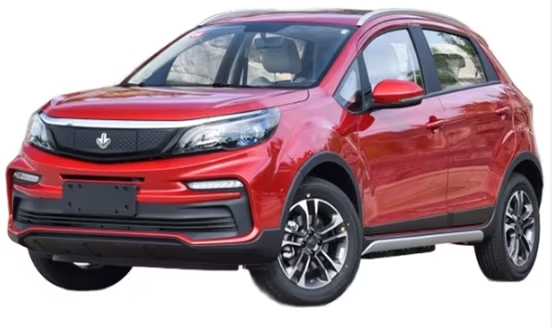
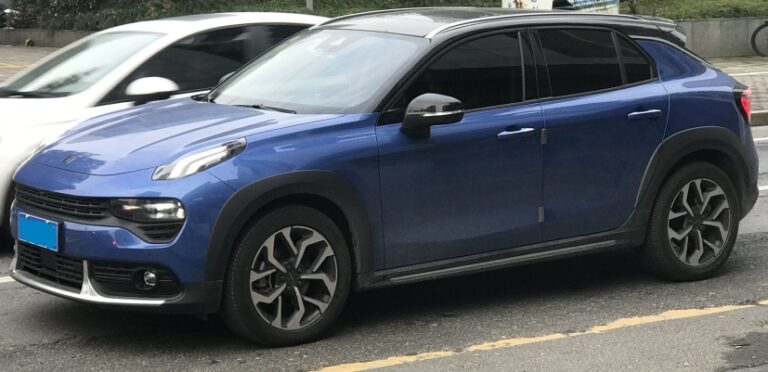
The Evolution of the Maple 30X: The Electric SUV That Revived a Brand
The Maple 30X holds a unique place in the modern history of Chinese electric vehicles. As one of the first products launched under the revived Maple brand—later absorbed into Livan Automotive—it served as both a technological stepping stone and a strategic relaunch of an older marque. Though its production life was relatively short, the Maple 30X illustrates the early direction of affordable electric mobility and the transition toward platform-sharing EVs in China’s automotive industry.
Origins of the Maple 30X
The Maple 30X emerged during a transitional period for Zhejiang Geely Holding Group. The original Maple brand, known as Shanghai Maple, had existed from 2000 to 2010 as a budget-focused division before being discontinued.
In 2020, Geely revived the Maple name as part of a broader push into affordable electric vehicles. The Maple 30X became the first model of this revival, signaling a new direction built around electrification and cost efficiency.
The vehicle was developed as a rebadged version of the Geely Vision X3, adapted into a fully electric subcompact SUV.
.
THIS is GOOD stuff if your car is in need:

.
Production Timeline and Lifecycle
The Maple 30X had a concise production run compared to many vehicles, reflecting its role as an early experimental model rather than a long-term flagship.
Production Years:
- 2020 – Initial launch and market introduction
- 2021 – Continued limited production
- 2022 – Discontinued as Maple brand merged into Livan
Although some references list the model under Livan branding after 2022, the Maple 30X itself was effectively phased out rather than significantly updated.
Design and Platform
The Maple 30X was designed as a compact urban SUV, prioritizing practicality and affordability.
Key Dimensions:
- Length: 157.7 inches (4005 mm)
- Width: 69.3 inches (1760 mm)
- Height: 62.0 inches (1575 mm)
- Wheelbase: 97.6 inches (2480 mm)
Its proportions made it well-suited for city driving, offering a small footprint with enough interior space for five passengers.
Design Characteristics:
- Conventional SUV styling
- Raised ride height for urban versatility
- Simple, functional interior layout
Rather than pursuing bold design innovation, the Maple 30X emphasized cost-effective engineering and familiarity.
Powertrain and Performance
From its introduction, the Maple 30X was exclusively a battery-electric vehicle (BEV), targeting urban commuters.
Electric Motor:
- Output: 70 kW (approximately 95 horsepower)
- Torque: 180 Nm
- Drive type: Front-wheel drive
Performance:
- Top speed: about 75 mph (120 km/h)
These figures positioned the vehicle firmly in the entry-level EV segment, focusing on efficiency rather than performance.
Battery and Range
The Maple 30X featured a single battery configuration throughout its production.
Battery Specifications:
- Capacity: 37 kWh
- Type: Ternary lithium (NMC)
- Range: approximately 190 miles (306 km, NEDC)
Charging:
- Fast charging: about 30 minutes (30–80%)
- Slow charging: approximately 7 hours
While not offering battery-swapping technology like later Maple models, the 30X laid the groundwork for Geely’s broader EV strategy.
Models and Trim Levels
Despite its short production run, the Maple 30X was offered in multiple trims during the 2020 model year. These trims primarily differed in features and equipment rather than powertrain.
2020 Maple 30X Trim Lineup
Available trims included:
- Fengyun
- Smart
- Traveler
- Style (multiple sub-variants)
Across these trims, the core mechanical specifications remained the same, with differences focused on:
- Infotainment systems
- Interior materials
- Convenience features
- Exterior styling accents
Feature Highlights by Trim
Although detailed trim-by-trim breakdowns varied, higher-level versions typically included:
- Touchscreen infotainment system (approximately 8 inches)
- Voice control functionality
- Smartphone connectivity (CarPlay/CarLife)
- Parking sensors and rear camera
- Artificial leather seating
Lower trims offered more basic configurations, emphasizing affordability for entry-level buyers.
Market Position and Use Cases
The Maple 30X was designed primarily for:
- Urban commuters
- First-time EV buyers
- Budget-conscious consumers
- Car-sharing and fleet applications
Its low cost and modest range made it ideal for short-distance driving in cities, where charging infrastructure was more accessible.
Role in Maple and Livan Strategy
The Maple 30X played a foundational role in the revival of the Maple brand and the eventual creation of Livan Automotive.
Strategic Importance:
- Proof of Concept
Demonstrated the viability of rebadging existing gasoline platforms into EVs. - Market Entry Vehicle
Served as an affordable entry point into the EV market. - Brand Revival Catalyst
Helped reintroduce Maple as an electric-focused marque.
After the formation of Livan in 2022, the Maple brand was folded into the new joint venture, and the 30X was discontinued in favor of newer, more advanced models.
Comparison to Successor Models
While the Maple 30X itself did not evolve into a direct second generation, its role was effectively succeeded by later Livan models.
Key Differences:
- Later models like the Maple 60S introduced battery-swapping technology
- Improved range and efficiency
- More advanced connectivity features
In contrast, the 30X remained a simpler, first-generation EV focused on affordability.
Limitations and Challenges
The Maple 30X faced several challenges that contributed to its short lifecycle:
1. Limited Range
While adequate for city driving, its range was less competitive compared to newer EVs.
2. Lack of Battery Swapping
Unlike later Maple vehicles, it did not support battery-swapping infrastructure.
3. Basic Technology
Its features were relatively modest, even by early 2020s standards.
4. Brand Transition
The shift from Maple to Livan reduced the need to continue the model.
Legacy and Impact
Despite its brief production run, the Maple 30X remains significant for several reasons:
- It marked the rebirth of the Maple brand
- It served as Geely’s entry point into affordable EV SUVs under Maple
- It helped pave the way for battery-swapping vehicles like the Maple 60S
In many ways, the Maple 30X can be seen as a transitional vehicle bridging older gasoline-based platforms and newer, purpose-built EV architectures.
Future Outlook
Although the Maple 30X itself is no longer in production, its influence continues within the broader Livan and Geely ecosystem.
Expected Trends Moving Forward:
1. Dedicated EV Platforms
Future models are likely to move away from converted gasoline platforms toward fully electric architectures.
2. Expansion of Battery Swapping
Livan continues to invest in battery-swapping systems, which could define future models.
3. Improved Performance and Range
Advancements in battery technology will likely address the limitations seen in early EVs like the 30X.
4. Global Expansion
Livan’s expansion into international markets may bring similar compact EVs to a wider audience.
The Maple 30X, produced from 2020 to 2021 (with discontinuation following the 2022 brand transition), was a short-lived but important model in the evolution of electric vehicles under Geely’s umbrella. Offered in multiple trims—including Fengyun, Smart, Traveler, and Style—it provided an accessible entry point into electric mobility.
While it lacked the advanced features of later models, its role in reviving the Maple brand and establishing a foothold in the EV market cannot be overlooked. The Maple 30X represents an early chapter in a rapidly evolving story—one that continues to unfold as companies like Livan refine and expand their electric vehicle offerings.