The Evolution of the Huansu S6: BAIC Huansu’s Ambitious Compact SUV
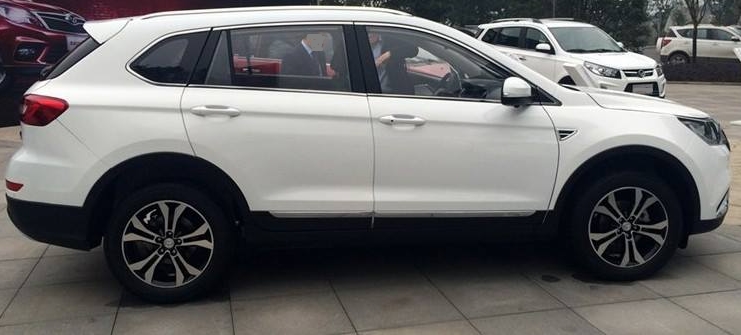
The Huansu S6 was one of the most important vehicles produced by the Huansu brand during the rapid growth of China’s SUV market in the mid-2010s. Developed by Beiqi Yinxiang Automobile, a joint venture between BAIC Group and Yinxiang Group, the Huansu S6 combined affordable pricing, modern styling, and turbocharged performance in an attempt to compete against increasingly sophisticated domestic and international crossover SUVs.
Although the Huansu brand eventually disappeared after financial difficulties struck its parent companies, the S6 remains a notable example of China’s rapidly evolving automotive industry during the late 2010s. Produced from 2015 through 2020, the Huansu S6 represented Huansu’s effort to move beyond low-cost utility vehicles and establish itself in the growing compact crossover segment.
Origins of the Huansu Brand
Huansu was launched in 2014 as a sub-brand under Beiqi Yinxiang Automobile. The company focused primarily on affordable SUVs and MPVs for the Chinese market. At the time, China’s auto industry was experiencing enormous growth, especially in the SUV category, where buyers increasingly preferred taller vehicles with modern styling and practical interiors.
Before the S6, Huansu mainly sold lower-cost models such as the S2 and S3. However, the company wanted a more upscale vehicle capable of competing with popular compact crossovers from Changan, Geely, Haval, and Chery. The result was the Huansu S6, which debuted in 2015.
The S6 was built on the same platform as the Senova X65 and shared engineering with other BAIC-related vehicles. This platform-sharing strategy helped reduce development costs while allowing Huansu to offer a larger and more refined SUV than its earlier products.
.
NO MORE dead batteries with this:

.
Launch and Early Development
The Huansu S6 officially entered the Chinese market in September 2015. At launch, pricing ranged from approximately 88,800 yuan to 116,800 yuan, positioning the vehicle as an affordable compact SUV with premium-inspired styling and turbocharged power.
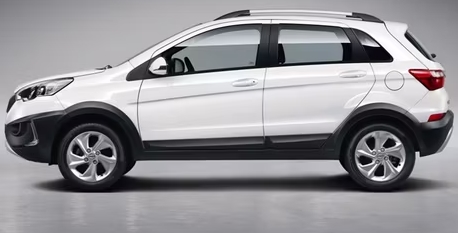
The S6 immediately stood out from earlier Huansu vehicles because of its more modern design language. The front fascia featured a large chrome grille, projector-style headlamps, and sculpted bodywork intended to resemble more expensive international SUVs. The overall design reflected the growing sophistication of Chinese automakers during this period.
Dimensionally, the S6 measured approximately 184.8 inches long, 72.4 inches wide, and 66.3 inches high, with a wheelbase of 106.3 inches. These dimensions gave the vehicle competitive interior space for both passengers and cargo.
Powertrain and Mechanical Specifications
Throughout its production life, the Huansu S6 primarily used turbocharged gasoline engines. Most versions were equipped with a 1.5-liter turbocharged inline-four engine producing approximately 147 horsepower and around 159 lb-ft of torque. Some reports also listed a larger 2.0-liter turbocharged engine for select configurations and markets.
Transmission choices evolved during production and included:
- 5-speed manual transmission
- 6-speed manual transmission
- Continuously variable transmission (CVT)
The S6 used a front-engine, front-wheel-drive layout. Suspension design consisted of a MacPherson strut front suspension and a multi-link rear suspension setup intended to improve ride comfort and handling compared with simpler torsion-beam systems commonly used in lower-cost SUVs.
The vehicle’s turbocharged engine helped distinguish it from many entry-level Chinese crossovers at the time, which still relied heavily on naturally aspirated engines with modest performance.
2015 Huansu S6
The 2015 model year marked the beginning of production. Initial trim levels varied slightly by region, but the Chinese market commonly included several configurations aimed at different price points.
Early trim levels included:
- Comfort
- Elite
- Luxury
- Premium
Base Comfort models featured cloth seats, manual climate controls, power windows, alloy wheels, and basic infotainment systems. Elite trims added touchscreen displays, upgraded interior materials, rear parking sensors, and steering-wheel controls.
Luxury and Premium trims introduced features that were still relatively uncommon in affordable Chinese SUVs during the mid-2010s, including:
- Leather upholstery
- Push-button start
- Panoramic sunroof
- Rearview camera
- Cruise control
- Larger infotainment screens
- Electronic stability control
These features helped the S6 appear more upscale than many competitors in its price category.
2016 Model Year
The 2016 Huansu S6 became the vehicle’s strongest sales year. Chinese buyers responded positively to the combination of SUV styling, turbocharged power, and relatively low pricing. Sales exceeded 45,000 units during the year, making it one of Huansu’s most successful models.
For 2016, Huansu expanded available configurations and improved equipment packaging. Additional trim variations included:
- 1.5T Manual Comfort
- 1.5T Manual Elite
- 1.5T Manual Luxury
- 1.5T CVT Luxury
- 1.5T CVT Premium
Higher-end models offered upgraded multimedia systems with smartphone connectivity, automatic climate control, and improved safety systems.
During this period, Huansu marketed the S6 heavily toward younger families seeking a modern SUV without the cost of international brands such as Honda, Hyundai, or Volkswagen.
2017 Model Year
For 2017, the Huansu S6 received modest updates rather than a complete redesign. Exterior changes were minimal, though some trims gained revised wheels and additional chrome accents.
Interior improvements included updated infotainment software and expanded convenience equipment on mid-range trims. Huansu also improved cabin materials in response to criticism that some interior plastics felt inexpensive compared with rival crossovers.
Available trim levels generally remained similar:
- Comfort
- Elite
- Luxury
- Premium
- Intelligent Edition
The Intelligent Edition trim emphasized technology features such as larger touchscreens, navigation systems, and expanded connectivity options.
Sales remained respectable during 2017, though increasing competition from rapidly improving domestic automakers began to pressure Huansu’s market position.
2018 Model Year
The 2018 model year marked the beginning of significant decline for the Huansu S6. By this point, competitors including Geely, Haval, Changan, and BYD had introduced more advanced SUVs with improved build quality, better safety systems, and more refined drivetrains.
Huansu attempted to keep the S6 competitive by revising equipment packaging and offering better value-oriented trim combinations. Available trims often included:
- Standard
- Comfort
- Luxury
- Smart Edition
Features such as touchscreen infotainment, rear cameras, keyless entry, and leather seating became increasingly common across more affordable trims.
However, Huansu faced growing financial instability as Yinxiang Group encountered economic difficulties. These problems limited investment in new vehicle development and prevented the S6 from receiving major redesigns or mechanical upgrades.
2019 and 2020 Final Years
By 2019, Huansu sales had fallen sharply. The S6 remained in production, but annual sales dropped dramatically as consumers shifted toward newer competitors with more advanced technology and improved reputations for quality.
The final production years offered mostly carryover models with limited changes. Trim levels became simplified in some markets, focusing primarily on value-oriented versions equipped with standard infotainment systems, alloy wheels, and turbocharged engines.
Production officially continued into 2020, though manufacturing volumes became very small. Chinese sales data indicates that only hundreds of units were sold during the final year.
Sales Performance
The Huansu S6 experienced a sharp rise and decline over its lifespan. Chinese sales figures included:
- 2015: 5,883 units
- 2016: 45,345 units
- 2017: 23,246 units
- 2018: 2,607 units
- 2019: 1,798 units
- 2020: approximately 800 units
These numbers reflected both the intense competition within China’s SUV market and the financial collapse of Huansu’s parent companies.
Legacy and Future Outlook
The Huansu S6 never received a direct successor. Financial troubles at Yinxiang Group eventually led to the collapse of the Huansu brand, and many of its vehicle programs were discontinued. Some surviving operations were later reorganized under other BAIC-affiliated brands.
Despite its relatively short lifespan, the Huansu S6 remains significant as an example of the explosive growth of Chinese crossover SUVs during the 2010s. The vehicle demonstrated how quickly Chinese automakers were improving their design, engineering, and feature content in an effort to compete with global brands.
Today, vehicles such as the Huansu S6 are remembered as transitional products that helped lay the groundwork for the internationally competitive Chinese SUVs now sold around the world.