The Evolution of the BAW Ruisheng M8: Development, Variants, and Future Outlook
The BAW Ruisheng M8 is a modern Chinese mid-size to large multipurpose vehicle (MPV) introduced by Beijing Automobile Works (BAW) under its Ruisheng sub-brand. First launched in 2025, the M8 represents a significant step up in size, technology, and drivetrain diversity compared with the smaller Ruisheng Wangpai M7, on which it is partially based. Despite being a very new model, the M8 already demonstrates a clear strategy: flexibility, electrification, and multi-role usability for both family and commercial markets.
Unlike long-established MPVs with multiple generational cycles, the Ruisheng M8 is still in its earliest production phase. However, its initial configuration range and rapid expansion into multiple powertrains make its development unusually rich for such a recent vehicle.
Introduction and Launch (2025)
The Ruisheng M8 officially entered production in late 2025, with pre-sales opening earlier that year and full market launch occurring in December 2025.
It was introduced as a larger, more premium alternative to the Ruisheng Wangpai M7, targeting:
- Large families needing 7–9 seats
- Ride-hailing and shuttle operators
- Small business passenger transport
- Government and fleet buyers in China
Built as a front-engine, rear-wheel-drive MPV, the M8 emphasizes interior volume and modular seating rather than sporty handling.
.
MANY auto lovers not only spend time in their garages to tinker on their autos, but have other projects going on in there as well. Wood working is a popular pastime for the creative type of individual. Not sure what to make next? Or thinking about getting into this kind of hobby? There’s lots of possibilities… Here’s some of them…

.
Platform and Design Philosophy
The M8 is closely related to the Ruisheng M7 but significantly enlarged and re-engineered. It measures just over 5.3 meters in length, placing it in the upper tier of China’s mainstream MPV market.
Key design priorities include:
- Maximum passenger capacity efficiency
- Multi-energy compatibility (gasoline, EV, EREV, CNG)
- Low cost per seat for commercial users
- Simple mechanical architecture for durability
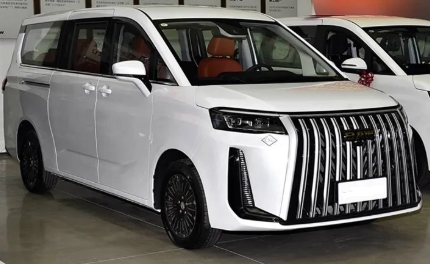
Styling follows modern Chinese MPV trends, featuring a large grille, integrated lighting elements, and a tall, boxy body optimized for cabin space.
Model Range and Body Configurations
From launch, the Ruisheng M8 was offered in a relatively structured but flexible lineup. While trim naming can vary slightly by market listing, the configuration structure is consistent.
Seating Configurations
- 7-seat layout (2+2+3 configuration)
- 9-seat layout (2+2+2+3 configuration)
These layouts define most trim differences, with the 7-seat versions aimed at private buyers and the 9-seat versions aimed at commercial transport operators.
Body and Use Cases
- Standard passenger MPV configuration
- Long-wheelbase commercial shuttle configuration
- Fleet-optimized variants for taxi and transport services
Unlike many competitors that split passenger and cargo versions into separate models, the M8 consolidates multiple roles into one adaptable platform.
Trim Levels and Market Variants (2025–2026)
Although the Ruisheng M8 does not use a deeply stratified luxury trim system like premium Japanese or European MPVs, it is still offered in clearly differentiated equipment tiers.
Core Trim Structure (Generalized Across Market Listings)
Base Utility Trim
- Manual-focused configuration (in ICE variants)
- Basic interior materials
- Fleet-oriented equipment set
- Designed for affordability and durability
Standard Comfort Trim
- Improved seating materials
- Enhanced infotainment system
- Additional convenience features such as rear climate controls
- Most common retail configuration
Business / High-Capacity Trim
- Typically paired with 9-seat layout
- Reinforced seating structure for frequent use
- Focus on shuttle and taxi operations
New Energy Variants (EV / EREV / CNG)
- Available across multiple seating layouts
- Battery electric version with rear-mounted motor
- Extended-range electric version with range extender engine
- CNG-compatible fuel option for cost-sensitive fleets
This structure reflects BAW’s strategy of simplifying trim branding while differentiating mainly through powertrain and seating configuration.
Powertrain Options
One of the most important aspects of the Ruisheng M8 is its multi-energy platform approach. At launch, the model was not limited to a single drivetrain type.
Internal Combustion Engine (ICE)
- 2.0-liter inline-four gasoline engine
- Also available in gasoline + CNG bi-fuel configuration
- Paired with a manual transmission in base versions
Battery Electric Vehicle (EV)
- Rear-mounted electric motor
- Lithium iron phosphate (LFP) battery pack
- Estimated range up to approximately 310 miles (about 500 kilometers in real-world reporting contexts) depending on configuration
Extended-Range Electric Vehicle (EREV)
- 1.5-liter turbocharged range extender engine
- LFP battery system
- Combined driving range up to approximately 600 miles or more depending on usage cycle
Key Market Positioning Advantage
This diversity allows a single vehicle platform to serve:
- Private buyers (EV-focused)
- Rural and fleet users (gasoline/CNG)
- Long-distance shuttle operators (EREV)
Few MPVs in this price class offer such a broad drivetrain mix at launch.
Evolution Timeline (2025–2026)
Because the M8 is a newly introduced model, its “evolution” so far is concentrated in early updates rather than generational changes.
2025 – Launch Phase
- Official introduction and pre-sales
- First availability of ICE, EV, and EREV versions
- Establishment of 7-seat and 9-seat core configurations
- Initial pricing positioned in the budget-to-mid market MPV segment
2026 – Early Refinement Phase
- Expansion of automatic transmission availability in select versions
- Continued optimization of trim packaging for fleet buyers
- Minor updates to configuration naming and equipment distribution
- Increased emphasis on long-wheelbase and 9-seat variants for commercial demand
At this stage, changes are evolutionary rather than structural, typical of a newly launched vehicle stabilizing its market position.
Relationship to the Ruisheng M7
The M8 is best understood as an upscale and enlarged sibling to the Ruisheng Wangpai M7, which began production in 2022. The M7 provided the foundation for:
- Platform scaling
- Multi-seat flexibility concepts
- Multi-energy drivetrain strategy
The M8 extends this philosophy into a larger body class, offering more space and stronger fleet-oriented capabilities.
Market Position and Competition
The Ruisheng M8 competes in China’s highly competitive MPV segment, positioned against:
- Budget large MPVs from domestic manufacturers
- Entry-level fleet vans
- Lower-cost alternatives to premium MPVs
Its main advantage is not luxury, but rather:
- Extremely flexible seating
- Low operating cost options (CNG and EV)
- High passenger capacity per dollar
Future Outlook
The future of the Ruisheng M8 will likely be shaped by three major trends:
1. Increased Electrification
BAW is expected to gradually shift production toward:
- Higher-range EV variants
- More efficient EREV systems
- Improved battery technology (higher energy density LFP packs)
2. Trim Simplification and Standardization
As production matures, the M8 lineup may:
- Reduce overlapping configurations
- Standardize naming conventions
- Consolidate trim levels into clearer packages
3. Fleet Market Expansion
The M8 is likely to remain heavily focused on:
- Taxi fleets
- Shuttle operators
- Institutional transport contracts
This is consistent with BAW’s broader product strategy across its MPV lineup.
The BAW Ruisheng M8, introduced in 2025, is still in the earliest stage of its lifecycle, but it already shows a highly adaptable and multi-role design philosophy. With 7-seat and 9-seat layouts, multiple drivetrain options including ICE, EV, EREV, and CNG, and a strong focus on affordability and utility, the M8 is positioned as a flexible workhorse for China’s large MPV market.
Although it has not yet undergone generational changes, its rapid configuration expansion and early refinement phase suggest that it will evolve quickly as BAW responds to fleet demand and the ongoing shift toward electrification.