The Evolution of the DFSK K01: The Compact Pickup That Expanded DFSK’s Global Commercial Vehicle Business
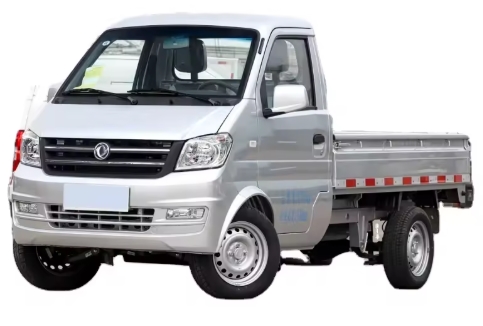
The DFSK K01 is one of the most important compact pickup trucks produced by DFSK Motor, the Chinese automotive joint venture established by Dongfeng Motor Corporation and Chongqing Sokon Industry, now known as Seres Group. Introduced during the mid-2000s, the K01 became a key commercial vehicle for DFSK’s growing domestic and international operations.
Designed primarily as a lightweight utility truck for small businesses, tradespeople, agricultural users, and urban delivery services, the K01 evolved from a simple low-cost work truck into a broader family of commercial and passenger-oriented utility vehicles. Over the years, the K01 platform gained updated styling, improved payload capability, revised powertrains, and expanded export-market availability.
Although largely unknown in the United States, the DFSK K01 became one of the most widely exported compact Chinese utility trucks and helped establish DFSK as a global manufacturer of affordable commercial vehicles.
Origins of the DFSK K01
The DFSK K01 traces its roots to the founding of DFSK Motor itself. The company was created in 2003 as a joint venture between:
- Dongfeng Motor Corporation
- Chongqing Sokon Industry Group
The goal of the partnership was to produce low-cost commercial vehicles and microvans for China’s rapidly expanding economy. During the early 2000s, demand for inexpensive transportation and utility vehicles increased dramatically across China, especially among small businesses and rural operators.
DFSK initially focused on compact vans such as the DFSK K07. However, the company quickly recognized demand for a lightweight pickup truck based on the same platform.
The result was the DFSK K01, which officially entered production around 2005 as part of the DFSK K-Series commercial lineup.
The K01 was designed as a small rear-wheel-drive pickup with simple mechanical components and low operating costs.
.

.
First-Generation DFSK K01 (2005–2015)
The original DFSK K01 debuted as a compact cab-over pickup truck built primarily for utility use.
The design emphasized:
- Low manufacturing cost
- Easy maintenance
- Compact exterior dimensions
- Good cargo capacity
- Fuel efficiency
- Mechanical simplicity
The K01 shared much of its platform and engineering with the DFSK K07 microvan. This reduced development and production costs while simplifying parts availability.
The truck featured:
- Cab-over body layout
- Rear-wheel drive
- Ladder-frame construction
- Leaf-spring rear suspension
- Five-speed manual transmission
The cab-over configuration maximized cargo-bed length while keeping the truck compact enough for crowded urban streets and narrow rural roads.
Early Engines and Specifications
The first-generation K01 was powered by small gasoline four-cylinder engines focused on affordability and economy rather than performance.
Engine options included:
- 1.0-liter inline-four gasoline engine
- 1.1-liter inline-four gasoline engine
- 1.3-liter inline-four gasoline engine
Power output generally ranged between:
- 50 horsepower
- 82 horsepower
These modest figures were acceptable for the truck’s intended role as a lightweight commercial utility vehicle.
2005–2010 DFSK K01 Models and Trim Levels
The K01 lineup gradually expanded during its early years.
Standard Models
- DFSK K01 Standard Cab
- DFSK K01 Basic Utility
- DFSK K01 Cargo Bed Edition
Commercial Variants
- DFSK K01 Flatbed
- DFSK K01 Stake Bed
- DFSK K01 Box Cargo Truck
The truck was available with:
- Short-bed configurations
- Long-bed configurations
- Single rear-wheel layouts
- Optional dual rear-wheel setups in some export markets
Payload capacities varied depending on trim and configuration.
Most models prioritized ruggedness and simplicity over comfort or technology.
Export Market Growth
One of the K01’s biggest strengths was its export potential.
DFSK aggressively marketed the truck internationally throughout:
- South America
- Southeast Asia
- Africa
- Eastern Europe
- The Middle East
The K01 became especially popular in developing countries where buyers needed inexpensive utility vehicles for:
- Agriculture
- Delivery services
- Construction
- Small businesses
- Municipal fleets
In several regions, the truck was sold under alternate branding names connected to Dongfeng or local importers.
The K01’s low purchase price often made it significantly cheaper than Japanese compact trucks from Toyota, Suzuki, or Daihatsu.
DFSK K01 II and Mid-Cycle Improvements
During the late 2000s and early 2010s, DFSK introduced updates commonly referred to as the K01 II.
The revised truck received:
- Updated front-end styling
- Improved headlights
- Revised dashboard materials
- Better seat cushioning
- Minor suspension refinements
- Improved emissions systems
Mechanically, however, the vehicle remained intentionally simple.
DFSK focused on maintaining:
- Easy repairability
- Low operating costs
- High durability
- Affordable pricing
The company understood that its target customers valued practicality and low ownership costs more than luxury or performance.
Second-Generation K01S (2015–Present)
A major redesign arrived around 2015 with the introduction of the DFSK K01S.
The K01S represented a significant modernization of the original platform.
Major improvements included:
- Larger body dimensions
- Stronger chassis structure
- More modern styling
- Improved cabin ergonomics
- Better ride comfort
- Revised suspension tuning
- Improved fuel economy
The K01S maintained the cab-over layout but introduced more contemporary styling and slightly more passenger-friendly interiors.
The redesign helped DFSK remain competitive against newer Chinese commercial trucks entering the market.
2015–Present K01S Trim Levels
The K01S lineup expanded considerably depending on country and intended use.
Passenger and Utility Models
- K01S Basic
- K01S Standard
- K01S Comfort
- K01S Commercial
Cargo and Heavy-Duty Variants
- K01S Long Bed
- K01S Heavy Load Edition
- K01S Dual Rear Wheel
- K01S Cargo Box Edition
Certain export markets also received:
- Refrigerated cargo conversions
- Dump-bed conversions
- Utility-service configurations
The newer models offered improved payload ratings while retaining low operating costs.
Electric and Alternative-Energy Versions
As global emissions regulations tightened, DFSK began developing electric commercial variants based on the K01 platform.
Certain overseas markets introduced:
- Battery-electric cargo versions
- Low-speed urban delivery models
- Commercial fleet EV variants
These electric models targeted:
- Urban delivery services
- Municipal fleets
- Low-emissions business zones
However, gasoline-powered versions remained dominant in most markets because of lower upfront costs and easier servicing.
Manufacturing and Factory Operations
The DFSK K01 has primarily been manufactured in Chongqing, China.
DFSK production facilities emphasized:
- High-volume assembly
- Low-cost manufacturing
- Shared-platform production systems
- Simplified logistics
Because the K01 shared many components with the K07 and related DFSK utility vehicles, manufacturing efficiency remained relatively high.
Certain international assembly operations also existed in:
- Indonesia
- Pakistan
- Iran
- South America
Localized assembly helped DFSK reduce import taxes and improve market competitiveness.
Consumer Reception
The DFSK K01 generally received positive reception among commercial buyers looking for inexpensive utility transportation.
Owners frequently praised:
- Affordable purchase price
- Simple mechanical design
- Easy maintenance
- Good cargo capacity
- Fuel efficiency
- Compact maneuverability
The truck became especially useful in:
- Dense urban areas
- Rural farming regions
- Small-business delivery operations
However, criticism commonly focused on:
- Basic interior materials
- Minimal safety equipment
- Limited comfort
- Modest engine performance
- Sparse technology features
Despite these criticisms, many buyers considered the truck an excellent value for commercial work.
Online automotive communities often compared the K01 to older Japanese kei trucks because of its compact dimensions and utilitarian design philosophy.
Competition and Market Position
The DFSK K01 competed against several compact utility trucks including:
- Suzuki Carry
- Daihatsu Hijet Truck
- Chang’an Star Truck
- Wuling Rongguang Pickup
- FAW Jiabao pickup variants
DFSK differentiated the K01 through:
- Competitive pricing
- Broad export availability
- Shared commercial platform engineering
- Low maintenance costs
The truck became one of DFSK’s most recognizable commercial products globally.
Future Outlook
As of 2026, the DFSK K01 and K01S remain in production in several markets.
Future development is expected to focus on:
- Improved emissions compliance
- Expanded electric variants
- Better safety systems
- Updated interiors
- Enhanced export-market adaptation
Although compact cab-over trucks face growing competition from modern compact vans and crossovers, the K01 continues filling an important role in developing markets where affordability and utility remain essential.
The DFSK K01 ultimately became much more than simply a low-cost pickup truck. It helped establish DFSK as an international commercial vehicle manufacturer and demonstrated how Chinese automakers could successfully compete worldwide through simplicity, affordability, and practical design.