The Evolution of the Xiaomi YU7: Xiaomi’s High-Performance Electric SUV
The Xiaomi YU7 represents one of the most ambitious moves by Chinese technology giant Xiaomi into the global electric vehicle market. Known primarily for smartphones, smart home devices, and consumer electronics, Xiaomi surprised the automotive industry when it officially entered the EV sector in 2021. After the successful launch of the Xiaomi SU7 sedan in 2024, Xiaomi expanded its lineup with the YU7, its first SUV.
Introduced for the 2025 model year, the YU7 combines high-performance electric powertrains, advanced software integration, long driving range, and premium technology features. The vehicle quickly became one of the most talked-about electric SUVs in China and a direct rival to models such as the Tesla Model Y. Although the YU7 is still a very new model, it has already established itself as an important part of Xiaomi’s long-term automotive strategy.
Origins and Development
Xiaomi officially announced its automotive ambitions in March 2021, committing billions of dollars toward EV development. The company established Xiaomi EV as a dedicated automotive division and invested heavily in battery technology, autonomous driving systems, software ecosystems, and manufacturing.
The success of the SU7 sedan demonstrated that Xiaomi could compete with established automakers. Following strong consumer demand for SUVs in China and international markets, Xiaomi began development of the YU7 shortly afterward. The vehicle was first revealed publicly in late 2024 before its full launch in 2025.
The name “YU7” reportedly derives from Chinese language symbolism associated with motion and elegance. Xiaomi described the vehicle as a luxury high-performance SUV designed around advanced technology and intelligent connectivity.
.

.
Years Produced
| Model | Production Years |
|---|---|
| Xiaomi YU7 | 2025–present |
| Xiaomi YU7 Pro | 2025–present |
| Xiaomi YU7 Max | 2025–present |
| Xiaomi YU7 GT | Expected 2026 |
As of 2026, the YU7 remains in its first generation.
First Generation (2025–Present)
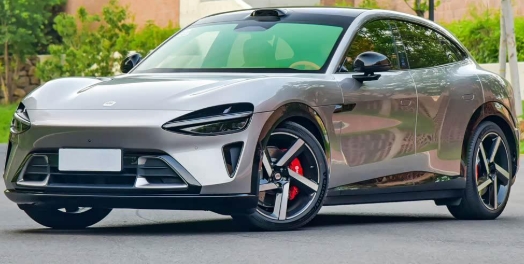
The first-generation YU7 debuted in 2025 as a midsize all-electric SUV. It shares some design and engineering concepts with the SU7 sedan but uses a taller SUV body with additional interior space and cargo capacity.
The YU7 rides on Xiaomi’s advanced 800-volt electrical architecture, allowing extremely rapid charging speeds and improved efficiency. Xiaomi also emphasized aerodynamic design, giving the SUV a sleek profile more similar to a crossover than a traditional upright SUV.
Exterior styling includes:
- Slim LED lighting
- Flush door handles
- Large panoramic glass roof
- Active aerodynamic elements
- Roof-mounted sensors for driver assistance systems
The interior reflects Xiaomi’s consumer electronics background. A large center touchscreen dominates the dashboard, while the vehicle integrates deeply with Xiaomi smartphones, smart home systems, and connected devices. The YU7 also introduced Xiaomi’s “HyperVision” panoramic display system stretching across the base of the windshield.
2025 Xiaomi YU7 Models and Trim Levels
At launch, Xiaomi offered three primary trim levels.
Xiaomi YU7 Standard
The entry-level YU7 Standard featured a single rear-mounted electric motor with rear-wheel drive.
Key specifications included:
- 320 horsepower
- 528 lb-ft of torque
- 96.3 kWh lithium iron phosphate battery
- Up to 835 km (519 miles) CLTC range
- 0–62 mph in approximately 5.9 seconds
- Top speed of 149 mph
This version prioritized long-range efficiency while maintaining strong acceleration performance.
Xiaomi YU7 Pro
The YU7 Pro added dual-motor all-wheel drive and greater performance.
Specifications included:
- 496 horsepower
- 690 lb-ft of torque
- Dual-motor AWD system
- 96.3 kWh battery
- Up to 770 km (478 miles) CLTC range
- 0–62 mph in about 4.3 seconds
The Pro trim balanced performance and long-distance capability, making it one of the most competitive electric SUVs in its segment.
Xiaomi YU7 Max
The flagship YU7 Max focused heavily on high performance.
Major features included:
- 690 horsepower
- 866 lb-ft of torque
- Dual-motor AWD
- 101.7 kWh battery
- Up to 760 km (472 miles) CLTC range
- 0–62 mph in roughly 3.2 seconds
- Top speed around 157 mph
The Max trim also received upgraded brakes, premium materials, faster charging capability, and additional luxury features.
2026 Developments and YU7 GT
In 2026, reports began circulating regarding a new performance-oriented YU7 GT variant. Reuters reported that Xiaomi planned to introduce a GT series model aimed at further expanding the YU7 lineup.
According to early information, the YU7 GT could feature:
- More than 1,000 horsepower
- Performance-oriented suspension tuning
- Enhanced cooling systems
- Sport-focused exterior styling
- Additional software driving modes
Some technical databases already list a “GT” version with approximately 1,003 horsepower, suggesting Xiaomi may be targeting ultra-high-performance SUVs such as the Tesla Model X Plaid and premium European performance EVs.
Technology and Features
The YU7 stands out because Xiaomi treats the vehicle as an extension of its broader technology ecosystem. Owners can synchronize smartphones, tablets, wearables, and smart home devices directly with the SUV.
Important technologies include:
- Xiaomi HyperOS operating system
- Advanced voice assistant controls
- Over-the-air software updates
- Smartphone-based digital keys
- Level 2+ driver assistance systems
- Integrated AI functionality
The SUV also supports ultra-fast charging. Certain variants reportedly recharge from 10% to 80% battery capacity in approximately 12 minutes under ideal conditions.
Market Reception
The YU7 received an extremely strong reception immediately after launch. Xiaomi reported hundreds of thousands of orders shortly after order books opened in 2025. Reuters noted that the vehicle received 200,000 orders within minutes of launch.
Many buyers were attracted by:
- Competitive pricing
- Long driving range
- Advanced technology
- High performance
- Xiaomi brand loyalty
Pricing in China initially started at approximately 253,500 yuan for the base version, with higher trims reaching nearly 330,000 yuan.
The YU7 quickly became one of Xiaomi EV’s best-selling models and significantly contributed to the company’s growing automotive sales volume.
Competition
The Xiaomi YU7 competes against several major electric SUVs, including:
- Tesla Model Y
- BYD Sealion 7
- NIO ES6
- XPeng G9
- Zeekr 7X
Xiaomi positioned the YU7 aggressively by offering more performance and range than many rivals at similar pricing levels. Reuters specifically noted that Xiaomi targeted the Model Y directly and undercut Tesla on price in China.
Future Outlook
The future of the Xiaomi YU7 appears promising. Xiaomi has publicly stated its intention to become a major global EV manufacturer over the coming decade. The company is expanding production facilities and reportedly plans international expansion beginning later in the decade.
Future YU7 developments may include:
- Additional trim levels
- International market launches
- Autonomous driving improvements
- Higher-performance variants
- Expanded customization programs
- Battery technology upgrades
Special editions and custom paint programs have already appeared, demonstrating Xiaomi’s willingness to broaden the vehicle’s appeal.
The Xiaomi YU7 represents a major milestone not only for Xiaomi but also for the rapidly evolving Chinese electric vehicle industry. In only a few years, Xiaomi transformed itself from a consumer electronics company into a legitimate EV manufacturer capable of competing with established global brands.
With impressive range, strong performance, advanced software integration, and competitive pricing, the YU7 quickly became one of the most important new electric SUVs of the mid-2020s. Although still early in its production life, the YU7 has already demonstrated that Xiaomi intends to be a serious long-term competitor in the global automotive market.