The Evolution of the Xiaomi SU7 and SU7 Ultra
The Xiaomi SU7 represents one of the most significant automotive debuts of the modern electric vehicle era. Developed by Xiaomi, the SU7 marked the technology giant’s official entry into the automotive industry after years of preparation and investment. Introduced in late 2023 and officially launched in 2024, the SU7 quickly became one of the most talked-about electric sedans in China thanks to its advanced technology, strong performance, and aggressive pricing.
Within only a short time, Xiaomi expanded the lineup from the standard SU7 sedan into a broader performance-oriented range that eventually included the extreme high-performance SU7 Ultra. The evolution of the SU7 family demonstrated Xiaomi’s ambition to compete directly with established electric vehicle manufacturers such as Tesla, Porsche, BYD, and Nio.
Origins and Development
Xiaomi announced its intention to enter the electric vehicle market in 2021, pledging billions of dollars toward automotive research and development. Company founder Lei Jun described electric vehicles as Xiaomi’s final major entrepreneurial project.
The company established Xiaomi Auto and began developing its first production vehicle under the internal codename “MS11.” After several years of testing and development, Xiaomi officially unveiled the SU7 in December 2023 before launching it commercially in March 2024.
The name “SU7” stands for “Speed Ultra 7.” According to Xiaomi, the sedan was designed to combine high performance, luxury technology, and smart-device integration into a single package. The vehicle also heavily emphasized connectivity with Xiaomi’s smartphones and HyperOS software ecosystem.
.

.
2024 Xiaomi SU7 Lineup
Years Produced
- 2024–present
Available Trim Levels
- SU7 Standard
- SU7 Pro
- SU7 Max
The initial SU7 lineup launched in 2024 with three trim levels designed to appeal to different segments of the electric sedan market.
SU7 Standard
The entry-level SU7 Standard featured a single rear-mounted electric motor producing approximately 295 horsepower. Power came from a 73.6-kWh lithium iron phosphate battery pack supplied by BYD’s FinDreams division.
Key specifications included:
- Rear-wheel drive
- Approximately 435 miles of CLTC range
- 0–62 mph in roughly 5.3 seconds
- Top speed around 130 mph
The Standard trim was positioned as an affordable premium electric sedan and targeted consumers interested in long range and smart technology rather than outright performance.
SU7 Pro
The SU7 Pro expanded on the Standard trim by adding a larger 94.3-kWh battery pack from CATL. The Pro retained rear-wheel drive but delivered significantly increased driving range.
Major features included:
- Enhanced autonomous driving hardware
- Roof-mounted lidar
- Approximately 516 miles of CLTC range
- Additional luxury interior equipment
The Pro model became especially popular in China because it balanced affordability with long-distance capability and premium technology. Reports indicated that demand quickly exceeded Xiaomi’s initial production expectations.
SU7 Max
The SU7 Max served as the flagship model of the original lineup. Unlike the Standard and Pro trims, the Max featured dual-motor all-wheel drive and dramatically improved performance.
Specifications included:
- Combined output of roughly 664 horsepower
- 101-kWh CATL battery
- 0–62 mph in approximately 2.8 seconds
- Top speed near 165 mph
The Max also included:
- Adaptive air suspension
- Advanced torque vectoring
- Larger brakes
- Sport-focused chassis tuning
The SU7 Max was often compared to the Tesla Model S and Porsche Taycan because of its acceleration and pricing strategy.
Market Reception
The SU7 became an immediate success after launch. Xiaomi reportedly received tens of thousands of orders within the first 24 hours. Deliveries accelerated throughout 2024, and by early 2025 the company had delivered well over 135,000 vehicles.
Consumers praised several aspects of the vehicle:
- Competitive pricing
- Premium interior design
- Smartphone-style software experience
- Strong performance figures
- Long electric range
Industry analysts also noted how quickly Xiaomi established itself as a serious competitor in China’s crowded electric vehicle market. Reuters reported that Xiaomi became one of China’s largest EV startups within months of the SU7 launch.
The SU7 additionally gained international attention when Jim Farley publicly stated that he had been driving an SU7 and did not want to give it up.
The Arrival of the SU7 Ultra
Years Produced
- 2025–present
Available Trim Levels
- SU7 Ultra
- SU7 Ultra Racing Package
- SU7 Ultra Nürburgring Nordschleife Limited Edition
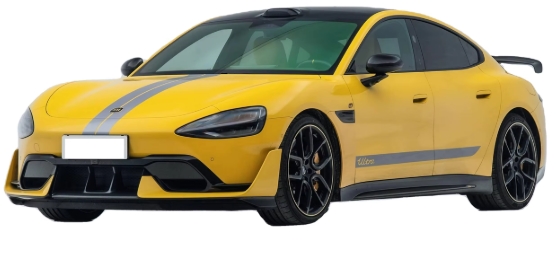
In 2024, Xiaomi revealed the prototype version of the SU7 Ultra, an extreme high-performance derivative designed to showcase the company’s engineering capabilities. The production version officially launched in early 2025.
The SU7 Ultra represented a dramatic leap beyond the already quick SU7 Max.
SU7 Ultra Specifications
The production SU7 Ultra featured:
- Triple electric motors
- Approximately 1,548 horsepower
- 0–62 mph in just 1.98 seconds
- Top speed around 217 mph
The Ultra used a specialized high-performance CATL battery pack and incorporated extensive aerodynamic modifications, including:
- Large rear wing
- Carbon fiber body components
- Aggressive front splitter
- Performance cooling systems
The vehicle also featured track-oriented suspension tuning and advanced torque-vectoring systems.
Racing Package
Xiaomi later announced an optional Racing Package for the SU7 Ultra. This package included additional track-focused equipment such as:
- Enhanced tires
- Specialized suspension settings
- Lightweight components
- Track telemetry systems
Nürburgring Nordschleife Limited Edition
Xiaomi also confirmed plans for a Nürburgring Nordschleife Limited Edition model tied to the company’s attempts to establish performance records at Germany’s famous Nürburgring circuit.
The SU7 Ultra earned considerable attention after setting an impressive Nürburgring lap time that reportedly surpassed several established performance EVs. Enthusiasts and automotive media viewed the achievement as proof that Xiaomi was capable of producing world-class performance cars.
Technology and Interior Evolution
One of the defining aspects of the SU7 lineup was its software integration. Xiaomi leveraged its expertise in consumer electronics to create a highly connected user experience.
Features across the lineup included:
- Xiaomi HyperOS operating system
- Large central touchscreen
- Seamless smartphone integration
- Voice assistant functionality
- Advanced driver assistance systems
- Over-the-air software updates
The cabin design evolved to become increasingly premium in higher trims, especially in the Ultra, which introduced Alcantara upholstery, carbon fiber trim, and sport-oriented seating.
2026 and Beyond
By 2026, reports suggested Xiaomi was preparing an updated second-generation SU7 lineup featuring revised battery architecture, faster charging, improved range, and upgraded driving systems. The refreshed lineup reportedly continued with Standard, Pro, and Max trims.
There were also reports of future variants including:
- Long-wheelbase SU7 L
- Additional performance models
- Expanded global exports
Xiaomi has publicly indicated plans to enter international markets, including Europe, beginning around 2027.
Legacy and Future Outlook
The Xiaomi SU7 has already become one of the most successful first vehicles ever launched by a technology company. Within less than two years, deliveries exceeded hundreds of thousands of units, and the brand established itself as a legitimate force in the electric vehicle industry.
The SU7 family demonstrated that Xiaomi could apply its expertise in software, manufacturing efficiency, and consumer technology to automobiles with remarkable success. The introduction of the SU7 Ultra further elevated the brand’s reputation by proving Xiaomi could compete not only in mainstream electric transportation but also in the high-performance luxury segment.
Looking ahead, Xiaomi appears poised to continue expanding its automotive portfolio with additional sedans, SUVs, and performance variants. If current momentum continues, the SU7 and SU7 Ultra may ultimately be remembered as the vehicles that transformed Xiaomi from a smartphone manufacturer into a major global automotive brand.