The Evolution of the Zotye E200: China’s Compact Electric City Car Revolution
The Zotye E200 was a fully electric microcar produced by Chinese automaker Zotye Auto during the late 2010s. Introduced as part of China’s rapid push toward urban electric mobility, the E200 was designed as a compact, affordable, and highly maneuverable city vehicle aimed at dense urban environments. With its tiny footprint, rear-wheel-drive layout, and modern electric drivetrain, it represented Zotye’s attempt to enter the growing low-cost EV segment dominated by city commuters and car-sharing fleets.
Produced from 2016 through 2021, the Zotye E200 became one of the company’s most recognizable electric models and reflected broader trends in China’s automotive industry toward electrification, efficiency, and urban-focused transportation solutions.
Origins and Development
The E200 was first revealed at the 2015 Shanghai Auto Show, where it was presented as a futuristic city EV concept aimed at young urban drivers. Zotye positioned it as a successor to earlier ultra-compact city cars, but with a fully electric powertrain and significantly more modern styling.
At the time, China was aggressively expanding incentives for electric vehicles, and micro-EVs were becoming an important part of city transportation policy. The E200 was designed specifically for this environment: short commutes, narrow streets, limited parking space, and low operating costs.
Production began in 2016, marking the official launch of the model into the Chinese domestic market.
.
MANY auto lovers not only spend time in their garages to tinker on their autos, but have other projects going on in there as well. Wood working is a popular pastime for the creative type of individual. Not sure what to make next? Or thinking about getting into this kind of hobby? There’s lots of possibilities… Here’s some of them…

.
Production Years
The Zotye E200 was produced from 2016 through 2021, with no major generational redesign during its lifecycle.
Production Timeline
| Year | Development |
|---|---|
| 2015 | Public debut as concept at Shanghai Auto Show |
| 2016 | Start of production and market launch |
| 2017 | Expanded availability and early updates |
| 2018 | Continued production with minor improvements |
| 2019 | Peak visibility in domestic EV market |
| 2020 | Reduced production due to company financial strain |
| 2021 | Final production year |
After 2021, Zotye largely halted production of the E200 as the company underwent restructuring and reduced its EV output.
Design and Dimensions
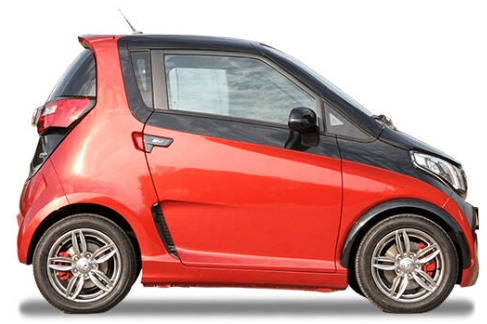
The E200 was classified as an ultra-compact, two-seat electric city car. Its design emphasized simplicity, efficiency, and ease of urban driving.
Key dimensions included:
- Length: 107.7 inches (2,735 mm)
- Width: 63.0 inches (1,600 mm)
- Height: 64.2 inches (1,630 mm)
- Wheelbase: 71.3 inches (1,810 mm)
Despite its extremely small size, the E200 featured a relatively tall body design, maximizing interior headroom and improving visibility in traffic.
The exterior styling was modern and rounded, with smooth surfaces, short overhangs, and a compact two-door (and in some configurations, three-door or five-door classified variants depending on market interpretation) hatchback profile. The overall design emphasized friendliness and practicality rather than sportiness or luxury.
Powertrain and Performance
The Zotye E200 was powered by a rear-mounted electric motor, giving it a rear-wheel-drive layout unusual for vehicles in its size class.
Electric Motor
- Output: approximately 82 horsepower (60 kW)
- Torque: around 165 Nm
- Top speed: about 74 mph (120 km/h)
Battery Options
The E200 was offered with lithium-ion battery packs ranging from approximately:
- 24.5 kWh
- Up to 31.9 kWh in upgraded versions
Range
Depending on battery configuration and driving conditions, the E200 delivered an estimated driving range of up to:
- About 137 miles (220 km) under ideal testing cycles
This range was considered suitable for daily urban commuting but not designed for long-distance travel.
Trim Levels and Variants
Unlike many Western automakers, Zotye structured the E200 lineup using simplified equipment-based trims rather than heavily branded model names. However, across its production life, the vehicle was generally available in three main configurations.
Base City Trim
The entry-level E200 focused on affordability and core mobility:
- Standard battery pack (24.5 kWh)
- Basic infotainment display
- Manual-style climate controls
- Steel or basic alloy wheels
- Essential safety systems (ABS, airbags)
This version was often targeted at government fleets and city-sharing programs.
Mid-Level Comfort Trim
The most common configuration added convenience features:
- Improved interior materials
- Larger infotainment screen
- Bluetooth connectivity
- Rear parking assistance
- Enhanced audio system
- Optional upgraded battery capacity in later years
This trim represented the balance between cost and usability for private buyers.
High-End Premium Trim
Top-tier E200 variants focused on comfort and technology:
- Larger touchscreen infotainment system
- Digital instrument cluster (on later models)
- Keyless entry and push-button start
- Improved interior trim finishes
- Upgraded connectivity features
- Optional advanced battery configuration
These versions positioned the E200 closer to premium micro-EVs in the Chinese market.
Interior and Technology
The E200’s interior was designed around simplicity and digital functionality. Despite its small size, it incorporated modern technology that was advanced for its price category at the time.
Key interior features included:
- Central touchscreen infotainment system
- Digital driver display (on higher trims)
- Smartphone connectivity
- Bluetooth audio integration
- Basic navigation system
- Climate control system
- Compact but ergonomic seating layout
The cabin was tightly packaged but efficient, making use of vertical space to improve comfort for two occupants.
Market Position and Reception
The Zotye E200 entered a rapidly expanding market for electric city cars in China. Its competitors included models like the Baojun E100/E200 series and various other low-cost EVs designed for urban use.
The E200 was generally recognized for:
- Extremely compact size ideal for city driving
- Low operating costs
- Easy parking and maneuverability
- Rear-wheel-drive layout, which was unusual in its class
- Competitive pricing at launch
However, it also faced limitations:
- Limited interior space (only two seats in most configurations)
- Modest driving range compared to larger EVs
- Minimal highway capability
- Brand perception challenges as Zotye’s financial issues emerged
Despite these drawbacks, it remained a practical solution for urban transportation.
Role in China’s EV Expansion
The E200 played a meaningful role in China’s broader electric vehicle expansion strategy. During the late 2010s, government incentives encouraged automakers to develop small EVs for city use, and the E200 fit directly into this policy environment.
It was particularly popular in:
- Dense metropolitan areas
- Fleet and shared mobility programs
- Short-distance commuter use cases
Its affordability and simplicity made it a useful entry-level EV during a formative period for China’s electric car industry.
Decline and End of Production
By the end of the 2010s, Zotye Auto began facing financial challenges, which affected development across its entire product lineup, including EV models like the E200.
As a result:
- Production slowed significantly after 2019
- Investment in updates declined
- No major redesign was introduced
The model was ultimately discontinued in 2021, alongside several other Zotye vehicles.
Legacy and Future Outlook
The Zotye E200 remains an important example of early Chinese micro-electric vehicle development. While it was not a global export success, it demonstrated how quickly Chinese manufacturers adapted to electrification trends and urban mobility needs.
Its legacy includes:
- Helping normalize ultra-compact EVs in Chinese cities
- Demonstrating rear-wheel-drive electric layouts in microcars
- Supporting early EV infrastructure growth in urban regions
- Representing Zotye’s transition from traditional combustion vehicles to electrification
As of 2026, there are no confirmed plans for a direct successor to the E200, and Zotye Auto’s ongoing restructuring has left its future EV lineup uncertain.
The Zotye E200 was a compact, affordable electric city car that captured a specific moment in China’s automotive evolution. Produced from 2016 through 2021, it combined small dimensions, modest performance, and practical electric mobility into a package tailored for urban life.
While it never became a global icon, it remains a noteworthy example of early mainstream electric mobility—an era when manufacturers were rapidly experimenting with how to bring EV technology to everyday city drivers.