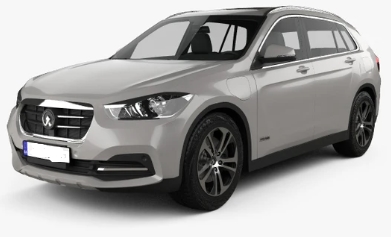
NEVS 9-3 EV: The Evolution of Saab’s Electric Successor
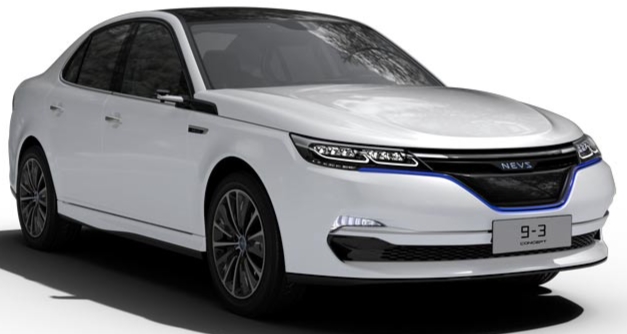
The NEVS 9-3 EV occupies a unique place in automotive history as one of the final chapters in the Saab story and one of the earliest attempts to transform a conventional premium sedan into a production battery-electric vehicle. Developed by National Electric Vehicle Sweden (NEVS) after acquiring the majority of Saab Automobile’s assets, the 9-3 EV combined the proven engineering of the second-generation Saab 9-3 with an all-electric drivetrain. Although it never became a global success, the model demonstrated how an established automobile platform could be adapted for the emerging electric vehicle market.
Produced from 2017 through 2022, the NEVS 9-3 EV was built exclusively for the Chinese market at the company’s factory in Tianjin, China. It represented NEVS’s first production battery-electric vehicle and served as a bridge between Saab’s engineering heritage and the company’s ambition to become an electric mobility manufacturer.
A Brief History
The origins of the NEVS 9-3 EV begin with Saab Automobile’s bankruptcy in December 2011. In 2012, National Electric Vehicle Sweden acquired most of Saab’s assets, including the Trollhättan engineering center, production equipment, and intellectual property related to the second-generation Saab 9-3. NEVS did not acquire the rights to the Saab name indefinitely, so it eventually marketed vehicles under its own corporate identity.
Before focusing entirely on electric vehicles, NEVS briefly restarted production of the gasoline-powered Saab 9-3 Aero sedan in late 2013. These limited-production cars allowed the company to re-establish supplier relationships while replacing numerous components previously sourced from General Motors. Once that work was completed, engineers concentrated on developing an electric version of the 9-3.
.
You’ve got that cool car, but is it resting in its own cool place?
It’s visually pleasing for the surrounding areas outside of your home to look as awesome as what’s stored inside your garage! If you desire a truly inspirational environment for your landscape, you should check into these easy plans! You’ll happy with the end results!

.
Development of the 9-3 EV
Prototype development began in Sweden, where many former Saab engineers continued working at the Trollhättan engineering center. Early prototypes were assembled between 2013 and 2016, allowing engineers to evaluate several electric drivetrain configurations before settling on the final production specification.
Public records indicate that NEVS built:
- Eight early prototypes equipped with a 150 kW electric motor between late 2013 and early 2014.
- Five additional development vehicles using a 100 kW motor between 2014 and 2016.
- Thirteen pre-series production vehicles in early 2018 using the final 130 kW (174 horsepower) electric motor.
These development vehicles allowed NEVS to refine the powertrain, battery system, and software before launching commercial production.
Public Debut
The NEVS 9-3 EV was officially unveiled alongside the NEVS 9-3X EV wagon at CES Asia in Shanghai during June 2017.
Although visually similar to the final Saab 9-3, the electric model featured numerous updates that distinguished it from its gasoline-powered predecessor. Engineers revised the front end to comply with newer pedestrian safety regulations by raising the hood slightly and redesigning the front fascia. Additional exterior changes included a revised grille, updated headlights, LED fog lights, and new side mirrors with integrated turn signals.
Production Years
The production timeline for the NEVS 9-3 EV unfolded in several stages:
- 2013–2016: Prototype development in Trollhättan, Sweden
- June 2017: Public introduction at CES Asia
- December 2017: Pre-series production begins in Tianjin, China
- December 29, 2018: First customer delivery
- June 29, 2019: Full series production begins
- 2022: Production ends
Unlike many concept vehicles that never progressed beyond prototypes, the 9-3 EV successfully entered commercial production, although volumes remained relatively limited and sales were confined to China. Production ended in 2022 as NEVS reduced operations due to financial challenges.
Models and Trim Levels
One interesting aspect of the NEVS 9-3 EV is its remarkably simple model lineup.
Production Model
Throughout its production life, NEVS offered only one production body style:
- NEVS 9-3 EV Sedan
Unlike most modern manufacturers, NEVS did not publicly introduce multiple trim levels, luxury packages, sport editions, or performance variants. Available information indicates the company marketed essentially one standardized specification for fleet customers and the Chinese domestic market.
Likewise, there were no officially named trims comparable to Saab’s former Linear, Vector, or Aero designations. Buyers generally received the same core equipment package, with only limited market-specific equipment differences.
Powertrain
The production NEVS 9-3 EV was powered by a 130 kW (174 horsepower) permanent magnet synchronous reluctance electric motor driving the front wheels.
Power came from a CATL lithium-ion battery pack, making the vehicle one of the earlier production automobiles to use batteries from what would become one of the world’s largest battery manufacturers.
Although NEVS did not publish EPA-certified figures because the vehicle was never sold in the United States, the car was designed primarily for urban and suburban commuting in China rather than long-distance touring.
Interior Evolution
The cabin retained much of the familiar Saab dashboard architecture but introduced several modern electronic features.
Notable updates included:
- A fully digital instrument cluster
- A touchscreen infotainment system replacing much of the older navigation equipment
- Updated software and connectivity
- Revised center console layout
- Additional storage replacing Saab’s traditional ignition-key location
Despite these updates, the interior remained recognizably descended from the second-generation Saab 9-3, preserving its driver-focused cockpit layout.
Manufacturing
Although development work remained centered in Trollhättan, production occurred at NEVS’s factory in Tianjin, China.
The Tianjin facility was initially designed for an annual production capacity of approximately 50,000 vehicles, reflecting NEVS’s optimistic expectations for growth in China’s expanding EV market. Actual production volumes were significantly lower than the plant’s theoretical capacity.
Consumer Reception
Because the NEVS 9-3 EV was sold exclusively in China, American consumers never had the opportunity to purchase it.
Within the automotive community, however, the vehicle generated considerable interest. Saab enthusiasts appreciated that many former Saab engineers had preserved much of the brand’s engineering philosophy, while automotive journalists generally viewed the car as a practical modernization of a respected platform rather than an entirely new design.
The vehicle’s greatest strengths included:
- Proven chassis dynamics
- Familiar Scandinavian styling
- Quiet electric operation
- Modernized electronics
- A comfortable, driver-oriented interior
Its primary limitation was that the underlying platform dated back to the early 2000s, making it less technologically advanced than purpose-built electric vehicles introduced by newer competitors.
Sales
NEVS did not publish comprehensive annual sales figures for the 9-3 EV, and verified production totals have never been fully disclosed.
The model was marketed exclusively in China, with no official exports to North America. Consequently:
- U.S. sales: None
- Global sales: Not publicly disclosed
Production remained relatively limited throughout the vehicle’s life.
Challenges
The greatest challenges facing the NEVS 9-3 EV were financial rather than technical.
Although the engineering program progressed successfully, NEVS struggled to establish itself as a competitive automaker in China’s rapidly expanding EV market. Later, the financial crisis involving NEVS’s owner, China Evergrande Group, dramatically reduced investment in vehicle development.
By 2022, production ended, and in 2023 NEVS reduced its workforce to a minimum while freezing most automotive operations. The end of the 9-3 EV marked the conclusion of NEVS’s production-car ambitions.
Legacy and Future Outlook
Although the NEVS 9-3 EV never achieved widespread commercial success, it remains historically significant as the first production electric vehicle developed from Saab’s final automobile platform. It demonstrated that an established premium sedan could be successfully converted into a practical battery-electric vehicle while preserving many of the characteristics that made the original Saab 9-3 popular.
As of 2026, there are no announced plans to restart production or revive the 9-3 EV. NEVS has largely ceased automobile manufacturing activities, and no successor has been announced. Nevertheless, the vehicle remains an important milestone in the transition from Saab to NEVS and serves as a reminder of the engineering expertise that continued in Trollhättan after Saab’s closure. While the 9-3 EV was ultimately produced in limited numbers, it stands as a noteworthy example of an automaker attempting to adapt a proven platform to the rapidly changing world of electric mobility.