The Yiwei Aipao: Evolution of a Modern Chinese Entry-Level Electric Vehicle
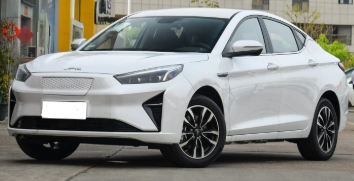
The Yiwei Aipao is a compact electric vehicle produced under the Yiwei brand, a sub-brand associated with Chinese automaker Anhui Jianghuai Automobile Group Corporation (JAC Motors). The Aipao represents one of the newer generations of China’s rapidly expanding small electric car segment, designed primarily for urban mobility, short-distance commuting, and budget-conscious buyers entering the electric vehicle market for the first time.
Unlike long-established global nameplates with decades of iterative development, the Yiwei Aipao exists within a much newer and faster-moving product environment. Its evolution is closely tied to the rapid electrification of China’s domestic automotive industry during the 2020s, where models often evolve quickly, are rebadged across platforms, and receive updates in short cycles rather than traditional multi-decade generational shifts.
Because of this, the Aipao’s development history is less about long-term generational redesigns and more about platform adaptation, trim simplification, and feature updates responding to regulatory requirements and market demand.
Brand Background: Yiwei and Its Position in the Market
The Yiwei brand was created as part of JAC Motors’ broader electrification strategy, aimed at competing in China’s highly competitive entry-level electric vehicle space. Rather than focusing on premium EVs or long-range luxury products, Yiwei targets practical urban transportation solutions.
The Aipao sits within this strategy as a small hatchback-style electric vehicle intended for:
- City commuting
- Ride-hailing fleets
- First-time EV buyers
- Short-distance logistics and personal mobility
This positioning places it in competition with numerous compact Chinese EVs such as the Wuling Hongguang Mini EV and other low-cost electric hatchbacks that have reshaped urban transportation patterns in China.
.
NO MORE dead batteries with this:

.
Production Timeline and Development
The Yiwei Aipao is generally associated with the early-to-mid 2020s wave of compact electric vehicle releases. While exact production timing can vary slightly depending on market rollout and homologation schedules, the Aipao is understood to have entered production in the mid-2020s as part of Yiwei’s early model lineup.
Unlike traditional vehicles that have clearly defined multi-decade production spans, the Aipao’s lifecycle is expected to follow a shorter and more iterative model:
- Initial launch phase: Early 2020s EV expansion period
- Active production phase: Mid-2020s onward (ongoing or recent production depending on market)
- Expected update cycles: Frequent minor revisions rather than full generational redesigns
This reflects a broader trend in China’s EV industry, where software updates, battery supplier changes, and trim restructuring often replace traditional “new generation” redesigns.
Design Philosophy and Platform
The Yiwei Aipao follows a simple and functional design approach typical of compact urban EVs. The vehicle emphasizes:
- Short body length for tight city parking
- High roofline for improved cabin space
- Minimal exterior ornamentation
- Lightweight construction for efficiency
- Small battery pack optimized for urban range
The platform is designed primarily for affordability and efficiency rather than long-distance travel. As such, performance figures and battery sizes are generally modest compared to larger EVs.
The Aipao is not positioned as a performance vehicle, but as a utility-focused electric city car.
Known Configurations and Trim Structure
One of the most important aspects of understanding the Yiwei Aipao is recognizing how trim levels are structured in China’s entry-level EV market.
Unlike traditional global automakers, Yiwei does not always maintain a long, stable list of internationally standardized trims. Instead, configurations are often simplified into a small number of equipment packages that may vary slightly by year, dealer, or regional availability.
Based on typical industry structure for vehicles in this segment, the Yiwei Aipao is generally organized into a small set of trims such as:
- Base Edition
- Standard Edition
- Comfort Edition
- Extended Range Edition (in some configurations or updates)
- Fleet or Commercial Edition (in limited markets or procurement channels)
These trims primarily differ in:
- Battery capacity and driving range
- Infotainment system availability
- Air conditioning equipment
- Interior material quality
- Safety feature inclusions such as airbags or stability control availability
- Convenience features like power windows or keyless entry
It is important to note that trim naming and availability can vary over time, and some versions may be renamed or merged as production continues.
Powertrain and Technical Characteristics
The Yiwei Aipao is an electric vehicle built around a compact front-mounted electric motor. While exact specifications may vary depending on trim level and production batch, vehicles in this class typically feature:
- Single electric motor drivetrain
- Low-to-moderate horsepower output optimized for city speeds
- Lithium-ion or lithium iron phosphate battery chemistry
- Range focused on daily commuting rather than highway travel
Charging is typically designed for standard household charging and basic fast-charging compatibility in higher trims or updated versions.
The emphasis is on cost efficiency, durability, and ease of maintenance rather than high performance.
Interior and Feature Evolution
As the Aipao has developed through its early production years, its interior and feature set have gradually improved in line with consumer expectations in China’s EV market.
Early or base versions typically include:
- Basic digital or semi-digital instrument cluster
- Simple infotainment screen or radio unit
- Manual air conditioning in lower trims
- Fabric seating surfaces
- Minimal driver assistance features
Higher trims or later updates may include:
- Larger touchscreen infotainment systems
- Smartphone connectivity integration
- Rear parking sensors or camera systems
- Upgraded seat materials
- Enhanced dashboard design with improved plastics and trim finishes
- Expanded safety equipment depending on regulatory requirements
This incremental improvement strategy is common among Chinese EV manufacturers, allowing vehicles to remain competitive without full redesigns.
Market Role and Competitive Landscape
The Yiwei Aipao competes in one of the most crowded segments in the global automotive industry: the entry-level urban electric vehicle category.
Its primary competitors include other Chinese compact EVs that emphasize affordability and city usability. In this segment, success is typically determined by:
- Purchase price
- Range adequacy for daily commuting
- Availability of charging infrastructure
- Government incentives for EV adoption
- Fleet and ride-hailing adoption rates
The Aipao’s role is not to dominate through performance or luxury, but to provide accessible electrified transportation in densely populated urban regions.
Export Potential and International Outlook
At present, vehicles like the Yiwei Aipao are primarily focused on the domestic Chinese market. However, similar compact EV platforms from Chinese manufacturers have increasingly been exported to:
- Southeast Asia
- Latin America
- Parts of Europe under rebadged or localized brands
If the Aipao or its platform expands internationally, it would likely be positioned as a low-cost urban mobility solution rather than a mainstream global passenger car.
Export success would depend heavily on:
- Safety certification compliance
- Battery supply chain adaptation
- Local market pricing competitiveness
- Charging infrastructure compatibility
Future Outlook
The future of the Yiwei Aipao depends on several broader trends in the Chinese EV market. These include rapid technological advancement, increasing consumer expectations, and consolidation among smaller EV manufacturers.
Key likely directions include:
- Increased battery efficiency and range improvements
- More standardized safety features across all trims
- Greater integration of smart infotainment systems
- Potential platform sharing with other JAC or Yiwei models
- Software-driven upgrades replacing hardware redesigns
It is also possible that the Aipao nameplate could evolve into a broader product family rather than a single fixed model, following a pattern seen with other Chinese EV lineups.
The Yiwei Aipao represents a modern example of China’s fast-moving electric vehicle industry, where compact, affordable EVs are developed and updated rapidly to meet urban transportation needs. While it does not have the long generational history of traditional global automotive nameplates, its evolution reflects a different kind of automotive development—one driven by speed, adaptability, and market responsiveness.
Produced as part of Yiwei’s early EV lineup in the mid-2020s, the Aipao continues to serve as a practical city-focused electric vehicle. Its trim structure remains flexible and market-dependent, and its future will likely involve incremental improvements rather than dramatic redesigns.
As China continues to lead global EV adoption, vehicles like the Yiwei Aipao highlight how transportation is being reshaped at the most accessible end of the market—where affordability and functionality matter as much as technology and design.