The History of SAIC Motor (MG, Roewe, IM Motors, Maxus, Rising Auto, Wuling, and Baojun)
The Rise of China’s Multi-Brand Automotive Giant and Its Global Ambitions
SAIC Motor is one of the most influential automotive manufacturers in the world, producing over five million vehicles annually and overseeing a wide portfolio of brands that span economy cars, luxury EVs, commercial vans, and global exports. Unlike traditional American automakers that grew organically under individual founders, SAIC Motor emerged as a state-backed enterprise and evolved through joint ventures, acquisitions, and strategic brand-building.
Today, SAIC controls or co-controls a diverse group of automotive brands, including MG Motor, Roewe, IM Motors, Maxus, Rising Auto, Wuling, and Baojun.
Founding and Government Origins (1955–1980s)
SAIC was established in 1955 in Shanghai as part of China’s centrally planned industrial system. It was not founded by an entrepreneur, but rather created under state direction during the leadership of Mao Zedong.
Founder Background
Mao Zedong (1893–1976) was a revolutionary leader who established the People’s Republic of China in 1949. His government prioritized heavy industry, leading to the creation of large state-owned enterprises like SAIC.
Early Operations
- Years of operation: 1955–present
- Initial production: Trucks and basic passenger vehicles
- Technology base: Soviet-derived designs
During this era, SAIC lacked innovation and scale compared to U.S. automakers like Ford or GM, but it laid the groundwork for future growth.
Opening to the World: Joint Ventures (1980s–2000s)
China’s economic reforms allowed SAIC to partner with foreign automakers.
SAIC-Volkswagen (1984–Present)
SAIC partnered with Volkswagen Group in 1984.
- Introduced modern manufacturing techniques
- Produced the Volkswagen Santana
SAIC-GM (1997–Present)
Partnership with General Motors began in 1997.
- Produced models like the Buick Excelle
- Elevated SAIC’s engineering capabilities
Acquisition and Global Expansion (2005–2010s)
MG Rover Acquisition (2005)
SAIC acquired assets from MG Rover Group after its collapse.
- MG Rover years: 1948–2005
- Buyer: SAIC Motor
- Outcome: Technology used to create Roewe; MG revived globally
SAIC Brand Portfolio
MG Motor (2007–Present)
MG Motor is SAIC’s primary global brand.
Models:
Strategy: Affordable EVs for Europe and emerging markets
Roewe (2006–Present)
Roewe focuses on the Chinese domestic market.
Models:
IM Motors (2020–Present)
IM Motors (Zhiji Motor) is a high-end EV brand launched with partners including Alibaba.
Models:
- IM L6 (luxury electric sedan)
- IM LS6 (electric SUV)
Focus: Autonomous driving and premium EV technology
Maxus (2011–Present)
Maxus originated from the British LDV Group.
Models:
- Maxus Deliver 9 (cargo van)
- Maxus T90 (pickup truck)
Market: Commercial vehicles globally
Rising Auto (2021–Present)
Rising Auto (Feifan) is SAIC’s premium EV division spun off from Roewe.
Models:
Wuling (2002–Present)
Wuling is a mass-market brand.
Models:
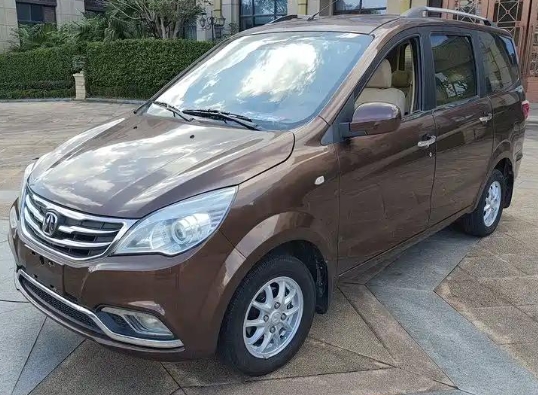
Baojun (2010–Present)
Baojun targets younger buyers.
Models:
Challenges and Struggles
MG Rover Collapse (2005)
- Loss of brand identity
- Solution: Rebuild MG as EV-focused
Global Branding Issues (2010s)
- Weak recognition in the U.S.
- Focus shifted to Europe
Trade Tensions (Late 2010s–2020s)
- Limited U.S. expansion
- Diversified global markets
EV Competition
- Competition from Tesla
- Strategy: Low-cost EV dominance
Manufacturing Operations
SAIC operates highly automated plants:
- Robotics-based assembly
- EV battery production lines
- Global export logistics
Major facilities are located in Shanghai and other industrial hubs.
Racing and Performance Programs
SAIC has used MG for motorsports:
- Touring car championships
- EV technology development
While not dominant globally, racing supports innovation.
Marketing and Strategy
Key Campaigns:
- Affordable EV positioning
- Digital-first sales
- MG global relaunch
SAIC emphasizes value, technology, and accessibility.
Milestones and Achievements
- 1955: Founded
- 1984: VW partnership
- 1997: GM partnership
- 2005: MG Rover acquisition
- 2020s: EV leadership
Most Successful Vehicle
Wuling Hongguang Mini EV
The Wuling Hongguang Mini EV is SAIC’s most successful vehicle.
Why it succeeded:
- Extremely low cost (~$5,000 USD)
- Ideal for city car driving
- Strong EV incentives
Sales:
- Global: Over 1 million units
- U.S.: Not sold
U.S. Market Reception
SAIC has minimal presence in the U.S.:
- MG absent since early 2000s
- Limited consumer awareness
American consumers are generally unfamiliar with SAIC-branded vehicles.
What Makes SAIC Different
- State-backed scale
- Joint venture expertise
- Aggressive EV strategy
- Multi-brand ecosystem
Current Status (2026)
SAIC remains:
- Fully operational
- One of the largest automakers globally
- A leader in EV production
Future Outlook
- Expansion of EV lineup
- Growth in Europe and Asia
- Autonomous driving investment
SAIC Motor’s transformation from a state-run manufacturer to a global automotive leader is one of the most significant industrial success stories of the modern era. With a diverse portfolio that includes MG, Roewe, IM Motors, Maxus, Rising Auto, Wuling, and Baojun, the company has positioned itself as a dominant force in both traditional and electric vehicle markets.
While it continues to face challenges in entering the U.S., SAIC’s scale, innovation, and strategic vision ensure that it will remain a major player in the global automotive industry for years to come.